
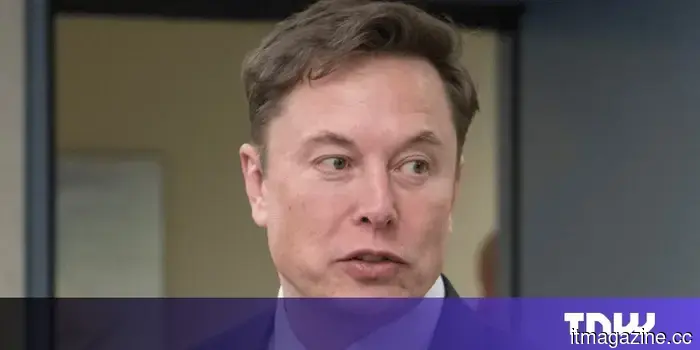
The judge has dismissed X's antitrust lawsuit against advertisers with prejudice.
A US federal judge has dismissed Elon Musk's antitrust lawsuit against advertisers who stopped spending on X, concluding that the company did not present a valid legal claim, and preventing it from refiling the case. US District Judge Jane Boyle, overseeing the case in Dallas, ruled on Thursday with prejudice, denying X the opportunity to appeal, effectively delivering a thorough legal defeat to the plaintiff.
The lawsuit, initiated by X Corp in August 2024 and expanded in February 2025, accused the World Federation of Advertisers, its now-defunct Global Alliance for Responsible Media initiative, and over a dozen major companies, including Mars, Unilever, CVS Health, Nestlé, Colgate-Palmolive, Lego, Shell, Tyson Foods, Abbott Laboratories, and Pinterest, of conspiring to withhold "billions of dollars" in advertising revenue from the platform. X claimed that the coordinated use of GARM's brand safety standards by these companies constituted an illegal boycott under US antitrust laws.
Judge Boyle disagreed on all counts, noting that GARM "did not purchase advertising space from X to sell to advertisers, nor did it instruct X not to sell directly to GARM's customers." Essentially, the supposed conspiracy was not a conspiracy at all. The companies independently determined their advertising expenditures, and choosing not to advertise on X does not constitute an antitrust violation, but rather a business decision.
The cost of the lawsuit
This legal defeat marks the conclusion of a confrontation that yielded little for X and inflicted significant collateral damage on the advertising industry. The GARM initiative at the heart of the lawsuit ceased operations in August 2024, shortly after X filed its complaint. The World Federation of Advertisers reported that the lawsuit had "drained its resources and finances," despite the case not yet being resolved. The voluntary industry body, aimed at helping advertisers avoid placing their brands alongside illegal or harmful content, was effectively dismantled by the lawsuit, regardless of its actual merits.
The companies targeted by X are among the largest advertisers in the world. Their decision to cut spending on the platform was not coordinated through GARM or any other means, according to available evidence. Instead, it was prompted by a series of decisions made by Musk that made X a less favorable environment for brand advertising: he reinstated accounts suspended for policy violations, relaxed content moderation, disbanded internal safety teams, and adopted a public persona that many corporate marketing departments found to conflict with their brands. Consequently, advertisers reacted as they typically do to perceived reputational risk—they left.
Where the money went, and where it did not return
The financial trajectory illustrates the situation clearly. Twitter generated about $4.5 billion in advertising revenue in 2022, the year Musk acquired the company. By 2023, that figure had dropped to roughly $2.2 billion, a decline of more than 50%. Revenue experienced a slight recovery to approximately $2.6 billion in 2024 and $2.9 billion in 2025, marking the first year of growth since the acquisition. However, even at that improved level, X's revenue remains approximately 35% lower than what the platform earned prior to Musk's takeover.
The partial recovery indicates that some advertisers have returned, enticed by lower rates, video advertising options, and the platform’s continued reach among news-oriented audiences. Nevertheless, the largest brand advertisers, which accounted for a significant portion of Twitter’s premium advertising revenue, have largely not returned. UK filings released in January 2026 revealed that X’s UK revenue fell by 58% during this period, a more significant decline than the global average.
The lawsuit was, among other things, an effort to utilize the legal system to compel expenditure that the market would not provide voluntarily. Judge Boyle’s ruling affirmed what the advertising industry had maintained from the outset: companies have no legal obligation to advertise on any specific platform, and opting not to do so does not constitute an act of anticompetitive conspiracy.
The strategic context
The dismissal comes at a crucial time for Musk's corporate empire. X was purchased by xAI in March 2025 and later integrated into SpaceX when SpaceX acquired xAI in February 2026. SpaceX is now preparing for a potential IPO in mid-2026, which could target a valuation of $1.75 trillion. Although X’s advertising business represents a small portion of the overall entity's value, it is a prominent and politically sensitive liability. A pending antitrust lawsuit against some of the world's largest companies would have complicated the IPO trajectory. Its dismissal with prejudice mitigates that particular risk, yet it does so by affirming that the lawsuit should not have been filed in the first place.
Musk's declaration when the lawsuit was filed in 2024, "We tried being nice for 2 years and got nothing but empty words. Now, it is war," now appears as a miscalculation rather than a strategic shift. The conflict lasted
Other articles
 Meta begins testing the Instagram Plus subscription, offering exclusive benefits.
A month free on the house, just enough to entice you.
Meta begins testing the Instagram Plus subscription, offering exclusive benefits.
A month free on the house, just enough to entice you.
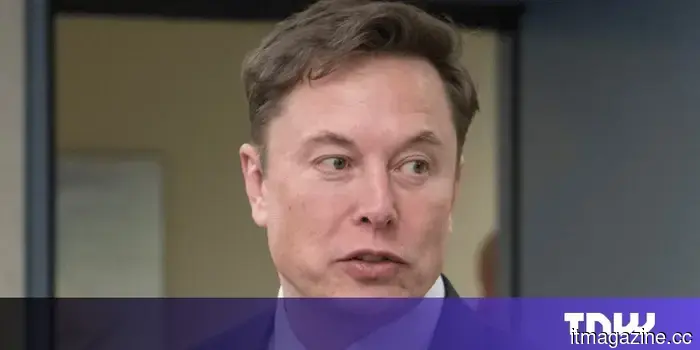 The judge has dismissed X's antitrust lawsuit against the advertisers with prejudice.
A US judge determined that X did not present a legitimate antitrust claim against advertisers such as Mars, Unilever, and Nestlé, preventing the company from re-filing the case.
The judge has dismissed X's antitrust lawsuit against the advertisers with prejudice.
A US judge determined that X did not present a legitimate antitrust claim against advertisers such as Mars, Unilever, and Nestlé, preventing the company from re-filing the case.
 PUBG's top-down experiment has ended before it truly began.
PUBG: Blindspot’s distinctive top-down tactical approach gained a portion of its audience, yet the game is being discontinued before it achieves a full release.
PUBG's top-down experiment has ended before it truly began.
PUBG: Blindspot’s distinctive top-down tactical approach gained a portion of its audience, yet the game is being discontinued before it achieves a full release.
 WhatsApp support for CarPlay is just around the corner.
As a dedicated CarPlay user for many years, this update seems like it's been a long time coming. WhatsApp is finally developing a proper app for CarPlay, which is well overdue. So far, I've only been able to see notifications appear on the dashboard, without any meaningful interaction beyond that. The downside is that it’s still in the testing phase.
WhatsApp support for CarPlay is just around the corner.
As a dedicated CarPlay user for many years, this update seems like it's been a long time coming. WhatsApp is finally developing a proper app for CarPlay, which is well overdue. So far, I've only been able to see notifications appear on the dashboard, without any meaningful interaction beyond that. The downside is that it’s still in the testing phase.
 Vivo X300 Ultra is designed to take the place of your camera, rather than just serve as your smartphone.
Vivo has introduced the X300 Ultra, featuring a professional-grade camera system aimed at competing with standalone cameras.
Vivo X300 Ultra is designed to take the place of your camera, rather than just serve as your smartphone.
Vivo has introduced the X300 Ultra, featuring a professional-grade camera system aimed at competing with standalone cameras.
 Some individuals are utilizing AI to enhance their real-life experiences, and you should learn from these lessons as well.
Certain individuals are utilizing AI to reduce everyday chores at home, allowing them to have more time for exercise, hobbies, rest, and personal connections.
Some individuals are utilizing AI to enhance their real-life experiences, and you should learn from these lessons as well.
Certain individuals are utilizing AI to reduce everyday chores at home, allowing them to have more time for exercise, hobbies, rest, and personal connections.
The judge has dismissed X's antitrust lawsuit against advertisers with prejudice.
A US judge determined that X did not present a valid antitrust claim against advertisers such as Mars, Unilever, and Nestlé, preventing the company from refiling.