
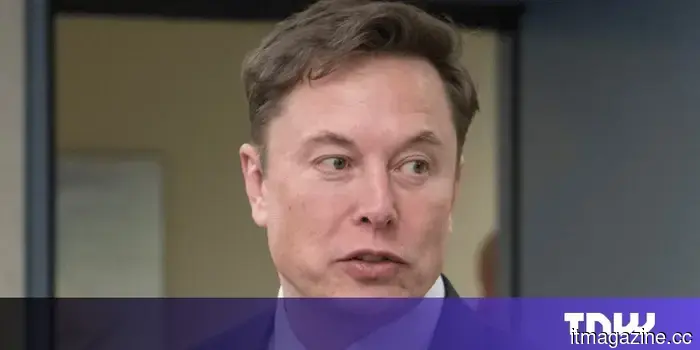
The judge has dismissed X's antitrust lawsuit against the advertisers with prejudice.
A federal judge in the US has thrown out Elon Musk's antitrust lawsuit against advertisers who withdrew their spending from X, ruling that the company did not present a valid legal claim and preventing it from refiling the case. US District Judge Jane Boyle, overseeing the case in Dallas, dismissed the lawsuit with prejudice on Thursday and denied X the option to appeal, resulting in a thorough legal defeat for the plaintiff.
The lawsuit, initiated by X Corp in August 2024 and later expanded in February 2025, accused the World Federation of Advertisers, its now-defunct Global Alliance for Responsible Media initiative, and over a dozen major corporations, including Mars, Unilever, CVS Health, Nestlé, Colgate-Palmolive, Lego, Shell, Tyson Foods, Abbott Laboratories, and Pinterest, of colluding to withhold "billions of dollars" in advertising revenue from the platform. X claimed that the coordinated use of GARM’s brand safety standards constituted an illegal boycott under US antitrust law.
Judge Boyle disagreed with all claims. She stated that GARM “did not purchase advertising space from X to resell to advertisers nor did it instruct X to refrain from selling directly to GARM’s clients.” Essentially, the purported conspiracy was not a conspiracy at all. Companies made independent decisions regarding their advertising expenditures, and opting not to advertise on X does not breach antitrust laws but rather reflects a business decision.
The outcome of the lawsuit marks the conclusion of a confrontation that yielded minimal benefits for X and inflicted significant collateral damage on the advertising sector. The GARM initiative at the heart of the lawsuit ceased operations in August 2024, shortly after X filed its complaint. The World Federation of Advertisers indicated that the lawsuit had “depleted its resources and finances,” even though the case had not yet been resolved. The voluntary industry group created to assist advertisers in avoiding placements alongside illegal or harmful content was effectively dismantled due to the lawsuit, regardless of its merits.
The companies targeted by X among the largest advertisers globally made their choice to cut back on spending independently of GARM or any other coordinated effort. This decision followed a series of changes by Musk that rendered X a less appealing environment for brand advertising: he reinstated accounts previously suspended for policy violations, loosened content moderation, disbanded internal safety teams, and pursued a public image that many corporate marketing teams considered incompatible with their brands. Advertisers acted as they always have when faced with perceived reputational risks, choosing to exit.
The financial figures illustrate this situation clearly. In 2022, Twitter generated about $4.5 billion in advertising revenue, the year Musk acquired it. By 2023, that amount had dropped to approximately $2.2 billion, over a 50% decrease. Revenue modestly rebounded to around $2.6 billion in 2024 and $2.9 billion in 2025, marking the first growth since the acquisition. However, even at this improved level, X's revenue is still roughly 35% below pre-Musk figures.
The partial recovery implies that some advertisers returned, attracted by lower rates, video advertising opportunities, and the platform's sustained reach among news-oriented audiences. However, the largest brand advertisers, responsible for most of Twitter’s premium advertising revenue, have largely stayed away. UK filings released in January 2026 showed that X’s revenue in the UK dropped by 58% during this period, a sharper decline than the global average.
The lawsuit was partly an attempt to leverage the legal system to enforce spending that the market was unwilling to provide voluntarily. Judge Boyle’s decision affirmed what the advertising industry had contended from the beginning: companies have no legal obligation to advertise on any specific platform, and abstaining from doing so does not constitute an act of anticompetitive conspiracy.
The dismissal comes at a critical time for Musk’s business ventures. X was taken over by xAI in March 2025 and subsequently integrated into SpaceX after SpaceX acquired xAI in February 2026. SpaceX is now preparing for a potential IPO in mid-2026, aiming for a $1.75 trillion valuation. Although X’s advertising business represents a minor portion of the combined value, it poses a visible and politically sensitive liability. The ongoing antitrust lawsuit against some of the largest companies in the world would have complicated the IPO process. Its dismissal with prejudice alleviates this specific risk, but it simultaneously confirms that the lawsuit should never have been initiated.
Musk’s assertion when the lawsuit was filed in 2024—that “We tried being nice for 2 years and got nothing but empty words. Now, it is war”—now seems more like a miscalculation than a strategic shift. This “war” lasted 19 months, leading to the destruction of GARM, alienating the advertisers X sought to regain, incurring legal expenses for all involved, and resulting in a ruling that X's claims did not represent a valid ant
Other articles
 Meta begins testing the Instagram Plus subscription, offering exclusive benefits.
A month free on the house, just enough to entice you.
Meta begins testing the Instagram Plus subscription, offering exclusive benefits.
A month free on the house, just enough to entice you.
 AI can outperform chess grandmasters, but it struggles to adjust to contemporary video games.
Researchers at NYU indicate that the main vulnerability of AI remains its adaptability, as contemporary systems find it challenging to manage new video games that they have not encountered previously.
AI can outperform chess grandmasters, but it struggles to adjust to contemporary video games.
Researchers at NYU indicate that the main vulnerability of AI remains its adaptability, as contemporary systems find it challenging to manage new video games that they have not encountered previously.
 Roblox now employs AI moderation to prevent harmful content from reaching you.
Roblox's updated AI moderation system analyzes entire game scenes in real-time, detecting harmful content that many older systems would overlook, and is already closing down 5,000 servers each day.
Roblox now employs AI moderation to prevent harmful content from reaching you.
Roblox's updated AI moderation system analyzes entire game scenes in real-time, detecting harmful content that many older systems would overlook, and is already closing down 5,000 servers each day.
 WhatsApp support for CarPlay is just around the corner.
As a dedicated CarPlay user for many years, this update seems like it's been a long time coming. WhatsApp is finally developing a proper app for CarPlay, which is well overdue. So far, I've only been able to see notifications appear on the dashboard, without any meaningful interaction beyond that. The downside is that it’s still in the testing phase.
WhatsApp support for CarPlay is just around the corner.
As a dedicated CarPlay user for many years, this update seems like it's been a long time coming. WhatsApp is finally developing a proper app for CarPlay, which is well overdue. So far, I've only been able to see notifications appear on the dashboard, without any meaningful interaction beyond that. The downside is that it’s still in the testing phase.
 The judge has dismissed X's antitrust lawsuit against advertisers with prejudice.
A US judge determined that X did not present a valid antitrust claim against advertisers such as Mars, Unilever, and Nestlé, preventing the company from refiling.
The judge has dismissed X's antitrust lawsuit against advertisers with prejudice.
A US judge determined that X did not present a valid antitrust claim against advertisers such as Mars, Unilever, and Nestlé, preventing the company from refiling.
 AI is capable of defeating chess grandmasters, however, it struggles to adjust to contemporary video games.
Researchers at NYU indicate that the major limitation of AI remains its adaptability, as contemporary systems have difficulty managing new video games they have not previously encountered.
AI is capable of defeating chess grandmasters, however, it struggles to adjust to contemporary video games.
Researchers at NYU indicate that the major limitation of AI remains its adaptability, as contemporary systems have difficulty managing new video games they have not previously encountered.
The judge has dismissed X's antitrust lawsuit against the advertisers with prejudice.
A US judge determined that X did not present a legitimate antitrust claim against advertisers such as Mars, Unilever, and Nestlé, preventing the company from re-filing the case.