
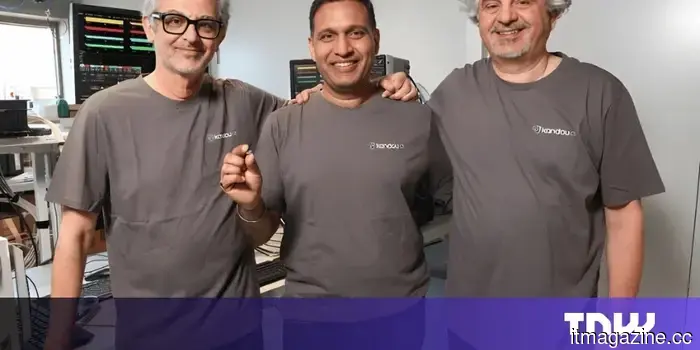
Kandou AI secures $225 million from SoftBank and Synopsys to address the memory wall challenge in AI.
Kandou AI, a Swiss semiconductor firm specializing in chip-to-chip interconnect technology, has secured $225 million in what it describes as a Series A funding round, led by Maverick Silicon, with strategic contributions from SoftBank, Synopsys, Cadence Design Systems, and Alchip Technologies. This round values the company at $400 million. It's noteworthy that Kandou, founded in 2011, previously raised over $163 million through Series B and C rounds under the name Kandou Bus. The "Series A" label indicates a rebranding and leadership shift rather than a fresh start.
In 2025, Srujan Linga, a former Goldman Sachs managing director, succeeded founder Amin Shokrollahi, a mathematics and computer science professor at EPFL who developed the core technology. Shokrollahi's innovation, known as Chord, is a signaling method that transmits correlated signals over multiple wires, boosting bandwidth by two to four times while cutting power consumption in half. This remains the technological cornerstone of the company. The rebranding to Kandou AI and the shift towards artificial intelligence infrastructure are initiatives spearheaded by Linga, and they seem to have paid off: the $225 million raised marks the largest in the company’s history, attracting SoftBank, a prominent player in AI infrastructure investments, to its funding table.
The distinction of Kandou AI's approach lies not in the issue it aims to address but in the material it chooses to use. The interconnect bottleneck facing the AI sector is well recognized. As models scale to hundreds of billions of parameters and training clusters expand to tens of thousands of GPUs, the speed of data exchange between processors and memory has become the main performance limitation. Traditional copper interconnects consume around 30% of the total cluster power at signaling speeds of 224 gigabits per second, with signal degradation so significant that reach is limited to under a meter without amplification.
The industry's typical response has been a shift to optical solutions. Ayar Labs raised $500 million in March 2026 at a valuation of $3.8 billion for its co-packaged optical interconnects. Similarly, Marvell acquired Celestial AI for $3.25 billion in February, obtaining photonic fabric technology that claims to provide 25 times the bandwidth of copper alternatives at a tenth of the latency. The optical interconnect market for AI data centers is expected to grow from $3.75 billion in 2025 to $18.36 billion by 2033.
Kandou AI, however, is betting on the continued viability of copper. The company asserts that its Chord signaling technology can achieve efficiency approaching Shannon capacity, cutting power consumption and system costs by a factor of ten while extending copper links to 448 gigabits per second and potentially beyond. If substantiated, this would suggest that significant investments in optical interconnects could be somewhat premature and that existing copper infrastructures could be viable for several more generations of hardware at a significantly lower cost.
The makeup of the investor group is of greater significance than the total funding amount. Synopsys and Cadence are leading providers of electronic design automation tools, and their involvement indicates potential integration of Kandou AI’s serializer/deserializer intellectual property into the design processes of chip architects creating processors and memory controllers. Alchip, a Taiwanese ASIC design services firm, offers a path to manufacturing. SoftBank, which has invested over $100 billion in AI-related companies through its Vision Fund and direct investments, brings substantial capital and a strategic network.
The practical implication is that Kandou AI's technology might be incorporated into chips designed by other firms rather than compelling customers to adopt its silicon. This model for licensing and intellectual property is akin to Arm’s approach within mobile processors and represents a more capital-efficient route to market leadership than manufacturing and selling chips outright. The key question is whether Kandou can flourish under a $400 million valuation and $225 million in new funding while competing against optical rivals valued significantly higher.
At a valuation of $400 million, Kandou AI is worth about a tenth of Ayar Labs and an eighth of what Marvell invested in Celestial AI. This disparity may indicate market skepticism concerning the longevity of copper in AI infrastructure, or it could reflect the reality that Kandou's technology, if successful, does not necessitate the overhaul of existing wiring. Copper is already present in every data center. If Kandou’s signaling technology can enhance it sufficiently for future AI workloads, the adoption curve would likely be more rapid and cost-effective than transitioning to optical solutions.
However, the risk remains that "another generation" may not suffice. The sizes of AI models and the scales of training clusters are expanding at a pace that often surpasses infrastructure predictions. What is deemed sufficient at 448 gigabits per second now might be inadequate in just two to three years when terabit-per-second speeds become necessary for next-generation models. Despite their costs and complexities, optical interconnects boast
Other articles
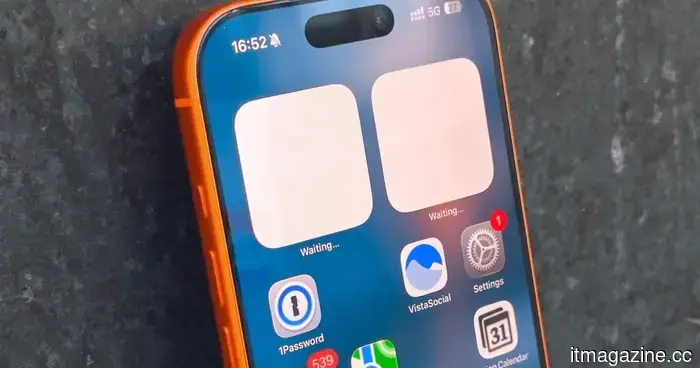 The Dynamic Island may reduce in size on the iPhone 18 series, and this change might apply to all models, not exclusively the Pro versions.
According to reports, Apple intends to introduce a more compact Dynamic Island across the entire iPhone 18 lineup; however, an atypical staggered launch schedule indicates that the overall situation is still uncertain.
The Dynamic Island may reduce in size on the iPhone 18 series, and this change might apply to all models, not exclusively the Pro versions.
According to reports, Apple intends to introduce a more compact Dynamic Island across the entire iPhone 18 lineup; however, an atypical staggered launch schedule indicates that the overall situation is still uncertain.
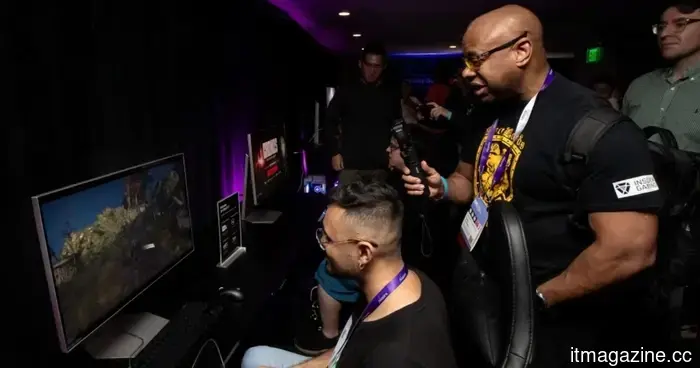 GDC 2026: How Samsung and Worldwide Game Studios Are Transforming the Gaming Experience
During GDC 2026, Samsung showcased how Odyssey 3D and HDR10+ GAMING are revolutionizing gaming experiences. By collaborating with international studios, the company is expanding its 3D library to over 120 titles, providing an immersive experience without the need for glasses.
GDC 2026: How Samsung and Worldwide Game Studios Are Transforming the Gaming Experience
During GDC 2026, Samsung showcased how Odyssey 3D and HDR10+ GAMING are revolutionizing gaming experiences. By collaborating with international studios, the company is expanding its 3D library to over 120 titles, providing an immersive experience without the need for glasses.
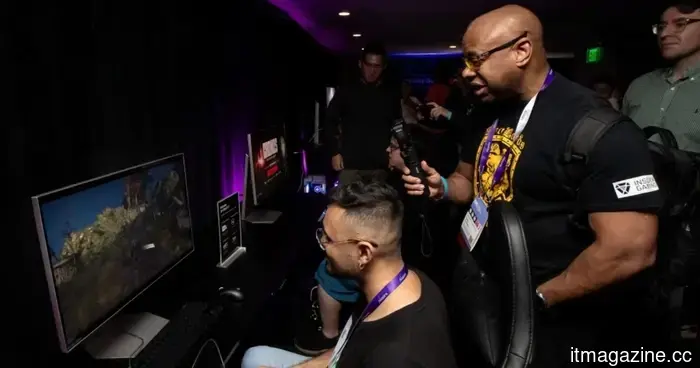 GDC 2026: How Samsung and International Game Studios Are Transforming the Gaming Experience
At GDC 2026, Samsung showcased how Odyssey 3D and HDR10+ GAMING are revolutionizing the gaming experience. By collaborating with international studios, the company is expanding its 3D library to over 120 titles, providing an immersive experience without the need for glasses.
GDC 2026: How Samsung and International Game Studios Are Transforming the Gaming Experience
At GDC 2026, Samsung showcased how Odyssey 3D and HDR10+ GAMING are revolutionizing the gaming experience. By collaborating with international studios, the company is expanding its 3D library to over 120 titles, providing an immersive experience without the need for glasses.
 Meta introduces prescription Ray-Ban smart glasses in an effort to appeal to billions of eyewear consumers.
Meta's Scriber and Blazer smart glasses are aimed at those who need prescription lenses, shifting AI from electronics retailers to opticians in the $223 billion eyewear industry.
Meta introduces prescription Ray-Ban smart glasses in an effort to appeal to billions of eyewear consumers.
Meta's Scriber and Blazer smart glasses are aimed at those who need prescription lenses, shifting AI from electronics retailers to opticians in the $223 billion eyewear industry.
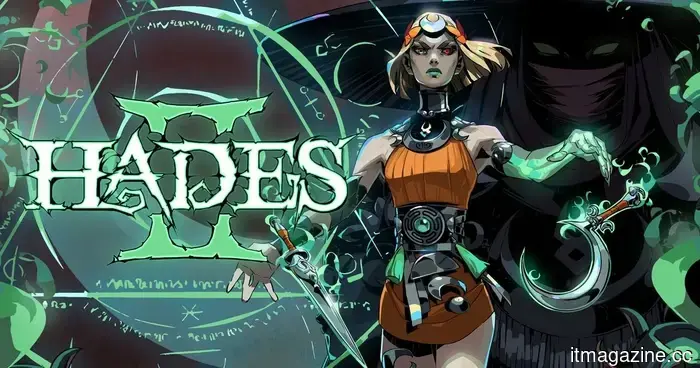 The blockbuster Hades 2 is set to be released on PlayStation and Xbox.
After months of anticipation, Hades II is set to be released on PS5, Xbox Series X|S, and Game Pass on April 14.
The blockbuster Hades 2 is set to be released on PlayStation and Xbox.
After months of anticipation, Hades II is set to be released on PS5, Xbox Series X|S, and Game Pass on April 14.
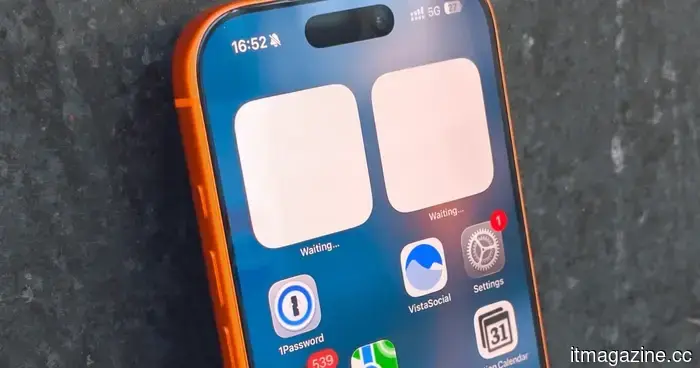 The Dynamic Island may become smaller in the iPhone 18 series, not only in the Pro models.
Apple is said to be planning a more streamlined Dynamic Island for the entire iPhone 18 lineup; however, an unconventional staggered launch schedule suggests that the complete details are still uncertain.
The Dynamic Island may become smaller in the iPhone 18 series, not only in the Pro models.
Apple is said to be planning a more streamlined Dynamic Island for the entire iPhone 18 lineup; however, an unconventional staggered launch schedule suggests that the complete details are still uncertain.
Kandou AI secures $225 million from SoftBank and Synopsys to address the memory wall challenge in AI.
Swiss chip interconnect firm Kandou AI secured $225 million at a $400 million valuation, wagering that its Chord signaling technology can maintain the relevance of copper in the face of the shift to optical solutions.