
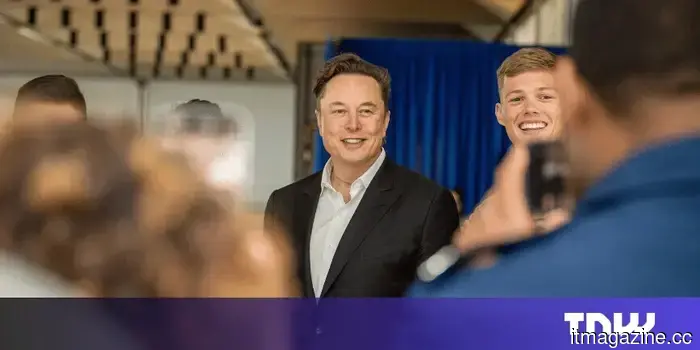
All 11 co-founders of xAI have departed from Elon Musk's AI firm.
Every co-founder that Elon Musk brought on board to develop xAI has now reportedly exited the company. Manuel Kroiss, who led the pretraining team, informed colleagues this month about his departure. Ross Nordeen, referred to by Business Insider as Musk's “right-hand operator,” left last Friday. They were the final two from a group of eleven co-founders, all of whom have vacated a company valued at $250 billion when SpaceX acquired it in February, which Musk himself remarked two weeks ago had been “not built properly the first time around.”
The departures are not just typical startup turnover. The researchers Musk recruited in 2023 were among the top talents in artificial intelligence. Jimmy Ba co-authored the 2014 Adam optimization paper, the most-cited paper in AI, with over 95,000 citations. Igor Babuschkin, the chief engineer, previously worked at Google DeepMind. Christian Szegedy also came from Google. Tony Wu led the reasoning team. Greg Yang, Toby Pohlen, Zihang Dai, Guodong Zhang, and Kyle Kosic contributed their knowledge from DeepMind, Google, Microsoft, and OpenAI. Now, that entire group is gone, and the company they helped establish is, in Musk's words, “being rebuilt from the ground up.”
A timeline of events shows that the exodus intensified sharply in early 2026. Christian Szegedy's departure in February 2025 was an early indicator, but the significant turnover began when Tony Wu, one of the central co-founders, announced he was leaving on February 10, 2026. Jimmy Ba resigned within 24 hours, reportedly due to rising tensions over demands to enhance model performance. By mid-March, only Kroiss and Nordeen were left. Their departures this week mark the end of that wave.
This timing is closely linked to the corporate restructuring occurring at xAI. On February 2, SpaceX finalized its acquisition of xAI in an all-stock deal, valuing SpaceX at $1 trillion and xAI at $250 billion, thus creating a combined entity valued at $1.25 trillion, marking the largest corporate merger by valuation in history. The transaction brought xAI, X (formerly Twitter), and SpaceX under one corporate umbrella, with SpaceX gearing up for a potential IPO in mid-2026 aimed at a $1.75 trillion valuation.
In January, Tesla had invested $2 billion in xAI’s Series E funding round at an estimated $230 billion valuation. Tesla shareholders are suing Musk for breach of fiduciary duty, contending that he effectively directed shareholder funds into his private venture. The lawsuit gained traction on March 13, when Musk acknowledged publicly that xAI's products, especially its coding tools, were not competitive with those from Anthropic’s Claude Code or OpenAI’s Codex. Tesla had invested in a company whose founder admitted it needed to be entirely rebuilt.
Musk’s admission on March 13 was notably frank for a CEO whose company had just been acquired for a quarter of a trillion dollars. He stated that xAI’s AI coding tools were ineffective and that the fundamental system required reconstruction. This acknowledgment seemed to validate the reasons for the co-founders’ exits: if the company leadership admits to product failure, the researchers responsible for its creation have little motivation to stay for the overhaul, especially given the lucrative opportunities available at competitors.
The AI labor market in 2026 is the most competitive it has ever been. Reports indicate that Meta has offered packages up to $300 million over four years to retain leading AI researchers. OpenAI, Google DeepMind, and Anthropic are all aggressively expanding their research departments. The eleven researchers who departed from xAI represent a significant talent pool that any of these companies would pay generously to acquire. Their future placements will reveal much about the direction of the industry, just as their departures illuminate xAI’s past.
xAI does possess valuable assets. The Colossus supercomputer, composed of over 200,000 NVIDIA H100 GPUs, is one of the largest AI training clusters globally. Grok, the company’s chatbot, benefits from a distribution channel through X’s user base. Furthermore, the SpaceX merger provides access to capital, infrastructure, and engineering talent at an unmatched scale in the AI sector. The critical question remains whether infrastructure and distribution are adequate when the research leadership essential for the product’s competitiveness is entirely gone.
This pattern of co-founder departures mirrors trends observed in Musk’s other companies. Twitter experienced a notable loss of its senior leadership and roughly 80 percent of its workforce just months after his 2022 acquisition. Tesla’s upper management has steadily dwindled as Musk's focus has been spread across six companies. The common factor is a management style effective in hardware engineering—where Musk’s risk tolerance and rapid iteration have propelled SpaceX and Tesla into industry leaders—but less successful in research-driven fields, where top talent has multiple
Other articles
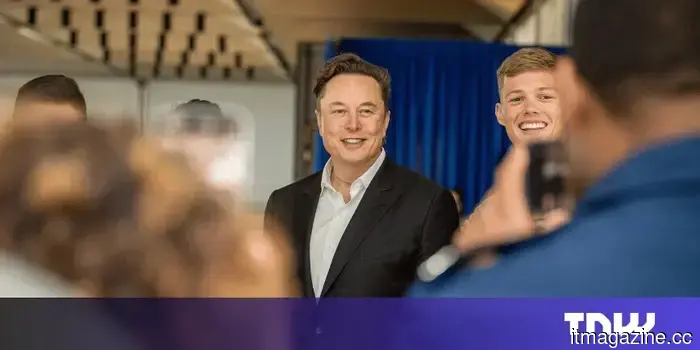 All 11 co-founders of xAI have departed from Elon Musk's AI company.
Manuel Kroiss and Ross Nordeen were the final ones to leave. Every researcher that Musk brought on board to establish xAI has since exited, just weeks after he acknowledged that it was "not built right."
All 11 co-founders of xAI have departed from Elon Musk's AI company.
Manuel Kroiss and Ross Nordeen were the final ones to leave. Every researcher that Musk brought on board to establish xAI has since exited, just weeks after he acknowledged that it was "not built right."
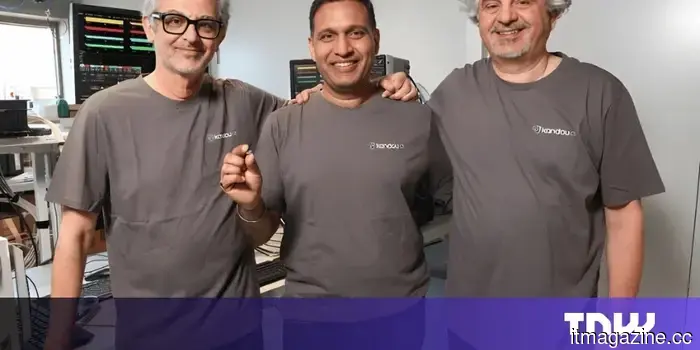 Kandou AI secures $225 million from SoftBank and Synopsys to address the memory wall challenge in AI.
Swiss chip interconnect firm Kandou AI secured $225 million at a $400 million valuation, wagering that its Chord signaling technology can maintain the relevance of copper in the face of the shift to optical solutions.
Kandou AI secures $225 million from SoftBank and Synopsys to address the memory wall challenge in AI.
Swiss chip interconnect firm Kandou AI secured $225 million at a $400 million valuation, wagering that its Chord signaling technology can maintain the relevance of copper in the face of the shift to optical solutions.
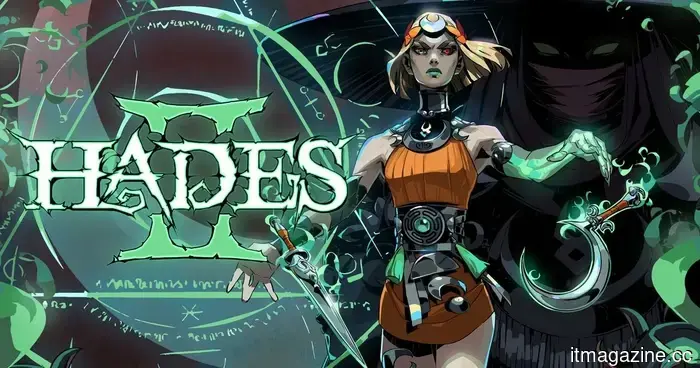 The blockbuster Hades 2 is set to be released on PlayStation and Xbox.
After months of anticipation, Hades II is set to be released on PS5, Xbox Series X|S, and Game Pass on April 14.
The blockbuster Hades 2 is set to be released on PlayStation and Xbox.
After months of anticipation, Hades II is set to be released on PS5, Xbox Series X|S, and Game Pass on April 14.
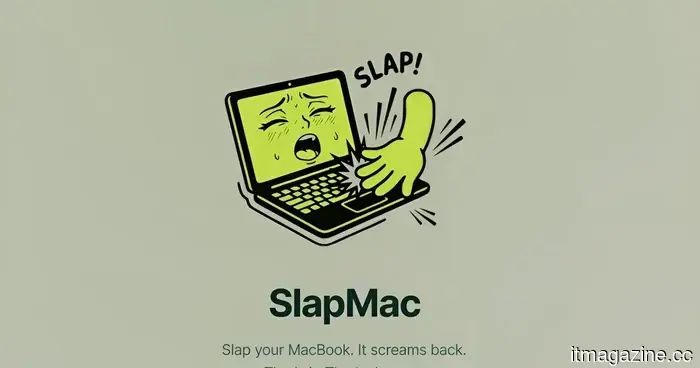 Avoid using this $3 app that causes your MacBook to moan, even though I understand your curiosity.
SlapMac, a $3 application that causes MacBooks to emit moans, farts, and various other sound effects when struck, has gained viral popularity after allegedly generating thousands in revenue within mere days.
Avoid using this $3 app that causes your MacBook to moan, even though I understand your curiosity.
SlapMac, a $3 application that causes MacBooks to emit moans, farts, and various other sound effects when struck, has gained viral popularity after allegedly generating thousands in revenue within mere days.
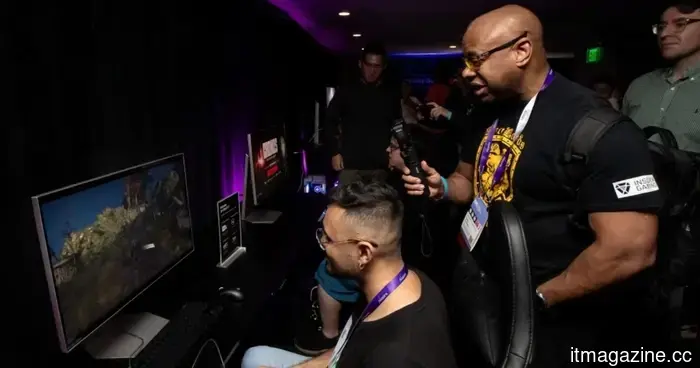 GDC 2026: How Samsung and International Game Studios Are Transforming the Gaming Experience
At GDC 2026, Samsung showcased how Odyssey 3D and HDR10+ GAMING are revolutionizing the gaming experience. By collaborating with international studios, the company is expanding its 3D library to over 120 titles, providing an immersive experience without the need for glasses.
GDC 2026: How Samsung and International Game Studios Are Transforming the Gaming Experience
At GDC 2026, Samsung showcased how Odyssey 3D and HDR10+ GAMING are revolutionizing the gaming experience. By collaborating with international studios, the company is expanding its 3D library to over 120 titles, providing an immersive experience without the need for glasses.
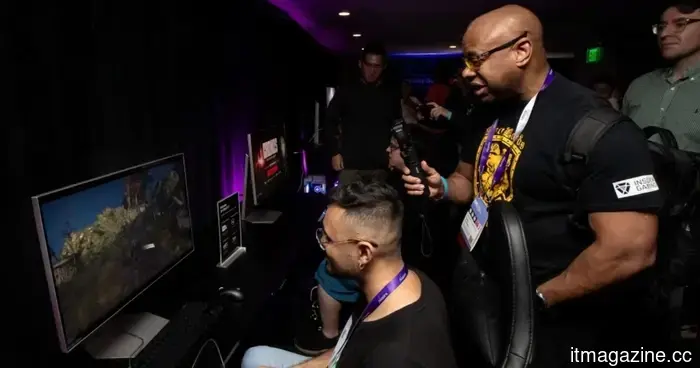 GDC 2026: How Samsung and Worldwide Game Studios Are Transforming the Gaming Experience
During GDC 2026, Samsung showcased how Odyssey 3D and HDR10+ GAMING are revolutionizing gaming experiences. By collaborating with international studios, the company is expanding its 3D library to over 120 titles, providing an immersive experience without the need for glasses.
GDC 2026: How Samsung and Worldwide Game Studios Are Transforming the Gaming Experience
During GDC 2026, Samsung showcased how Odyssey 3D and HDR10+ GAMING are revolutionizing gaming experiences. By collaborating with international studios, the company is expanding its 3D library to over 120 titles, providing an immersive experience without the need for glasses.
All 11 co-founders of xAI have departed from Elon Musk's AI firm.
Manuel Kroiss and Ross Nordeen were the final ones to leave. Every researcher that Musk brought on board to establish xAI has now left, just weeks after he acknowledged that it was "not built correctly."