

Blossom Health secures $20 million to integrate AI copilots with psychiatrists.
Blossom Health, a telepsychiatry startup based in New York and established in 2024, has secured $20 million in a mix of seed and Series A funding aimed at expanding its AI-driven platform, which connects psychiatrists with clinical copilots and automated administrative support. The funding round was led by Headline, with its co-founder and managing partner Mathias Schilling set to join the company's board. Village Global and TA Ventures returned as previous investors, while Operator Partners and Correlation Ventures joined as new institutional supporters, alongside angel investors from General Catalyst, Flatiron Health, Sword Health, and Zip.
Founded by CEO John Zhao, the company centers around the idea that the challenge in psychiatric care stems not from a lack of clinical knowledge but rather from insufficient time. In the United States, psychiatrists dedicate nearly half of their work hours to non-clinical activities, such as documentation, billing, insurance authorization, and scheduling. Blossom aims to alleviate this burden by utilizing AI agents for billing, reception, care coordination, and medical scribing, while a separate team of clinical copilots assists during patient interactions with tasks like symptom evaluation, refining diagnoses, and choosing medications.
The extent of the issue
The shortage of psychiatric professionals in the United States is serious and is deteriorating. According to the Health Resources and Services Administration, over 122 million Americans reside in areas designated as mental health professional shortage zones. The national psychiatrist-to-population ratio is one psychiatrist for every 5,058 individuals. Approximately 60% of practicing psychiatrists are aged 55 or older, indicating that a significant number will retire in the next decade. Depending on the location, wait times for initial psychiatric appointments can vary from three weeks to six months, and many rural areas have no psychiatrists available.
This disparity has created a market opportunity. In 2025, U.S. digital health startups attracted $14.2 billion, the highest figure since 2022, with AI-driven companies accounting for 54% of that total. In the realm of mental health, Talkiatry, a telepsychiatry platform within a network, raised $210 million in February 2026. Spring Health, which employs AI to offer personalized treatment recommendations, is valued at $3.3 billion. Ambient clinical scribes — AI that generates notes from patient interactions — generated $600 million in revenue last year.
Blossom is relatively smaller in comparison. The company reports that its tools are utilized by hundreds of clinicians treating over 10,000 patients across several U.S. states. Most patients are seen within 48 hours, with many getting same-day appointments. Blossom works with all major commercial insurers, including Optum UnitedHealthcare, Aetna, Cigna Evernorth, and Blue Cross Blue Shield, with average copayments around $22.
A copilot, not a replacement
The use of the term "copilot" is intentional and significant. Blossom is not creating a therapy chatbot; its AI tools work alongside licensed psychiatrists during consultations, providing relevant information, aiding in symptom evaluation against diagnostic criteria, and suggesting medication adjustments based on the patient’s history and current conditions. The psychiatrist maintains clinical authority over every decision.
Between appointments, the platform utilizes AI agents to keep in touch with patients through text-based check-ins on sleep, mood, medication adherence, and other factors. For instance, in cases of postpartum depression, the system sends follow-up prompts that highlight warning signs and prepare information for clinicians ahead of future visits. This method transforms traditional episodic care—where patients meet psychiatrists for brief 15-minute sessions every few months and are often unsupported—into a model that resembles continuous monitoring.
The clinical assertions are credible but still in the early stages. Blossom claims to have shown the ability to stabilize mental health conditions and avert the need for more intensive care, though it has not yet presented peer-reviewed clinical evidence. At 10,000 patients, the dataset is substantial for a young company but still too limited to draw broad conclusions about clinical effectiveness.
The cautionary example of Cerebral
Startups at the crossroads of AI, telepsychiatry, and controlled substance prescribing bear the reputational burden of previous entities. Cerebral, a telemental health company that secured $300 million at a $4.8 billion valuation in 2022, became embroiled in a Department of Justice investigation regarding its practices for prescribing controlled substances and settled with the Federal Trade Commission for $7 million over accusations of misleading cancellation policies and data sharing. The company's rapid expansion, which emphasized patient volume over clinical rigor, undermined trust across the industry.
Blossom’s structure, however, differs significantly. It collaborates with licensed psychiatrists rather than independent nurse practitioners, and its AI tools are designed for decision support rather than making decisions independently. Yet, the core challenge persists: scaling psychiatric care through technology requires maintaining clinical quality at a capacity that traditional practice models were not intended to handle. The

Other articles
 Xero and Anthropic collaborate to integrate small business financial management into Claude.
Xero's multi-year agreement with Anthropic integrates Claude into its accounting system and provides live financial data to Claude.ai for 4.6 million subscribers.
Xero and Anthropic collaborate to integrate small business financial management into Claude.
Xero's multi-year agreement with Anthropic integrates Claude into its accounting system and provides live financial data to Claude.ai for 4.6 million subscribers.
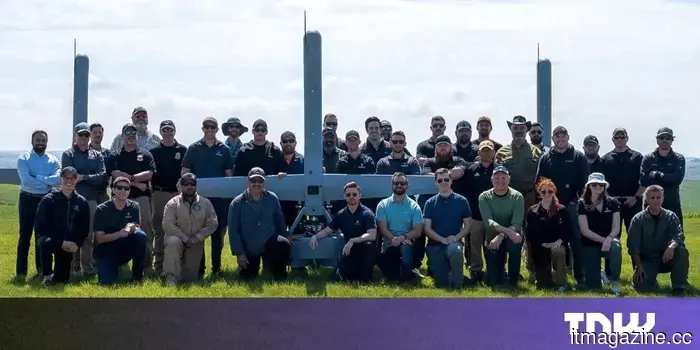 Shield AI secures $2 billion at a valuation of $12.7 billion for its autonomous combat pilot, Hivemind.
Shield AI secured $2 billion from Advent International to expand Hivemind, its proven autonomous pilot for combat, and to acquire the simulation company Aechelon Technology.
Shield AI secures $2 billion at a valuation of $12.7 billion for its autonomous combat pilot, Hivemind.
Shield AI secured $2 billion from Advent International to expand Hivemind, its proven autonomous pilot for combat, and to acquire the simulation company Aechelon Technology.
 The most affordable iPad from Apple could finally enhance its performance.
The upcoming budget iPad from Apple may see a significant performance enhancement with the inclusion of the A18 chip, which would provide quicker speeds and improved AI capabilities.
The most affordable iPad from Apple could finally enhance its performance.
The upcoming budget iPad from Apple may see a significant performance enhancement with the inclusion of the A18 chip, which would provide quicker speeds and improved AI capabilities.
 Apple's most affordable iPad may finally improve in terms of performance.
Apple's upcoming budget iPad may receive a significant performance boost with the A18 chip, resulting in enhanced speeds and AI functionalities.
Apple's most affordable iPad may finally improve in terms of performance.
Apple's upcoming budget iPad may receive a significant performance boost with the A18 chip, resulting in enhanced speeds and AI functionalities.
 The company "Ural" has released new head units "Storm".
The Russian audio electronics manufacturer "Ural" has introduced two new versions of the head units in the "Storm" line.
The company "Ural" has released new head units "Storm".
The Russian audio electronics manufacturer "Ural" has introduced two new versions of the head units in the "Storm" line.
 Soon, your VR headset will enable you to experience scents from the virtual world.
Scientists have created a wearable gadget that combines as many as eight fragrances in real time to correspond with what you experience in virtual reality, enhancing the immersion of virtual settings like never before.
Soon, your VR headset will enable you to experience scents from the virtual world.
Scientists have created a wearable gadget that combines as many as eight fragrances in real time to correspond with what you experience in virtual reality, enhancing the immersion of virtual settings like never before.
Blossom Health secures $20 million to integrate AI copilots with psychiatrists.
Blossom Health, a telepsychiatry startup located in New York and established in 2024, has secured $20 million in total seed and Series A funding to expand its AI-driven platform that connects psychiatrists with clinical copilots and automates administrative tasks.