
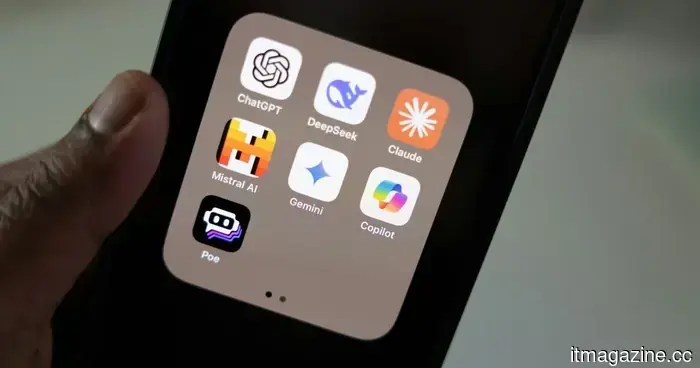
A breakthrough in next-generation AI promises chatbots that can understand the context of their surroundings more effectively.
Researchers are instructing AI chatbots to interpret nuances in communication
Have you ever posed a question to a chatbot and felt that it completely misunderstood your intention? You might express something with subtlety, only for the AI to overlook those nuances completely. This is precisely the challenge that researchers aim to address.
Despite the emotional connection that many users perceive with AI being more profound than human interactions, most current AI systems treat a sentence as a single unit of sentiment. When a statement contains both praise and criticism, the nuances generally get overlooked.
The study conducted by Zhifeng Yuan and Jin Yuan presents a model capable of analyzing a sentence and comprehending your sentiment regarding each component, rather than summarizing everything into a single response.
How this system enhances AI's understanding of intent
Consider a sentence like, “The food was great, but the service was terrible.” A conventional AI chatbot may struggle with this because it contains both positive and negative sentiments.
The proposed model examines each element of the sentence individually, associating each emotion with the corresponding subject. It uses an ‘emotional keywords attention network’ to accomplish this.
In straightforward terms, it trains the AI to hone in on emotionally charged words, such as “great” or “terrible.” These words direct the system's focus towards the most significant aspects of the sentence.
The model then associates these emotional signals with specific elements. It learns that “great” refers to food, while “terrible” pertains to service. This aspect-level sentiment analysis renders the chatbot's responses significantly more accurate.
Furthermore, it employs attention mechanisms to grasp context, ensuring it doesn’t depend solely on keywords. This allows it to understand how various parts of a sentence relate to one another. Researchers assert that this approach surpasses existing models in standard assessments.
This method could enhance the human-like quality of AI chatbots
If implemented widely, this could transform how AI engages in real-world scenarios. Chatbots would be better equipped to manage nuanced feedback rather than resorting to generic responses. Customer support systems could identify specific issues and respond with increased precision.
Although there are rising concerns regarding AI chatbots reflecting human personality traits too closely, one thing remains evident: AI is here to stay. If it is to become a part of daily conversations, it must improve its ability to read social cues.


Другие статьи
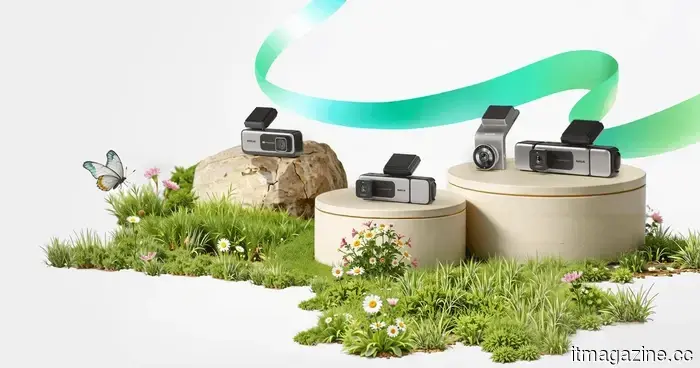 Botslab Умные Видеорегистраторы: Улучшите свою безопасность на дороге этой весной с большей осведомленностью и меньшей неопределенностью
С учетом растущей непредсказуемости на дороге, современное вождение требует от водителей большей внимательности. Во время весенних распродаж в марте компания Botslab делает доступнее видеорегистраторы с поддержкой ИИ, предназначенные для водителей, стремящихся обновить технологии в своем автомобиле. Это поможет защитить водителей и пассажиров с помощью умных уведомлений и доказательств в снижении споров на дороге.
Botslab Умные Видеорегистраторы: Улучшите свою безопасность на дороге этой весной с большей осведомленностью и меньшей неопределенностью
С учетом растущей непредсказуемости на дороге, современное вождение требует от водителей большей внимательности. Во время весенних распродаж в марте компания Botslab делает доступнее видеорегистраторы с поддержкой ИИ, предназначенные для водителей, стремящихся обновить технологии в своем автомобиле. Это поможет защитить водителей и пассажиров с помощью умных уведомлений и доказательств в снижении споров на дороге.
 WYBOT S3: Первый в мире самоопустошающийся очиститель бассейна превращает уход за бассейном из стрессового в роскошный
Чистка бассейна не должна быть стрессовой задачей. С WYBOT S3, первым в мире самоопустошающимся роботизированным очистителем бассейна, вы получаете поистине бесконтактный уход за бассейном. Сочетая беспроводное удобство с интеллектуальной очисткой на основе ИИ, он позволяет вам наслаждаться вашим открытым пространством, не поднимая больше ни пальца.
WYBOT S3: Первый в мире самоопустошающийся очиститель бассейна превращает уход за бассейном из стрессового в роскошный
Чистка бассейна не должна быть стрессовой задачей. С WYBOT S3, первым в мире самоопустошающимся роботизированным очистителем бассейна, вы получаете поистине бесконтактный уход за бассейном. Сочетая беспроводное удобство с интеллектуальной очисткой на основе ИИ, он позволяет вам наслаждаться вашим открытым пространством, не поднимая больше ни пальца.
 Оказывается, если попросить ИИ сыграть роль эксперта, он становится менее надежным.
Сказать ИИ "вести себя как эксперт" звучит как отличная идея, но новое исследование предполагает, что это на самом деле может навредить его точности.
Оказывается, если попросить ИИ сыграть роль эксперта, он становится менее надежным.
Сказать ИИ "вести себя как эксперт" звучит как отличная идея, но новое исследование предполагает, что это на самом деле может навредить его точности.
 Последний Ryzen 9 9950X3D2 от AMD доводит X3D до предела
AMD Ryzen 9 9950X3D2 предлагает двойной 3D V-Cache, до 208 МБ общего кэша и 16 ядер, нацеливаясь на экстремальные игры и высокопроизводительные задачи.
Последний Ryzen 9 9950X3D2 от AMD доводит X3D до предела
AMD Ryzen 9 9950X3D2 предлагает двойной 3D V-Cache, до 208 МБ общего кэша и 16 ядер, нацеливаясь на экстремальные игры и высокопроизводительные задачи.
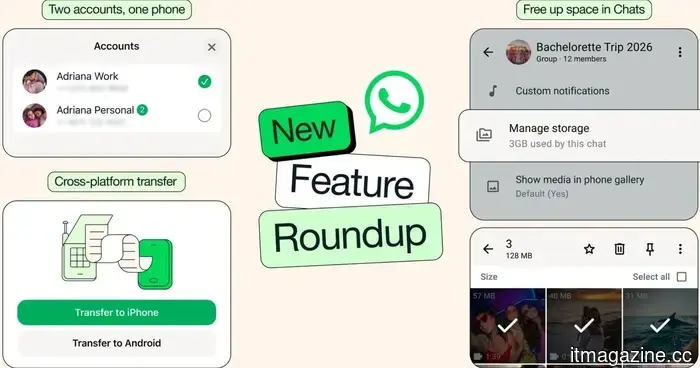 WhatsApp наконец-то позволяет пользователям iPhone использовать два аккаунта на одном устройстве
Два аккаунта на одном iPhone, более умные средства управления хранилищем, бесшовные передачи чата между платформами и редактирование фотографий с помощью ИИ: обновление WhatsApp в марте 2026 года — это практическое обновление, которого ждали опытные пользователи.
WhatsApp наконец-то позволяет пользователям iPhone использовать два аккаунта на одном устройстве
Два аккаунта на одном iPhone, более умные средства управления хранилищем, бесшовные передачи чата между платформами и редактирование фотографий с помощью ИИ: обновление WhatsApp в марте 2026 года — это практическое обновление, которого ждали опытные пользователи.
 Ваш VR-гарнитура скоро позволит вам ощущать запахи виртуального мира
Исследователи разработали носимое устройство, которое в реальном времени смешивает до восьми ароматов, чтобы соответствовать тому, что вы видите в виртуальной реальности, делая виртуальные среды более погружающими, чем когда-либо прежде.
Ваш VR-гарнитура скоро позволит вам ощущать запахи виртуального мира
Исследователи разработали носимое устройство, которое в реальном времени смешивает до восьми ароматов, чтобы соответствовать тому, что вы видите в виртуальной реальности, делая виртуальные среды более погружающими, чем когда-либо прежде.
A breakthrough in next-generation AI promises chatbots that can understand the context of their surroundings more effectively.
This innovative AI method enables chatbots to concentrate on emotionally significant words and associate them with the correct context, improving their comprehension of subtle messages and enhancing their responses.