
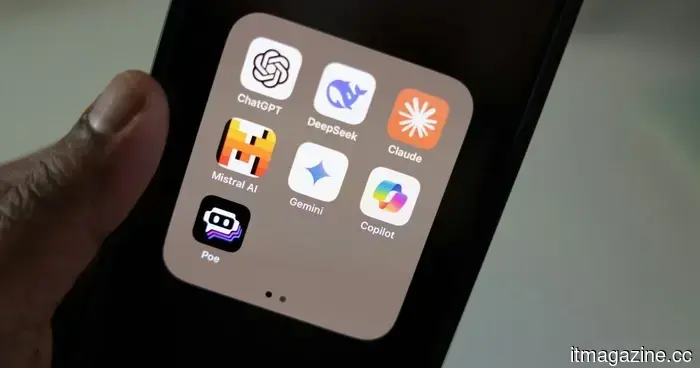
A breakthrough in next-generation AI offers the potential for chatbots to better understand social cues.
Researchers are teaching AI chatbots to understand nuanced communication.
Have you ever posed a question to a chatbot and felt that it completely misunderstood your point? You might express something with subtlety, only for the AI to overlook those nuances. This is the issue that researchers aim to address.
Despite many users feeling a deeper emotional connection with AI than with human conversations, most AI systems currently view a sentence as a solid block of sentiment. When a statement includes both praise and criticism, the subtleties often vanish.
The research conducted by Zhifeng Yuan and Jin Yuan presents a model that breaks down sentences to comprehend feelings about each component rather than generalizing everything into a single response.
How this system enhances AI's ability to interpret intent better
Consider a sentence like, “The food was great, but the service was terrible.” A typical AI chatbot may struggle with it since it contains both positive and negative sentiments.
The proposed model analyzes each part of the sentence individually, linking each emotion to the appropriate subject. It utilizes an 'emotional keywords attention network' for this purpose.
In straightforward terms, it trains AI to concentrate on strong emotional words, such as “great” or “terrible.” These words direct the system toward grasping what’s most important in the sentence.
The model then associates those emotional signals with specific elements. It understands that “great” refers to the food while “terrible” relates to the service. This technique, known as aspect-level sentiment analysis, yields far more accurate responses.
Additionally, it employs attention mechanisms to comprehend context, so it does not rely solely on keywords. It can identify how various parts of a sentence are interconnected. Researchers indicate that this method outperforms existing models on standard evaluation metrics.
This method could make AI chatbots seem more human.
If widely implemented, this could revolutionize how AI responds in real-world contexts. Chatbots would be able to manage nuanced feedback more effectively instead of resorting to generic answers. Customer support systems could accurately diagnose issues and respond with greater precision.
While there are growing concerns about AI chatbots mimicking human personality traits too closely, one thing is evident: AI is here to remain, and to be part of daily interactions, it must enhance its ability to read social cues.




Other articles
 Google globally launches Search Live with AI for voice and camera.
Google has launched Search Live worldwide, introducing AI-driven voice and camera search to more than 200 countries and various languages.
Google globally launches Search Live with AI for voice and camera.
Google has launched Search Live worldwide, introducing AI-driven voice and camera search to more than 200 countries and various languages.
 The most affordable iPad from Apple could finally enhance its performance.
The upcoming budget iPad from Apple may see a significant performance enhancement with the inclusion of the A18 chip, which would provide quicker speeds and improved AI capabilities.
The most affordable iPad from Apple could finally enhance its performance.
The upcoming budget iPad from Apple may see a significant performance enhancement with the inclusion of the A18 chip, which would provide quicker speeds and improved AI capabilities.
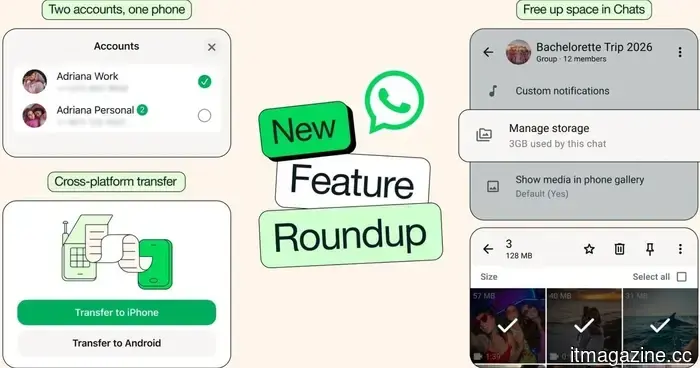 WhatsApp has finally enabled iPhone users to use two accounts on a single device.
WhatsApp's March 2026 update brings practical enhancements that power users have been anticipating, including two accounts on a single iPhone, improved storage management features, effortless chat transfers across platforms, and AI-driven photo editing capabilities.
WhatsApp has finally enabled iPhone users to use two accounts on a single device.
WhatsApp's March 2026 update brings practical enhancements that power users have been anticipating, including two accounts on a single iPhone, improved storage management features, effortless chat transfers across platforms, and AI-driven photo editing capabilities.
 Soon, your VR headset will enable you to experience scents from the virtual world.
Scientists have created a wearable gadget that combines as many as eight fragrances in real time to correspond with what you experience in virtual reality, enhancing the immersion of virtual settings like never before.
Soon, your VR headset will enable you to experience scents from the virtual world.
Scientists have created a wearable gadget that combines as many as eight fragrances in real time to correspond with what you experience in virtual reality, enhancing the immersion of virtual settings like never before.
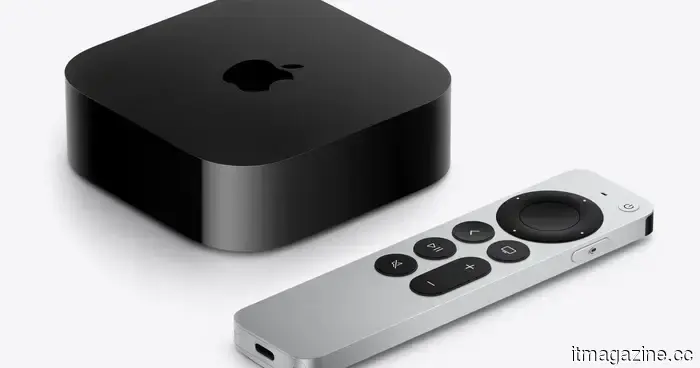 Your Apple TV can now suggest shows and movies based on your viewing preferences.
tvOS 26.4 from Apple introduces four significant updates to enhance your Apple TV experience, featuring a personalized content browser, a Dolby audio improvement that audiophiles will value, and the removal of iTunes.
Your Apple TV can now suggest shows and movies based on your viewing preferences.
tvOS 26.4 from Apple introduces four significant updates to enhance your Apple TV experience, featuring a personalized content browser, a Dolby audio improvement that audiophiles will value, and the removal of iTunes.
 Botslab Smart Dashcams: Enhance Your Road Safety This Spring by Increasing Awareness and Reducing Uncertainty
As road unpredictability increases, modern driving requires heightened awareness from drivers. During the March Spring Sales, Botslab is working to make AI-driven hands-free dashcams more available for those looking to upgrade their vehicle technology. This initiative aims to enhance safety for drivers and passengers through smart alerts and evidence that can help decrease on-road conflicts.
Botslab Smart Dashcams: Enhance Your Road Safety This Spring by Increasing Awareness and Reducing Uncertainty
As road unpredictability increases, modern driving requires heightened awareness from drivers. During the March Spring Sales, Botslab is working to make AI-driven hands-free dashcams more available for those looking to upgrade their vehicle technology. This initiative aims to enhance safety for drivers and passengers through smart alerts and evidence that can help decrease on-road conflicts.
A breakthrough in next-generation AI offers the potential for chatbots to better understand social cues.
This innovative AI method instructs chatbots to concentrate on emotionally significant words and associate them with the correct topics, enhancing their ability to comprehend nuanced communications and respond more suitably.