
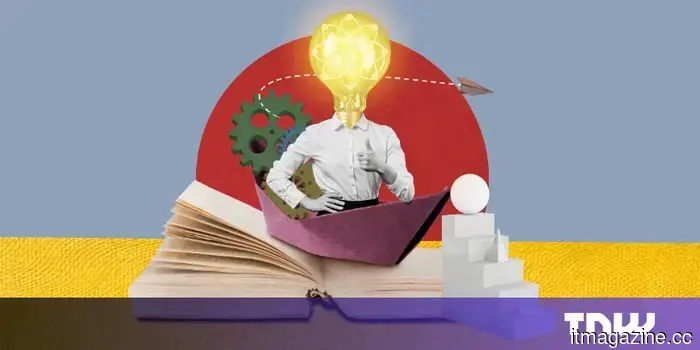
OpenAI Sora is no longer available. The artists continue their efforts.
Last September, when OpenAI quietly introduced the Sora 2 app to the public, the discussions around it were anything but muted. Commentators who had spent months observing the model’s preview clips, featuring a golden retriever leaping through autumn leaves and an almost lifelike Tokyo street scene, lined up to assert that something had fundamentally changed. Not just a minor shift—this was a significant transformation. The argument posited that a technology capable of generating moving images from a simple text prompt marked the beginning of the end for certain types of human jobs.
Actors, animators, and cinematographers found their honed skills, built over years, suddenly deemed temporary. Hollywood labor unions issued statements, and illustrators circulated open letters. The term “replacement” appeared in numerous headlines, making it feel less like a forecast and more like a casual prediction.
On March 24, 2026, OpenAI announced it was discontinuing Sora. The app had been operational for just six months and had not replaced anyone.
This is significant not due to any technical failure of Sora. The underlying model was, by many accounts, notably impressive: capable of creating video that could deceive a casual viewer, complemented by audio generation that enhanced the illusion further. OpenAI's own communications referred to Sora 2 as potentially "the GPT-3.5 moment for video," suggesting it had crossed a significant threshold. It achieved a million downloads faster than ChatGPT had, and for a brief period, it was the top app in Apple’s App Store.
However, it could not encourage users to return. By January 2026, downloads had decreased by 45%. The social component that OpenAI created around it, a TikTok-like feed of AI-generated clips, never coalesced into a regular habit among users.
This week, the company informed employees that shutting down Sora would free up computing resources for its next generation of models. The research team would shift focus to "world simulation research" to benefit robotics. In essence, the shift was from creativity to practicality.
This change is worth contemplating, as it directly contradicts the assumption underlying the AI-will-replace-artists narrative. That narrative was based on a specific view of creative work: that the value audiences derive from art, film, and performance is primarily from the output—the visuals, sounds, and stories—and if a machine can convincingly replicate that output, the human creator becomes unnecessary.
Sora was expected to be the demonstration of this concept. Instead, Sora highlighted the other aspect of this dynamic that replacement theorists often overlooked. Audiences do not merely consume outputs; they engage with them in connection to their origins.
A deepfake of a deceased civil rights leader giving a comedy performance is not perceived as the same cultural entity as a film about that leader’s life, even if the former technically boasts superior pixel quality.
When the families of Martin Luther King Jr. and Robin Williams publicly objected to AI-generated videos featuring their likenesses on the Sora platform, they were not merely making an abstract ethical statement. They aptly expressed what users felt as they scrolled past yet another AI clip: the creation context adds significant value to a creative work.
OpenAI recognized this dynamic, or at least sensed it, which is why it pursued a deal with Disney so eagerly.
The licensing agreement, which covered over 200 characters from Disney, Marvel, Pixar, and Star Wars, was not merely about commerce. It was an attempt to gain cultural credibility, to associate AI-generated video with something that audiences were already familiar with.
The agreement was announced in December 2025. It was undone this week, with Disney stating that no financial transactions had occurred.
A clear pattern emerged. OpenAI attempted to cultivate an audience for AI creativity by initially impressing them with the output, then by making it customizable (the "cameo" feature, where users could upload their likeness for AI-generated deepfakes, was the app’s highlight), and finally by linking it to existing intellectual properties with established fanbases.
None of these efforts led to lasting engagement. The app intended to replace creative professionals failed to captivate the very audience it aimed to entertain.
Nonetheless, this does not imply that AI video generation will not impact the creative industries. The technologies are available, they will be utilized, and some of that usage will displace work traditionally done by humans.
These are legitimate concerns, and the unions and guilds advocating for contractual protections are right to do so. However, the prevailing assertion that dominated the coverage of Sora’s launch—that AI was on the verge of rendering human creativity obsolete and that actors and artists were facing inevitable redundancy—has encountered the most persistent issue in the history of cultural technology: people do not merely seek content.
They desire content created by someone.
The streaming era was expected to spell the death of cinema. While it made theatrical releases more selective, it
Other articles
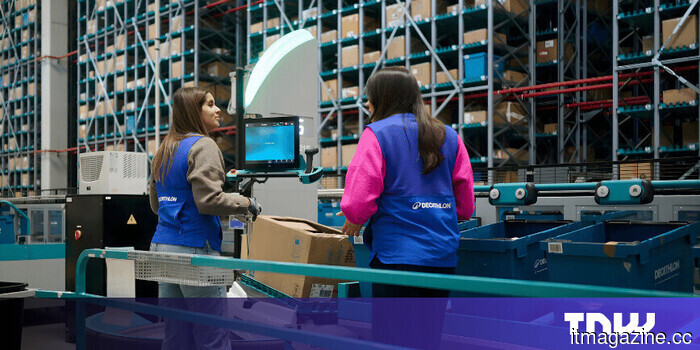 Decathlon increases warehouse productivity by twofold using Exotec robots at seven locations in Europe | TNW
Decathlon has automated seven warehouses in Europe using Exotec's Skypod robots, which has resulted in a doubling of order output in Portugal and a 90% reduction in the distance pickers need to walk.
Decathlon increases warehouse productivity by twofold using Exotec robots at seven locations in Europe | TNW
Decathlon has automated seven warehouses in Europe using Exotec's Skypod robots, which has resulted in a doubling of order output in Portugal and a 90% reduction in the distance pickers need to walk.
 Meta cuts hundreds of jobs in Reality Labs, recruitment, and sales as part of its $135 billion investment in AI | TNW
On Wednesday, Meta reduced its workforce by hundreds in areas including Reality Labs, Facebook, recruiting, and sales, marking the latest round of layoffs as investments in AI approach $135 billion.
Meta cuts hundreds of jobs in Reality Labs, recruitment, and sales as part of its $135 billion investment in AI | TNW
On Wednesday, Meta reduced its workforce by hundreds in areas including Reality Labs, Facebook, recruiting, and sales, marking the latest round of layoffs as investments in AI approach $135 billion.
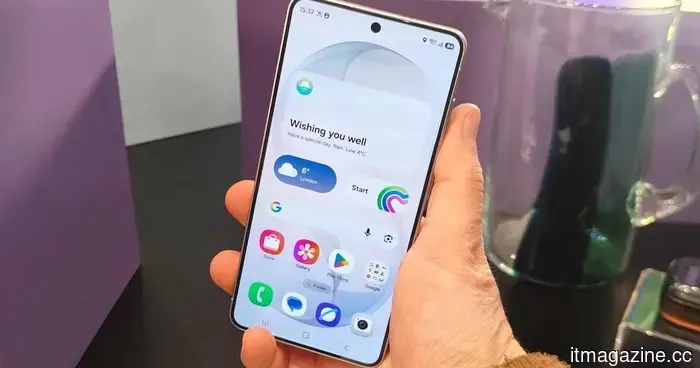 The Samsung Galaxy S26 Ultra is amazing, but issues arise when it requires repair.
iFixit's teardown of the Galaxy S26 Ultra showed a combination of results: a surprisingly straightforward battery swap, a frustratingly difficult screen replacement, and a replacement parts system that is almost comically inadequate.
The Samsung Galaxy S26 Ultra is amazing, but issues arise when it requires repair.
iFixit's teardown of the Galaxy S26 Ultra showed a combination of results: a surprisingly straightforward battery swap, a frustratingly difficult screen replacement, and a replacement parts system that is almost comically inadequate.
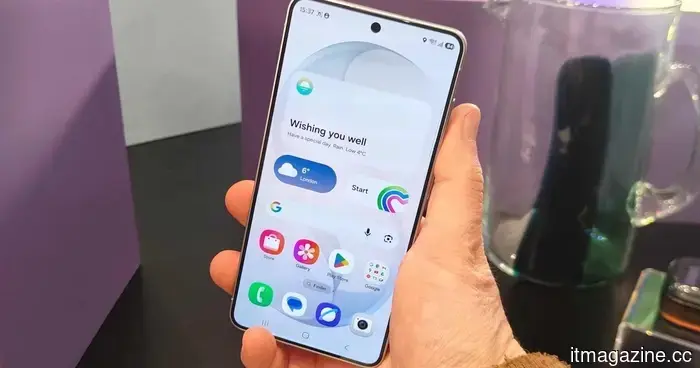 The Samsung Galaxy S26 Ultra is amazing, but issues arise when it needs repairs.
iFixit's teardown of the Galaxy S26 Ultra showed a mixed outcome: a surprisingly simple battery replacement, a frustratingly difficult screen replacement, and a replacement parts system that is nearly laughable.
The Samsung Galaxy S26 Ultra is amazing, but issues arise when it needs repairs.
iFixit's teardown of the Galaxy S26 Ultra showed a mixed outcome: a surprisingly simple battery replacement, a frustratingly difficult screen replacement, and a replacement parts system that is nearly laughable.
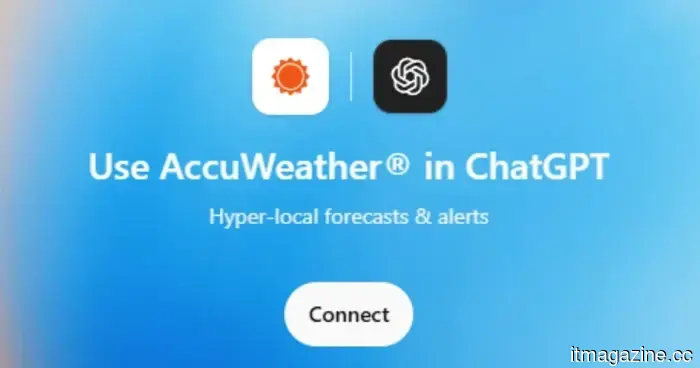 ChatGPT can now provide you with real-time weather information using AccuWeather.
ChatGPT now offers real-time weather assistance via a new AccuWeather app, enabling users to access forecasts, alerts, and live conditions directly in their chats.
ChatGPT can now provide you with real-time weather information using AccuWeather.
ChatGPT now offers real-time weather assistance via a new AccuWeather app, enabling users to access forecasts, alerts, and live conditions directly in their chats.
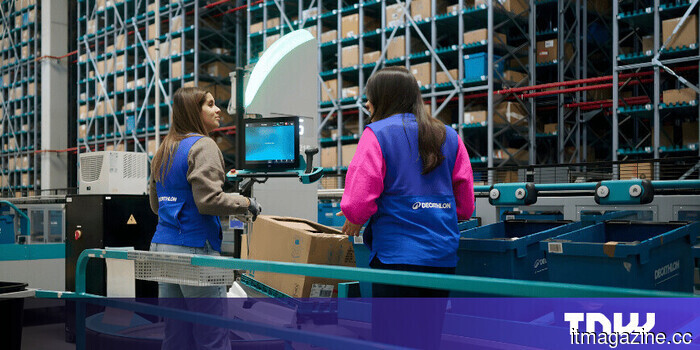 Decathlon increases warehouse productivity by two times using Exotec robots at seven locations in Europe | TNW
Decathlon has automated seven warehouses in Europe using Exotec's Skypod robots, which has resulted in a twofold increase in order output in Portugal and a 90% reduction in picker walking.
Decathlon increases warehouse productivity by two times using Exotec robots at seven locations in Europe | TNW
Decathlon has automated seven warehouses in Europe using Exotec's Skypod robots, which has resulted in a twofold increase in order output in Portugal and a 90% reduction in picker walking.
OpenAI Sora is no longer available. The artists continue their efforts.
OpenAI's AI video application claimed to revolutionize creative tasks. However, six months after the introduction of Sora 2, it struggled to retain users.