
Granola secures $125 million at a valuation of $1.5 billion to transform meetings into enterprise AI contexts | TNW
Granola, a London-based AI meeting application that records conversations without introducing a bot into the call, has successfully secured $125 million in a Series C funding round led by Danny Rimer from Index Ventures, with contributions from Mamoon Hamid of Kleiner Perkins. This funding round values the firm at $1.5 billion, representing a sixfold increase from its $250 million valuation less than a year prior and raising its total funding to $192 million.
Current investors, including Lightspeed Venture Partners, Spark Capital, and NFDG, the venture firm headed by Nat Friedman and Daniel Gross, also took part in this round. Rimer will assume a position on Granola’s board as an observer.
The surge in valuation is notable, even within the context of the current AI investment surge. In May 2025, Granola raised a $43 million Series B from NFDG at a $250 million valuation, following a $20 million Series A in October 2024, which had only 5,000 weekly users, and a $4.25 million seed round from Lightspeed and betaworks in May 2023. The rapid progression from seed funding to unicorn status in under three years is remarkably swift, though not entirely without similar instances in this market cycle.
What Granola actually offers is quite straightforward. The application operates on a user’s computer and locally records meeting audio instead of deploying a visible bot into the call. It transcribes discussions, creates structured notes, and enables those notes to be searchable across an organization. This method is significant as many professionals, especially in sales, legal, and executive roles, find meeting bots disruptive. Granola claims to capture equivalent information without the social discomfort.
Founded in 2023 by Chris Pedregal and Sam Stephenson, Granola has evolved beyond mere note-taking. Granola Chat allows users to inquire about their conversation history using Claude, GPT, or Gemini. Spaces facilitate teams to organize, share, and search contextual notes from meetings and channels. Additionally, the company introduced a Model Context Protocol server and two new APIs, one for personal use and another for enterprise-level operations, which enable users and administrators to integrate meeting context into external AI applications.
Pedregal is banking the company’s future on that last feature. As AI meeting notes become increasingly standardized, with competition from Otter.ai, Fireflies.ai, Read AI, and Quill, Granola argues that the true value lies not in the notes themselves but in unlocking the knowledge contained within conversations for access by other systems. The reasoning suggests that if an AI agent can extract context from all meetings a team has undertaken, it can enhance decision-making for future actions.
This funding is specifically targeted at expanding into the enterprise market. Granola lists customers like Vanta, Gusto, Thumbtack, Asana, Cursor, Lovable, Decagon, and Mistral AI, spanning sectors such as compliance, fintech, home services, project management, developer tools, and AI. The enterprise API comprises SSO, SCIM, and consent-based data management, fundamental infrastructure needed by large organizations before they adopt any tool that records employee discussions.
The competitive landscape is dense and rapidly evolving. Fireflies.ai has amassed over 16 million users and achieved a $1 billion valuation. Otter.ai has been operational since 2016 and enjoys substantial brand recognition. Glean and Mem.ai are tackling the same issue from the perspective of enterprise knowledge management. Furthermore, established players like Notion, Microsoft, and Google are integrating AI meeting features into their existing productivity products.
Granola's potential advantage lies in its early entry into the convergence of meeting intelligence and agentic AI. The MCP server, APIs, and LLM integrations position it as a context layer rather than a standalone application, which makes it a resource for other AI tools rather than a rival. The key question for the next two years will be whether this positioning can withstand competition from giants like Microsoft Copilot and Google Gemini at the enterprise level.
The valuation of $1.5 billion for a company valued at $250 million only ten months ago raises questions. Granola has yet to publicly disclose financial figures, user numbers, or retention rates. According to Market Research Future, the AI meeting assistant market is expected to grow from around $3.5 billion in 2025 to over $34 billion by 2035, indicating potential within the category to support several significant players. However, the disparity between market potential and actual revenue remains substantial across the sector.
Granola does possess a product-market fit within a specific niche: professionals seeking AI-enhanced meeting intelligence without the imposition of a visible bot. This niche has proven sizeable enough to attract Index Ventures and Kleiner Perkins, which typically do not chase early-stage hype. Whether this market will be ample enough to substantiate a $1.5 billion valuation will depend on the speed at which the enterprise product can convert pilot programs into contracts and how robust
Other articles
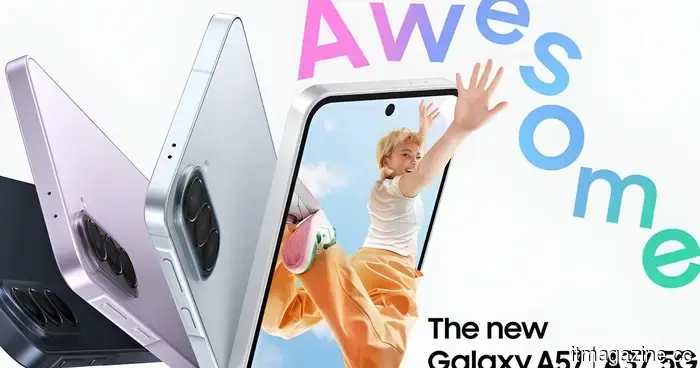 Samsung has introduced the Galaxy A57 and A37, featuring updated processors and enhanced cameras.
Samsung has officially unveiled the Galaxy A57 and A37, featuring new Exynos processors, enhanced night photography capabilities, and the well-known essentials of a mid-range device.
Samsung has introduced the Galaxy A57 and A37, featuring updated processors and enhanced cameras.
Samsung has officially unveiled the Galaxy A57 and A37, featuring new Exynos processors, enhanced night photography capabilities, and the well-known essentials of a mid-range device.
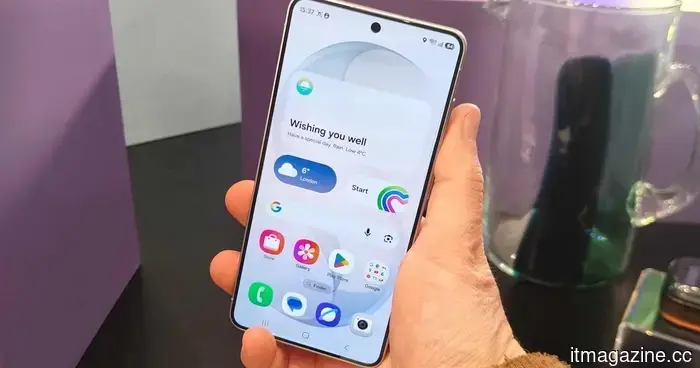 The Samsung Galaxy S26 Ultra is amazing, but it can be problematic when it comes time for repairs.
iFixit's teardown of the Galaxy S26 Ultra uncovered a mix of findings: a wonderfully straightforward battery replacement, a troublesome screen swap, and a replacement parts system that is so poor it's almost amusing.
The Samsung Galaxy S26 Ultra is amazing, but it can be problematic when it comes time for repairs.
iFixit's teardown of the Galaxy S26 Ultra uncovered a mix of findings: a wonderfully straightforward battery replacement, a troublesome screen swap, and a replacement parts system that is so poor it's almost amusing.
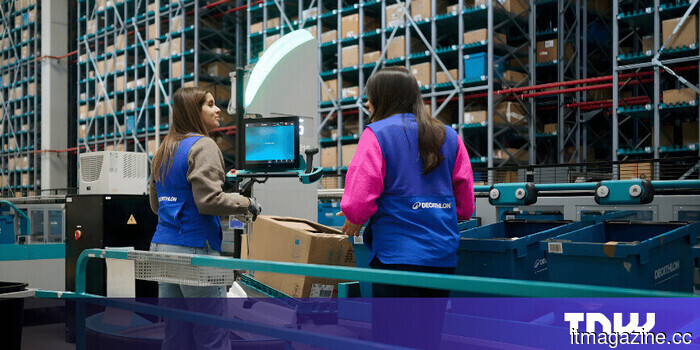 Decathlon increases warehouse productivity by two times with Exotec robots at seven locations in Europe | TNW
Decathlon has automated seven of its European warehouses using Exotec's Skypod robots, resulting in a doubling of order output in Portugal and a 90% reduction in the walking distance for pickers.
Decathlon increases warehouse productivity by two times with Exotec robots at seven locations in Europe | TNW
Decathlon has automated seven of its European warehouses using Exotec's Skypod robots, resulting in a doubling of order output in Portugal and a 90% reduction in the walking distance for pickers.
 OpenAI Sora is no longer available. The artists continue to be active.
OpenAI's AI video application was expected to revolutionize creative tasks. However, six months after the introduction of Sora 2, it struggled to retain users.
OpenAI Sora is no longer available. The artists continue to be active.
OpenAI's AI video application was expected to revolutionize creative tasks. However, six months after the introduction of Sora 2, it struggled to retain users.
 ChatGPT can now provide you with real-time weather information using AccuWeather.
ChatGPT now offers real-time weather assistance via a new AccuWeather app, enabling users to access forecasts, alerts, and live conditions directly in their chats.
ChatGPT can now provide you with real-time weather information using AccuWeather.
ChatGPT now offers real-time weather assistance via a new AccuWeather app, enabling users to access forecasts, alerts, and live conditions directly in their chats.
 Your finance team is still following up on invoices - here's the true expense.
Manual accounts payable costs between $15 and $40 for each invoice. BILL streamlines the entire process, from capturing to payment, for over 400,000 businesses. You can try it for free or opt for the complimentary Spend & Expense plan.
Your finance team is still following up on invoices - here's the true expense.
Manual accounts payable costs between $15 and $40 for each invoice. BILL streamlines the entire process, from capturing to payment, for over 400,000 businesses. You can try it for free or opt for the complimentary Spend & Expense plan.
Granola secures $125 million at a valuation of $1.5 billion to transform meetings into enterprise AI contexts | TNW
London-based AI meeting application Granola secured $125 million in Series C financing, achieving a $1.5 billion valuation, with Index Ventures and Kleiner Perkins as the lead investors.