

Meta cuts hundreds of jobs in Reality Labs, recruitment, and sales as part of its $135 billion investment in AI | TNW
Meta initiated layoffs affecting hundreds of employees on Wednesday across various departments, including Reality Labs, Facebook, recruiting, sales, and global operations, as reported by sources familiar with the situation and LinkedIn updates from impacted workers. These job cuts are part of an ongoing series of reductions that have intensified sharply in 2026, as the company reallocates resources toward artificial intelligence and away from areas that are no longer central to Mark Zuckerberg’s strategic vision.
A spokesperson from Meta confirmed the restructuring, stating that teams throughout the company routinely make adjustments to ensure they can meet their objectives, and that efforts are being made to provide alternative opportunities for those affected, whenever feasible.
The extent of the layoffs
As of the end of 2025, Meta's workforce totaled 78,865 people, according to its annual report. The latest layoffs, characterized by sources as impacting hundreds, represent only a small portion of this total. However, they do not stand alone.
Earlier this year, Meta eliminated around 1,500 jobs in its Reality Labs division, which is about 10 percent of that unit's workforce, and shut down three VR game studios: Twisted Pixel, Sanzaru Games, and Armature Studio. Additionally, in 2025, the company conducted performance-based terminations affecting roughly 3,600 employees, a move that Zuckerberg framed as raising performance management standards. In mid-March, Reuters reported that Meta's senior leaders were instructed to prepare workforce reduction plans for up to 20 percent, which could mean around 15,000 job losses if fully executed. Meta labeled that reporting as speculative.
The overall trend indicates a continuous downsizing. Since Zuckerberg designated 2023 as the "year of efficiency," which saw the elimination of over 21,000 positions in 2022 and 2023, the company has not truly ceased its cuts.
Where the investments are shifting
The layoffs are closely tied to Meta’s financial commitments to AI, which have escalated to levels that would have seemed unbelievable just two years ago. The company anticipates capital expenditures between $115 billion and $135 billion for 2026, almost double the $72 billion spent in 2025, with most of the investment going towards data centers, Nvidia GPUs, customized chips, and the necessary infrastructure for its Llama model ecosystem and Superintelligence Labs.
Total expenses for the company in 2026 are projected to be between $162 billion and $169 billion. Barclays analysts foresee a nearly 90 percent decline in free cash flow as a result. When Meta's stock rose nearly 3 percent following the news of potential 20 percent layoffs in mid-March, the market clearly signaled that investors prefer the spending and are willing to accept a reduced workforce to facilitate it.
Meanwhile, Reality Labs, which faced the most significant cuts in January, reported an operating loss of $19.2 billion for 2025, accumulating total losses of around $90 billion since the unit’s inception. Zuckerberg anticipates that 2026 will be the peak year for those losses, with gradual declines expected beginning in 2027 as the division shifts focus from VR headsets to smart glasses and wearable AI devices.
The broader industry context
Meta is not alone in these cuts. Over 45,000 tech jobs worldwide were lost in the first quarter of 2026, with AI being cited as a factor in at least one in five cases. Atlassian announced 1,600 job cuts in March, justifying them as necessary adaptations to the AI era. Amazon confirmed 16,000 corporate layoffs in late January, while Block eliminated 4,000 positions, with CEO Jack Dorsey explicitly referencing AI's expanding ability to perform tasks traditionally done by humans.
The trend is clear: companies are aggressively investing in AI infrastructure while scaling back the human workforce meant to complement or replace these systems. Whether the anticipated productivity gains will manifest as expected remains uncertain. Zuckerberg claims that productivity per engineer at Meta has increased by 30 percent since early 2025, thanks to AI coding tools, and that power users have experienced an 80 percent year-over-year improvement. If these claims hold true, they would signify a genuine transformation in how software firms operate. If not, then the layoffs might appear less as strategic realignment and more as cost-cutting framed in the context of transformation.
Looking ahead
The pressing question is whether the suggested 20 percent reduction plan will be fully realized. Meta has yet to confirm this. However, the sequence of layoffs—from performance-related terminations to the restructuring of Reality Labs to this week’s across-the-board cuts—indicates that the company may be implementing gradual reductions rather than enacting a singular, dramatic event.
For those impacted on Wednesday, the difference may be purely theoretical. For Meta, the expectation is that a streamlined company investing $135 billion annually in AI infrastructure will outperform the organization that had a workforce of 87,000 at its peak in 2022. The
Other articles
 The Samsung Galaxy S26 Ultra is amazing, but issues arise when it requires repair.
iFixit's teardown of the Galaxy S26 Ultra showed a combination of results: a surprisingly straightforward battery swap, a frustratingly difficult screen replacement, and a replacement parts system that is almost comically inadequate.
The Samsung Galaxy S26 Ultra is amazing, but issues arise when it requires repair.
iFixit's teardown of the Galaxy S26 Ultra showed a combination of results: a surprisingly straightforward battery swap, a frustratingly difficult screen replacement, and a replacement parts system that is almost comically inadequate.
 Granola secures $125 million with a valuation of $1.5 billion to transform meetings using enterprise AI technology | TNW
The London-based AI meeting application Granola secured $125 million in Series C funding, achieving a valuation of $1.5 billion. The funding round was led by Index Ventures and Kleiner Perkins.
Granola secures $125 million with a valuation of $1.5 billion to transform meetings using enterprise AI technology | TNW
The London-based AI meeting application Granola secured $125 million in Series C funding, achieving a valuation of $1.5 billion. The funding round was led by Index Ventures and Kleiner Perkins.
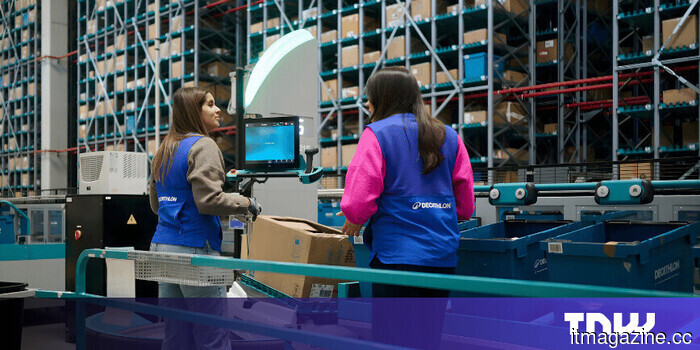 Decathlon increases warehouse productivity by twofold using Exotec robots at seven locations in Europe | TNW
Decathlon has automated seven warehouses in Europe using Exotec's Skypod robots, which has resulted in a doubling of order output in Portugal and a 90% reduction in the distance pickers need to walk.
Decathlon increases warehouse productivity by twofold using Exotec robots at seven locations in Europe | TNW
Decathlon has automated seven warehouses in Europe using Exotec's Skypod robots, which has resulted in a doubling of order output in Portugal and a 90% reduction in the distance pickers need to walk.
 ChatGPT can now provide you with real-time weather information using AccuWeather.
ChatGPT now offers real-time weather assistance via a new AccuWeather app, enabling users to access forecasts, alerts, and live conditions directly in their chats.
ChatGPT can now provide you with real-time weather information using AccuWeather.
ChatGPT now offers real-time weather assistance via a new AccuWeather app, enabling users to access forecasts, alerts, and live conditions directly in their chats.
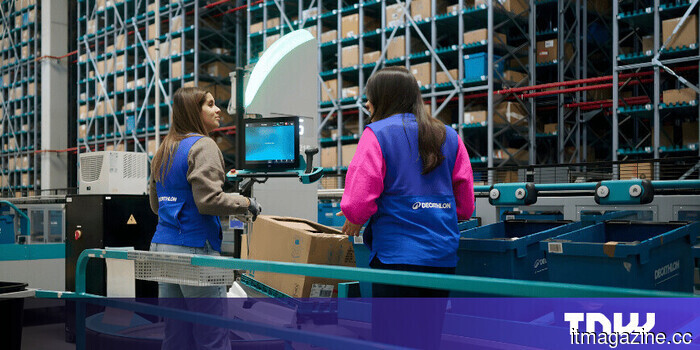 Decathlon increases warehouse productivity by two times using Exotec robots at seven locations in Europe | TNW
Decathlon has automated seven warehouses in Europe using Exotec's Skypod robots, which has resulted in a twofold increase in order output in Portugal and a 90% reduction in picker walking.
Decathlon increases warehouse productivity by two times using Exotec robots at seven locations in Europe | TNW
Decathlon has automated seven warehouses in Europe using Exotec's Skypod robots, which has resulted in a twofold increase in order output in Portugal and a 90% reduction in picker walking.
 OpenAI Sora is no longer available. The artists continue their efforts.
OpenAI's AI video application claimed to revolutionize creative tasks. However, six months after the introduction of Sora 2, it struggled to retain users.
OpenAI Sora is no longer available. The artists continue their efforts.
OpenAI's AI video application claimed to revolutionize creative tasks. However, six months after the introduction of Sora 2, it struggled to retain users.
Meta cuts hundreds of jobs in Reality Labs, recruitment, and sales as part of its $135 billion investment in AI | TNW
On Wednesday, Meta reduced its workforce by hundreds in areas including Reality Labs, Facebook, recruiting, and sales, marking the latest round of layoffs as investments in AI approach $135 billion.