
Pepper buys YC-supported Alima to introduce AI into food distribution catalogs | TNW
Pepper, a technology platform based in New York for independent food distributors, has acquired Alima, a startup supported by Y Combinator that developed ordering and procurement software for small food distributors in Latin America. The acquisition, announced on Tuesday without any financial details revealed, will incorporate Alima’s two co-founders into Pepper’s leadership and enhance the company's efforts in AI-driven product content and data infrastructure for an industry that still relies heavily on phone calls, faxes, and personal relationships.
Jorge Vizcayno, Alima’s CEO, will head Pepper’s product content platform and data infrastructure, leveraging AI to efficiently match and enrich product catalogs. Blanca Espinosa, co-founder and chief marketing officer of Alima, will lead customer implementation, utilizing AI tools to streamline the onboarding process, which has traditionally faced several hurdles in the software sales to food distributors.
While this acquisition may be small on its own, it illustrates the direction of vertical software for food distribution. Both Pepper and Alima were founded on the understanding that independent food distributors, who represent over two-thirds of food distribution in North America and handle more than $1.4 trillion in yearly sales, are significantly underserved by technology.
Established in 2021, Alima focused on addressing this issue from the Latin American perspective, where the technology gap is even more pronounced. According to their estimates, over 85% of B2B food suppliers and distributors in the region lack digital sales capabilities. Alima designed an ordering platform for small to mid-sized distributors with an initial emphasis on fresh produce procurement in Mexico. The company participated in Y Combinator's Winter 2022 cohort and secured $1.5 million in seed funding from Soma Capital, YC, The Dorm Room Fund, and angel investors.
Pepper, on the other hand, has developed a more extensive platform that encompasses ordering, sales and marketing, accounts receivable, and embedded payments for food distributors in the U.S. The company has raised $99 million over three funding rounds, including a $50 million Series C round in February led by Lead Edge Capital, with involvement from ICONIQ, Index Ventures, Greylock, Harmony Partners, and Interplay. Currently, it serves more than 500 distributors, accounting for around $30 billion in annual gross merchandise volume.
The rationale behind this deal focuses on product content, which includes the sprawling and fragmented catalogs food distributors must manage across thousands of SKUs from numerous suppliers. Product data in food distribution is often disorganized, with differences in item descriptions, packaging formats, and frequent price changes among suppliers. Pepper has been developing AI systems to automatically match and enrich this data, and Vizcayno’s experience in creating similar infrastructure for Latin American distributors adds both talent and technology to their market expansion strategy.
Espinosa’s role is equally significant. The customer implementation process, which involves transitioning a distributor onto a new technology platform, is a crucial stage where many vertical SaaS companies lose potential deals. Distributors frequently contend with limited technical personnel, legacy systems that are hard to integrate, and operations that cannot tolerate downtime during a migration. Pepper is banking on AI-assisted onboarding to reduce what has previously been a months-long process, and Espinosa’s experience in customer acquisition at Alima equips her to spearhead this initiative.
This marks Pepper’s second acquisition within seven months; in August 2025, it acquired Kimelo, which offered a distribution toolset that included a restaurant supply ordering application. The speed of these acquisitions indicates that Pepper is consolidating a fragmented market of smaller vertical tools into a unified platform, a strategy that has been seen in other industries but is still somewhat early in food distribution.
The larger picture reveals that technology in food distribution is still in its developmental stages despite the substantial market opportunity. Independent distributors form the foundation of the food supply chain, linking farms and manufacturers to the restaurants, grocery stores, and institutions that feed the public. Unfortunately, the industry's adoption of technology lags significantly behind that of sectors like logistics, retail, and financial services.
Pepper’s investors, which include Index Ventures and Greylock, demonstrate that considerable venture capital is entering this sector. The $50 million Series C funding in February assigned an undisclosed valuation to the company but positioned it as a leader in an undefined market space. The acquisition of Alima adds valuable Latin American expertise and a bilingual founding team to a company that may need to expand beyond the U.S. to validate its growth trajectory.
For Alima’s founders, the acquisition is perceived as a straightforward continuation of their journey. Vizcayno described it as the most genuine progression for Alima. Whether this reflects a strategic alignment or the reality that a $1.5 million seed-stage startup in a challenging Latin American market found a more effective route to impact within a better-funded platform is essentially the same sentiment expressed in two different ways.
Other articles
 Meta cuts hundreds of jobs in Reality Labs, recruiting, and sales while investing $135 billion in AI | TNW
On Wednesday, Meta laid off hundreds of employees in Reality Labs, Facebook, recruiting, and sales, continuing a trend of ongoing job cuts as AI capital expenditures approach $135 billion.
Meta cuts hundreds of jobs in Reality Labs, recruiting, and sales while investing $135 billion in AI | TNW
On Wednesday, Meta laid off hundreds of employees in Reality Labs, Facebook, recruiting, and sales, continuing a trend of ongoing job cuts as AI capital expenditures approach $135 billion.
 OpenAI Sora has disappeared. The artists are continuing their work.
OpenAI's AI video application aimed to revolutionize creative tasks. However, six months after the release of Sora 2, it struggled to retain users.
OpenAI Sora has disappeared. The artists are continuing their work.
OpenAI's AI video application aimed to revolutionize creative tasks. However, six months after the release of Sora 2, it struggled to retain users.
 The Samsung Galaxy S26 Ultra is amazing, but issues arise when it needs repairs.
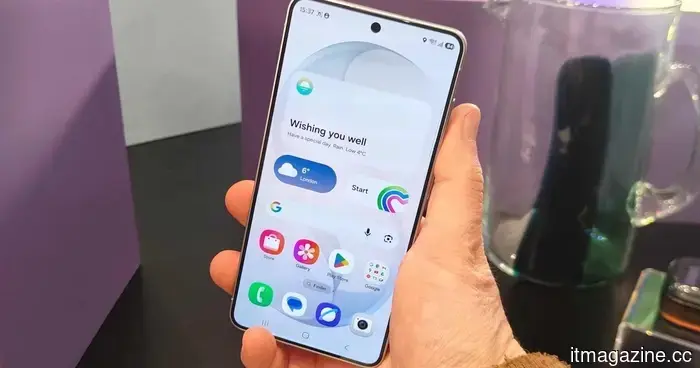
iFixit's teardown of the Galaxy S26 Ultra showed a mixed outcome: a surprisingly simple battery replacement, a frustratingly difficult screen replacement, and a replacement parts system that is nearly laughable.
The Samsung Galaxy S26 Ultra is amazing, but issues arise when it needs repairs.
iFixit's teardown of the Galaxy S26 Ultra showed a mixed outcome: a surprisingly simple battery replacement, a frustratingly difficult screen replacement, and a replacement parts system that is nearly laughable.
 Samsung has introduced the Galaxy A57 and A37, featuring updated processors and enhanced cameras.
Samsung has officially unveiled the Galaxy A57 and A37, featuring new Exynos processors, enhanced night photography capabilities, and the well-known essentials of a mid-range device.
Samsung has introduced the Galaxy A57 and A37, featuring updated processors and enhanced cameras.
Samsung has officially unveiled the Galaxy A57 and A37, featuring new Exynos processors, enhanced night photography capabilities, and the well-known essentials of a mid-range device.
 Granola secures $125 million with a valuation of $1.5 billion to transform meetings using enterprise AI technology | TNW
The London-based AI meeting application Granola secured $125 million in Series C funding, achieving a valuation of $1.5 billion. The funding round was led by Index Ventures and Kleiner Perkins.
Granola secures $125 million with a valuation of $1.5 billion to transform meetings using enterprise AI technology | TNW
The London-based AI meeting application Granola secured $125 million in Series C funding, achieving a valuation of $1.5 billion. The funding round was led by Index Ventures and Kleiner Perkins.
 This might be our initial glimpse of Samsung's forthcoming Galaxy Z Fold 8 Wide.
Leaked CAD images of the Galaxy Z Fold 8 Wide show a foldable device that is wider and shorter, which Samsung is developing to compete directly with Apple's inaugural foldable iPhone.
This might be our initial glimpse of Samsung's forthcoming Galaxy Z Fold 8 Wide.
Leaked CAD images of the Galaxy Z Fold 8 Wide show a foldable device that is wider and shorter, which Samsung is developing to compete directly with Apple's inaugural foldable iPhone.
Pepper buys YC-supported Alima to introduce AI into food distribution catalogs | TNW
Pepper has acquired Alima, a company supported by Y Combinator, incorporating AI-driven product content and expertise in the Latin American market into its food distribution platform, which has received $99M in funding.