

Meta reduces its workforce by hundreds in Reality Labs, recruiting, and sales as it invests $135 billion in AI | TNW
Meta started laying off hundreds of employees on Wednesday across various divisions, including Reality Labs, Facebook, recruiting, sales, and global operations, according to sources familiar with the situation and LinkedIn posts from those impacted. These layoffs are part of a continuous series of workforce reductions that have intensified sharply in 2026, as the company reallocates resources towards artificial intelligence and moves away from divisions that no longer align with Mark Zuckerberg’s strategic focus.
A spokesperson for Meta confirmed the restructuring in a statement, noting that teams throughout the company regularly implement changes to ensure they can meet their objectives, and that the company is seeking alternative opportunities for the affected employees wherever possible.
The extent of the layoffs
According to its annual report, Meta had 78,865 employees at the end of 2025. The layoffs on Wednesday, described by sources to involve hundreds of employees, constitute a small percentage of that total. However, they are not isolated incidents.
In January, Meta eliminated about 1,500 positions within its Reality Labs division, which was approximately 10 percent of that unit's workforce, and closed three VR game studios: Twisted Pixel, Sanzaru Games, and Armature Studio. Earlier in 2025, the company carried out performance-based terminations affecting around 3,600 employees, which Zuckerberg presented as an effort to enhance performance management. Moreover, in mid-March, Reuters reported that Meta's senior executives were asked to prepare plans for possible workforce reductions of up to 20 percent, a figure that could represent approximately 15,000 positions if fully executed. Meta referred to that report as speculative.
The broader context reveals a pattern of ongoing contraction. Since Zuckerberg designated 2023 as the “year of efficiency,” a program that resulted in over 21,000 role eliminations in 2022 and 2023, the company has consistently continued with cuts.
Where the funds are being redirected
The layoffs are closely linked to Meta's increased commitments to spending on AI, which have grown to proportions that would have seemed unbelievable just two years earlier. The company has projected capital expenditures of between $115 billion and $135 billion for 2026, nearly doubling the $72 billion spent in 2025, with most of the funds directed towards data centers, Nvidia GPUs, custom chips, and the infrastructure that supports its Llama model ecosystem and Superintelligence Labs.
Total expenses for the company in 2026 are estimated to be between $162 billion and $169 billion. Analysts at Barclays anticipate a nearly 90 percent decline in free cash flow as a result. When Meta’s stock rose by almost 3 percent following news of potential 20 percent layoffs in mid-March, the market's message was clear: investors want to see the spending continue, and they want the workforce adjusted accordingly.
At the same time, Reality Labs, which faced the most significant cuts in January, recorded an operating loss of $19.2 billion in 2025, accumulating losses of about $90 billion since its inception. Zuckerberg has stated he expects 2026 to be the peak year for these losses, with gradual improvements starting in 2027 as the division shifts its focus from VR headsets to smart glasses and wearable AI devices.
Industry-wide trends
Meta is not alone in making these cuts. Over 45,000 tech jobs have been eliminated worldwide in the first quarter of 2026, with AI being noted as the driving force in at least one in five cases. Atlassian announced 1,600 job cuts in March, framing these reductions as a necessary adaptation to the AI era. Amazon confirmed 16,000 job losses in its corporate sector at the end of January. Block cut 4,000 positions, with CEO Jack Dorsey specifically citing AI’s increasing capability to perform tasks previously done by humans.
The trend is consistent: companies are investing heavily in AI infrastructure while concurrently reducing the human workforce that these systems are intended to augment or replace. Whether productivity gains will materialize at the expected scale remains uncertain. Zuckerberg has claimed that productivity per engineer at Meta has increased by 30 percent since early 2025, driven by AI coding tools, and that power users have seen an 80 percent increase year-over-year. Should these figures hold, they would indicate a genuine structural shift in how software firms operate. Conversely, if they do not, the layoffs will appear less as a strategic repositioning and more as cost-cutting masked as transformation.
What lies ahead
The pressing question is whether the proposed 20 percent workforce reduction will be fully realized. Meta has not confirmed this. However, the sequence of cuts, from performance terminations to restructuring in Reality Labs to this week’s layoffs across divisions, suggests that the company is implementing a gradual reduction rather than a singular drastic event.
For the employees impacted on Wednesday, this distinction is largely irrelevant. For Meta, the strategy hinges on whether a leaner company investing $135 billion annually in AI infrastructure will outperform the
Other articles
 OpenAI Sora is no longer available. The artists continue to be active.
OpenAI's AI video application was expected to revolutionize creative tasks. However, six months after the introduction of Sora 2, it struggled to retain users.
OpenAI Sora is no longer available. The artists continue to be active.
OpenAI's AI video application was expected to revolutionize creative tasks. However, six months after the introduction of Sora 2, it struggled to retain users.
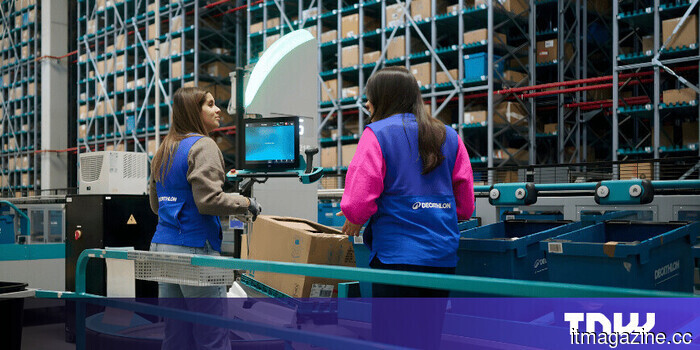 Decathlon increases warehouse productivity by two times using Exotec robots at seven locations in Europe | TNW
Decathlon has automated seven warehouses in Europe using Exotec's Skypod robots, which has resulted in a twofold increase in order output in Portugal and a 90% reduction in picker walking.
Decathlon increases warehouse productivity by two times using Exotec robots at seven locations in Europe | TNW
Decathlon has automated seven warehouses in Europe using Exotec's Skypod robots, which has resulted in a twofold increase in order output in Portugal and a 90% reduction in picker walking.
 The Samsung Galaxy S26 Ultra is amazing, but issues arise when it requires repair.
iFixit's teardown of the Galaxy S26 Ultra showed a combination of results: a surprisingly straightforward battery swap, a frustratingly difficult screen replacement, and a replacement parts system that is almost comically inadequate.
The Samsung Galaxy S26 Ultra is amazing, but issues arise when it requires repair.
iFixit's teardown of the Galaxy S26 Ultra showed a combination of results: a surprisingly straightforward battery swap, a frustratingly difficult screen replacement, and a replacement parts system that is almost comically inadequate.
 ChatGPT can now provide real-time weather information using AccuWeather.
ChatGPT now offers real-time weather assistance via a new AccuWeather app, allowing users to view forecasts, alerts, and live weather updates right within their conversations.
ChatGPT can now provide real-time weather information using AccuWeather.
ChatGPT now offers real-time weather assistance via a new AccuWeather app, allowing users to view forecasts, alerts, and live weather updates right within their conversations.
 Your finance team is still pursuing outstanding invoices - here’s the actual expense.
Manual accounts payable costs between $15 and $40 for each invoice. BILL automates the entire process, from capture to payment, for over 400,000 businesses. Experience it for free or sign up for the complimentary Spend & Expense plan.
Your finance team is still pursuing outstanding invoices - here’s the actual expense.
Manual accounts payable costs between $15 and $40 for each invoice. BILL automates the entire process, from capture to payment, for over 400,000 businesses. Experience it for free or sign up for the complimentary Spend & Expense plan.
 OpenAI Sora has disappeared. The artists are continuing their work.
OpenAI's AI video application aimed to revolutionize creative tasks. However, six months after the release of Sora 2, it struggled to retain users.
OpenAI Sora has disappeared. The artists are continuing their work.
OpenAI's AI video application aimed to revolutionize creative tasks. However, six months after the release of Sora 2, it struggled to retain users.
Meta reduces its workforce by hundreds in Reality Labs, recruiting, and sales as it invests $135 billion in AI | TNW
On Wednesday, Meta eliminated hundreds of positions within Reality Labs, Facebook, recruiting, and sales, marking the most recent in a ongoing series of layoffs as AI capital expenditure approaches $135 billion.