

Studies indicate that AI-generated summaries enhance learning, even if they may influence your viewpoints.
Yale researchers have discovered that AI-generated summaries are more effective teachers than those created by humans, though there is a downside.
Today, many of us rely on AI chatbots and search engines for information. Even Google presents an AI summary at the top of its search results before directing us to the original sources.
A recent study from Yale indicates that while AI-produced responses are quick, convenient, and straightforward, they can also sway our opinions. Daniel Karell, an assistant professor of sociology at Yale, and his team aimed to determine whether AI-written summaries of historical events improved learning compared to human-written summaries.
Participants were shown brief summaries of historical events, with some authored by humans and others by AI tools like ChatGPT, and were then quizzed on their recollections.
The findings showed that individuals who read AI-written summaries consistently performed better on the quiz.
Does this mean AI is superior to humans in sharing information?
Karell attributes this to AI's method of presenting information, stating, "It's as if the model took Wikipedia and made it more readable." The AI-generated summaries were clearer, smoother, and easier to remember, even when participants were aware that they were reading AI content.
Interestingly, even when informed that the summaries were produced by AI, participants still learned more from them than from human-created versions.
Should this raise concerns?
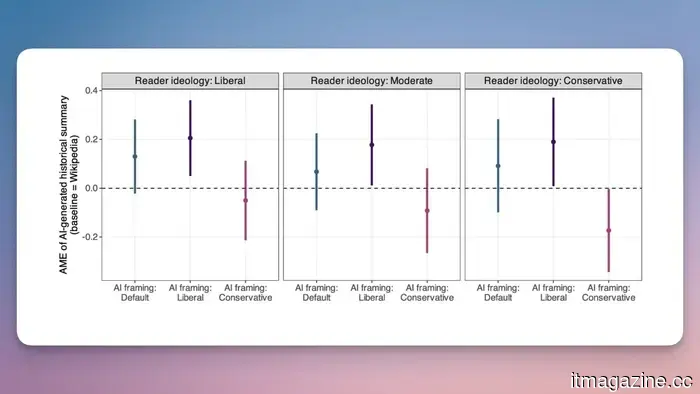
This is where things become intriguing. In a follow-up paper published in PNAS Nexus, the same researchers found that AI summaries not only facilitated better learning but also impacted political views.
When AI summaries had a liberal bias, readers adopted more liberal perspectives, while a conservative bias had the reverse effect. The researchers believe this is due to the way AI does not merely present facts but also frames them in a more logical and persuasive manner.
AI tools are increasingly becoming the primary means through which people learn about history and current events, which isn't inherently negative. However, it is important to recognize that the tools shaping our learning may also subtly shape our thoughts.
Moreover, AI hallucinations remain a significant problem, and AI-generated summaries can mislead users even more. A study by researchers at USC’s Information Sciences Institute found that AI systems can carry out propaganda campaigns with minimal human involvement.
Considering that AI might be more persuasive than humans, it is concerning to think about how these tools could manipulate human thought and reasoning, potentially leading to a more divided world.






Other articles
 American car buyers desire what is currently out of their reach: Chinese electric vehicles.
Increasing electric vehicle prices in the US are leading buyers to consider Chinese options, despite tariffs and policy obstacles that make them difficult to access.
American car buyers desire what is currently out of their reach: Chinese electric vehicles.
Increasing electric vehicle prices in the US are leading buyers to consider Chinese options, despite tariffs and policy obstacles that make them difficult to access.
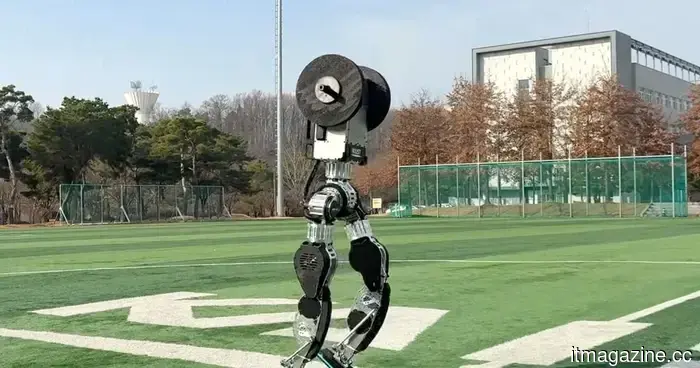 Observe this moonwalking humanoid robot showcase its remarkable agility that mimics lifelike movements.
A recently released video (above) from South Korea showcases the field testing and interaction features of KAIST Humanoid v0.7, created at the Korea Advanced Institute of Science and Technology (KAIST). This remarkable humanoid robot was designed at KAIST’s Dynamic Robot Control & Design Laboratory (DRCD) and utilizes actuators and technology developed internally. [...]
Observe this moonwalking humanoid robot showcase its remarkable agility that mimics lifelike movements.
A recently released video (above) from South Korea showcases the field testing and interaction features of KAIST Humanoid v0.7, created at the Korea Advanced Institute of Science and Technology (KAIST). This remarkable humanoid robot was designed at KAIST’s Dynamic Robot Control & Design Laboratory (DRCD) and utilizes actuators and technology developed internally. [...]
 Elon Musk is constructing a TeraFab chip manufacturing facility, and it’s unlike anything else on the planet.
Elon Musk has revealed TeraFab, a chip manufacturing facility in Austin established as a partnership between Tesla and SpaceX, aimed at producing chips to power its vehicles, humanoid robots, and spacecraft.
Elon Musk is constructing a TeraFab chip manufacturing facility, and it’s unlike anything else on the planet.
Elon Musk has revealed TeraFab, a chip manufacturing facility in Austin established as a partnership between Tesla and SpaceX, aimed at producing chips to power its vehicles, humanoid robots, and spacecraft.
 Studies indicate that AI-generated summaries enhance learning, even if they have the potential to shift your views.
A study conducted by Yale revealed that individuals understood history more effectively from summaries created by AI compared to those written by humans. However, there was a notable drawback: the content generated by AI subtly altered their political views.
Studies indicate that AI-generated summaries enhance learning, even if they have the potential to shift your views.
A study conducted by Yale revealed that individuals understood history more effectively from summaries created by AI compared to those written by humans. However, there was a notable drawback: the content generated by AI subtly altered their political views.
 Elon Musk is constructing a TeraFab chip factory, and it is unlike anything else on the planet.
Elon Musk has unveiled TeraFab, a chip manufacturing facility in Austin created as a collaboration between Tesla and SpaceX, aimed at producing chips for energizing its vehicles, humanoid robots, and spacecraft.
Elon Musk is constructing a TeraFab chip factory, and it is unlike anything else on the planet.
Elon Musk has unveiled TeraFab, a chip manufacturing facility in Austin created as a collaboration between Tesla and SpaceX, aimed at producing chips for energizing its vehicles, humanoid robots, and spacecraft.
 AI frame generation is arriving on the PS5 Pro.
Sony aims to implement AI-driven frame generation in upcoming updates for PlayStation.
AI frame generation is arriving on the PS5 Pro.
Sony aims to implement AI-driven frame generation in upcoming updates for PlayStation.
Studies indicate that AI-generated summaries enhance learning, even if they may influence your viewpoints.
A study conducted by Yale revealed that individuals gained a better understanding of history from summaries generated by AI compared to those written by humans. However, the twist was that AI-generated content subtly influenced their political views as well.