
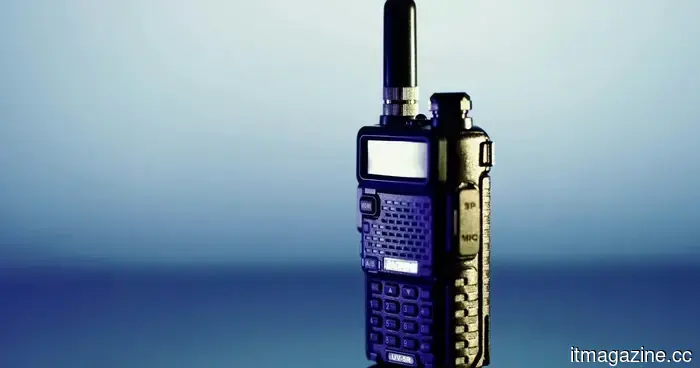
Researchers have shown that wireless communication can occur underground, even when passing through solid rock.
Korean researchers have successfully developed underground wireless communication, which has the potential to save lives in dire situations.
For many years, being underground meant losing connection and risking safety. At the Electronics and Telecommunications Research Institute (ETRI) in Korea, researchers have transformed this reality with a groundbreaking innovation that, while seemingly straightforward, is quite extraordinary.
This new technology enables voice communication up to 100 meters below ground, wirelessly. It is the first of its kind in the world, and its importance cannot be underestimated.
How does it work?
The communication method utilizes magnetic field underground communication source technology, marking the world’s first successful application of this approach. Rather than depending on conventional radio waves, which are quickly absorbed by rock and soil, ETRI’s system employs low-frequency magnetic fields.
The configuration includes a transmitting antenna that is 1 meter in diameter located on the surface and a small, handheld receiving sensor underground, functioning at approximately 15 kHz. This setup provides sufficient bandwidth for a data rate of 2 to 4 kbps, which is adequate for clear two-way voice communication.
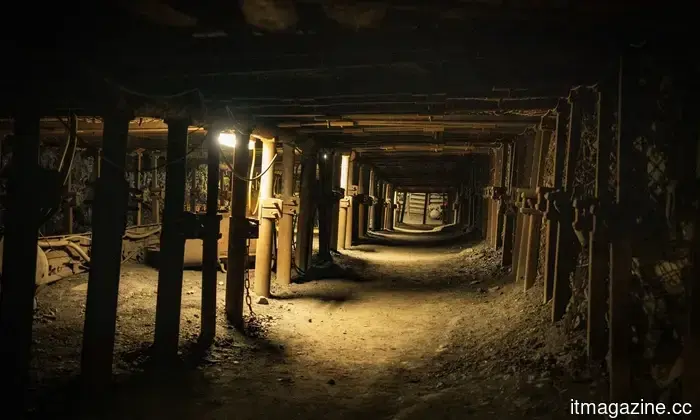
The research team successfully tested bidirectional communication between the surface and the fifth underground level of a limestone mine, an area where existing wireless technologies have failed to operate.
Previous studies had only achieved a communication range of a few tens of meters, but ETRI managed to extend this to 100 meters, with plans to push the technology even further.
Why is this significant?
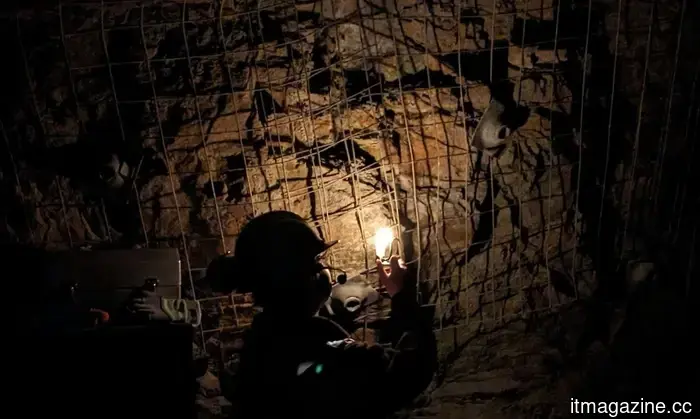
Those who have witnessed news reports of mine or tunnel collapses understand the feeling of helplessness experienced by rescue teams when they can no longer communicate with trapped workers. This technology could fundamentally change this dynamic. Rescue teams could maintain real-time communication with survivors buried underground, significantly enhancing rescue efforts.
This technology can be likened to the satellite feature included in Apple’s latest iPhones, which assists individuals stranded without network access in getting in touch with rescue services. Similarly, this innovation can help those trapped below the surface.
Its potential applications extend far beyond mining and rescue missions. It could be utilized in underground utility tunnels, gas and oil pipelines, and military bunker operations. ETRI is also working on integrating the system with personal devices like smartphones, making it even more accessible in real-world rescue scenarios.
The research has been published in the IEEE IoT Journal, and patents have been filed for the crucial components.
Elon Musk is establishing a TeraFab chip factory that is unlike anything the world has seen.
Currently, the global chip supply meets only 2% of Musk's requirements. Therefore, he has decided to construct his own factory. Musk revealed that every chip available to him today only satisfies about 2% of his companies' needs. Rather than waiting for the global supply to catch up, he announced TeraFab on Saturday night, a chip factory located in Austin resulting from a collaboration between Tesla and SpaceX.
The announcement was made via a livestream from the historic Seaholm Power Plant in downtown Austin. “We either build the TeraFab, or we don’t have the chips, and we need the chips, so we’re going to build the TeraFab,” Musk explained. The facility will be situated on the Tesla campus in eastern Travis County.
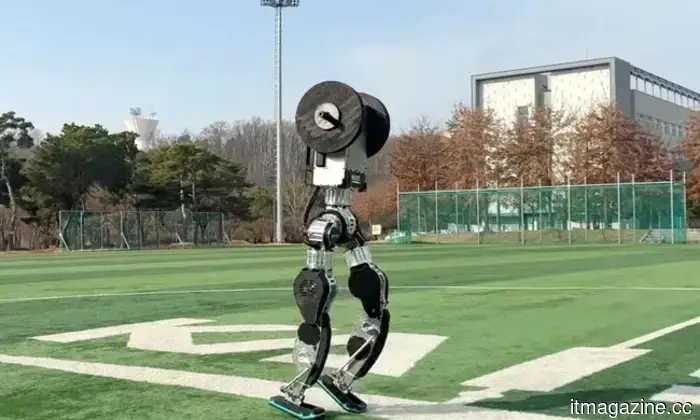
In South Korea, KAIST has released a video showcasing a humanoid robot demonstrating impressive human-like agility.
A new video (above) highlights the field tests and interaction abilities of KAIST Humanoid v0.7, created by the Korea Advanced Institute of Science and Technology (KAIST). This remarkable humanoid robot was developed in KAIST’s Dynamic Robot Control & Design Laboratory (DRCD) and incorporates actuators and technology innovated in-house.
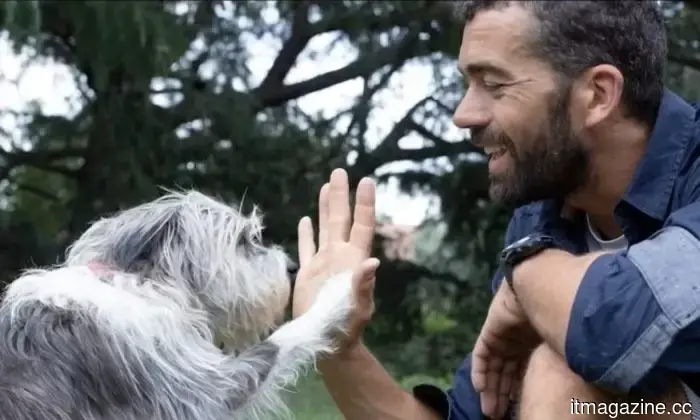
AI is proving to be a valuable tool for helping distressed individuals locate lost pets amidst a landscape filled with challenges.
While AI often gets bad press due to deepfakes, misinformation, and broader frustrations, there is a heartening aspect to its application. It is being used to assist people in finding their missing pets.

Other articles
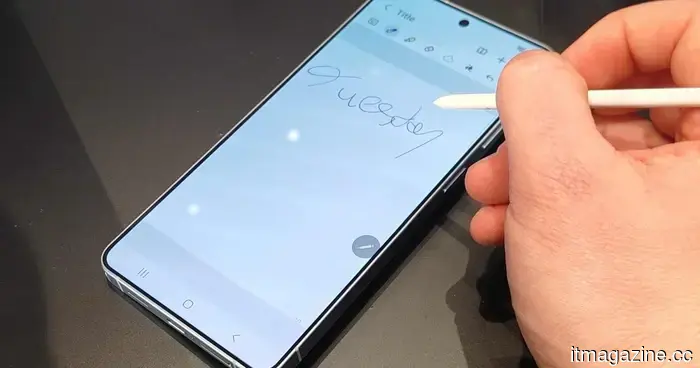 The Galaxy S27 Ultra might not see significant improvements to the S Pen, even with Samsung's continued efforts.
Samsung is said to be developing its next-generation S Pen technology, but a recent report indicates it might not be included with the Galaxy S27 Ultra.
The Galaxy S27 Ultra might not see significant improvements to the S Pen, even with Samsung's continued efforts.
Samsung is said to be developing its next-generation S Pen technology, but a recent report indicates it might not be included with the Galaxy S27 Ultra.
 Laifen Spring Sale 2026: Enhance Your Grooming Routine with Innovative Technology and Significant Savings
Laifen is launching its Spring Sale 2026, offering enticing discounts on its personal care products, making it an ideal opportunity to enhance your daily routine. The event will take place from March 21 to March 31, 2026, featuring price reductions of up to 25%, as well as extra savings on Amazon with special coupon codes. [...]
Laifen Spring Sale 2026: Enhance Your Grooming Routine with Innovative Technology and Significant Savings
Laifen is launching its Spring Sale 2026, offering enticing discounts on its personal care products, making it an ideal opportunity to enhance your daily routine. The event will take place from March 21 to March 31, 2026, featuring price reductions of up to 25%, as well as extra savings on Amazon with special coupon codes. [...]
 JAAQ secures $17 million to incorporate clinically approved mental health content.
JAAQ has secured $17 million to expand its clinically supervised mental health platform into the US, integrating video content within the digital resources offered to employers.
JAAQ secures $17 million to incorporate clinically approved mental health content.
JAAQ has secured $17 million to expand its clinically supervised mental health platform into the US, integrating video content within the digital resources offered to employers.
 IRONSCALES introduces AI email agents and threat intelligence at RSAC.
IRONSCALES introduces three AI email security agents and a new series on threat intelligence at RSAC 2026, focusing on the increase in AI-driven phishing attacks.
IRONSCALES introduces AI email agents and threat intelligence at RSAC.
IRONSCALES introduces three AI email security agents and a new series on threat intelligence at RSAC 2026, focusing on the increase in AI-driven phishing attacks.
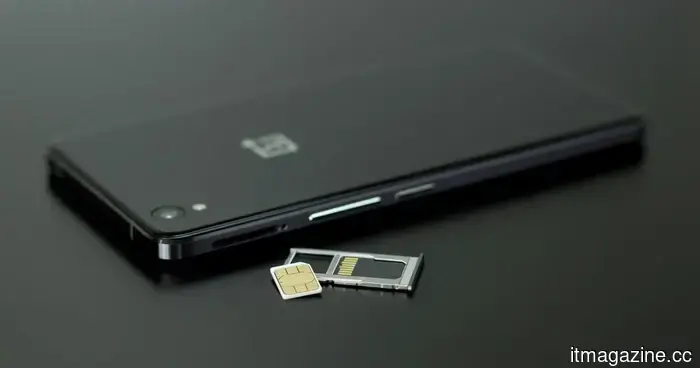 The memory crisis could lead to the return of expandable storage on smartphones.
With the increase in RAM and storage prices, smartphone manufacturers might consider hybrid storage options such as microSD cards to manage expenses.
The memory crisis could lead to the return of expandable storage on smartphones.
With the increase in RAM and storage prices, smartphone manufacturers might consider hybrid storage options such as microSD cards to manage expenses.
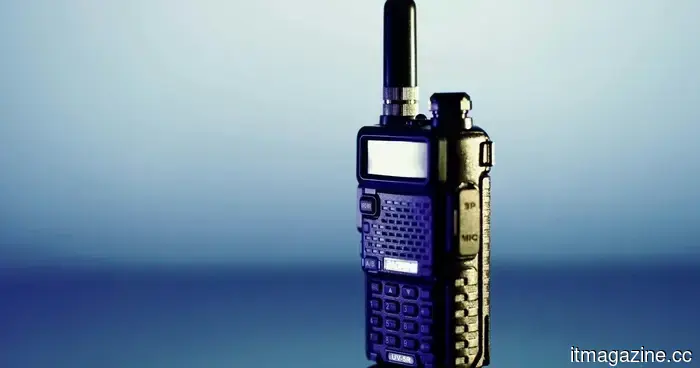 Researchers showcase the feasibility of wireless communication underground, capable of penetrating solid bedrock.
Korean scientists have successfully sent voice signals 100 meters underground via magnetic fields, marking a world first that has the potential to revolutionize rescue operations and communication in subterranean environments.
Researchers showcase the feasibility of wireless communication underground, capable of penetrating solid bedrock.
Korean scientists have successfully sent voice signals 100 meters underground via magnetic fields, marking a world first that has the potential to revolutionize rescue operations and communication in subterranean environments.
Researchers have shown that wireless communication can occur underground, even when passing through solid rock.
Korean researchers achieved the successful transmission of voice signals 100 meters underground through the use of magnetic fields, marking a global first that has the potential to revolutionize rescue operations and communication in subterranean environments.