
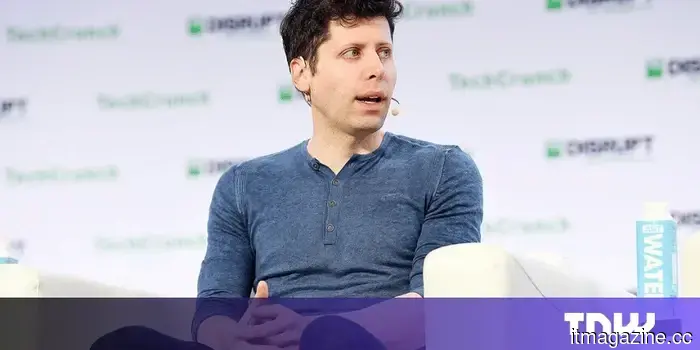
OpenAI is in discussions to purchase fusion energy from Helion.
Axios has reported that OpenAI may secure 5 gigawatts of electricity from Helion Energy by 2030, with the potential to expand to 50 gigawatts by 2035. Sam Altman has stepped down from his role as Helion’s board chair and has recused himself from the negotiation talks, similar to actions he took with the nuclear startup Oklo last year.
OpenAI is currently in advanced discussions to acquire electricity from Helion Energy, the nuclear fusion startup where Altman is the largest individual investor, according to an Axios report released on Monday, which cited a source familiar with the situation.
As part of the ongoing negotiations, OpenAI is expected to obtain 5 gigawatts of power by 2030, rising to 50 gigawatts by 2035, with an initial guarantee covering 12.5% of Helion’s output.
To put these figures into context, Helion currently has commercial commitments totaling 50 megawatts, established with Microsoft in 2023, marking the world's first commercial fusion power purchase agreement. Additionally, there is a 500-megawatt plant in development with steel producer Nucor, set for the 2030s.
This prospective OpenAI deal would represent a significant leap into gigawatt capacity. Helion has indicated that each of its reactors will produce about 50 megawatts of electricity, implying that reaching the 5 gigawatt target would necessitate around 100 reactors by 2030. Achieving the 50 gigawatt target by 2035 would require a substantially higher number of reactors.
According to Axios, these negotiations are still at an early structural stage. The framework includes several unmet conditions, including selecting a site for Helion’s power production. OpenAI has declined to comment.
The conflict-of-interest aspect is another crucial element of the situation. Altman led Helion’s $500 million Series E fundraising round in November 2021 and has served as board chair since 2015. He has a stake in the company, although the exact amount is undisclosed; various reports have estimated it to be around $375 million.
As per the Axios source, Altman has entirely stepped down from Helion's board and recused himself from the OpenAI negotiations. This mirrors a previous occurrence: in April 2025, he stepped away as chair of Oklo to "avoid conflict of interest" and enable OpenAI to explore energy agreements with that firm.
The issue of governance is not new. It was raised as a potential concern when Microsoft, a significant investor and partner of OpenAI, established its own Helion power purchase agreement in 2023. At that time, Altman was involved on both sides of a commercial relationship that could personally benefit him.
Bret Taylor, OpenAI's chairman, stated then that Altman had been transparent about his investments. His resignation from the board prior to the OpenAI deal negotiations indicates a more formal approach to the issue this time.
Founded in 2013 in Everett, Washington, Helion was established by David Kirtley, who serves as CEO, along with John Slough, Chris Pihl, and George Votroubek. The company has raised over $1 billion in total funding, including a $425 million Series F round that closed in January 2025, which valued the company at $5.425 billion.
Investors in the Series F round included Lightspeed Venture Partners, SoftBank Vision Fund 2, and a university endowment alongside existing investors. In February 2026, the company achieved a plasma temperature of 150 million degrees Celsius, surpassing its previous record of 100 million degrees reached in 2021.
Helion's methodology varies from that of most fusion startups; instead of using heat from fusion reactions to operate a steam turbine, it utilizes magnets to convert energy directly into electricity, a design that the company claims is more efficient and involves fewer moving parts.
Helion employs deuterium and helium-3 as fuel, stating that the process generates no long-lived radioactive waste. Commonwealth Fusion Systems, supported by Google among others, is pursuing a competing tokamak-based strategy; Google has a 200-megawatt power purchase agreement with CFS.
Whether the discussions with OpenAI lead to a formal agreement will hinge on numerous conditions, particularly Helion achieving the net electricity production milestone, which has yet to be demonstrated.
Other articles
 The Munich-based startup Interloom has secured $16.5 million in funding.
Munich-based startup Interloom has secured $16.5 million in a round led by DN Capital, aimed at developing a system that continuously tracks how businesses make operational decisions.
The Munich-based startup Interloom has secured $16.5 million in funding.
Munich-based startup Interloom has secured $16.5 million in a round led by DN Capital, aimed at developing a system that continuously tracks how businesses make operational decisions.
 A future without passwords is still several years away.
Despite the push for passwordless solutions, 76% of organizations still depend on passwords. The true cybersecurity challenge of 2026 will be ensuring the secure management of credentials.
A future without passwords is still several years away.
Despite the push for passwordless solutions, 76% of organizations still depend on passwords. The true cybersecurity challenge of 2026 will be ensuring the secure management of credentials.
 The Munich-based startup Interloom secured $16.5 million in funding.
Munich-based startup Interloom has secured $16.5 million in funding, led by DN Capital, to develop a system that continuously updates how businesses make operational decisions.
The Munich-based startup Interloom secured $16.5 million in funding.
Munich-based startup Interloom has secured $16.5 million in funding, led by DN Capital, to develop a system that continuously updates how businesses make operational decisions.
 IRONSCALES introduces AI email agents and threat intelligence at RSAC.
IRONSCALES introduces three AI email security agents and a new series on threat intelligence at RSAC 2026, focusing on the increase in AI-driven phishing attacks.
IRONSCALES introduces AI email agents and threat intelligence at RSAC.
IRONSCALES introduces three AI email security agents and a new series on threat intelligence at RSAC 2026, focusing on the increase in AI-driven phishing attacks.
 Human therapists staged a strike to protest against being replaced by AI counselors.
Are AI chatbots on the verge of taking the place of your therapist? This concern led to a strike by 2,400 mental health providers from Kaiser Permanente.
Human therapists staged a strike to protest against being replaced by AI counselors.
Are AI chatbots on the verge of taking the place of your therapist? This concern led to a strike by 2,400 mental health providers from Kaiser Permanente.
 Idomoo introduces Strata – the inaugural AI foundation model designed for layered video.
Idomoo has introduced Strata, a foundational model aimed at producing layered, editable videos, addressing the primary limitation of AI in video generation.
Idomoo introduces Strata – the inaugural AI foundation model designed for layered video.
Idomoo has introduced Strata, a foundational model aimed at producing layered, editable videos, addressing the primary limitation of AI in video generation.
OpenAI is in discussions to purchase fusion energy from Helion.
OpenAI is currently in discussions to acquire fusion energy from Helion. Sam Altman has resigned from Helion’s board prior to the negotiations.