
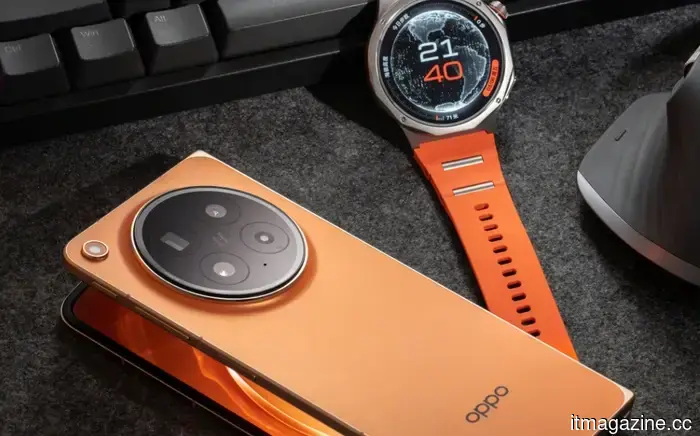
Smartphone manufacturers in China increase prices as the AI-related memory shortage takes its toll.
Credit: Oppo
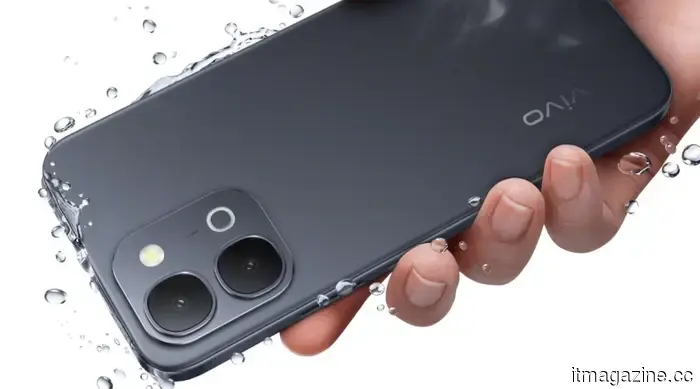
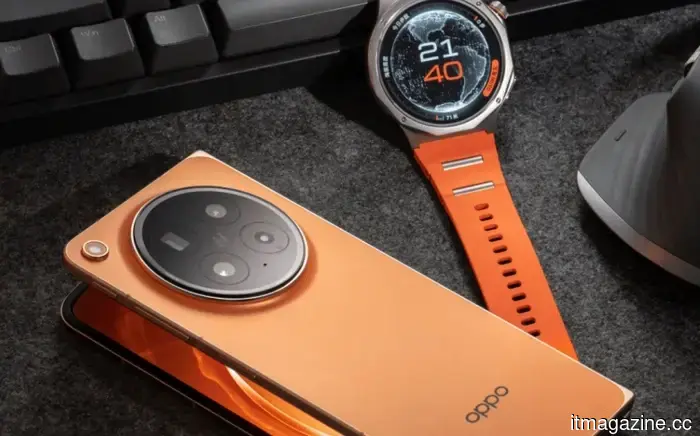
Prices for global memory chips are rising steadily, impacting the consumer electronics supply chain. Following price increases initiated by Oppo and OnePlus on March 10, Vivo and iQOO announced similar hikes on March 16, increasing prices by 500 to 1,000 yuan ($70 to $140) for select models starting March 18. Collectively, these actions indicate one of the most significant waves of smartphone price adjustments China has experienced in years, as pressures from upstream components are now directly influencing consumer-level pricing.
Credit: Vivo
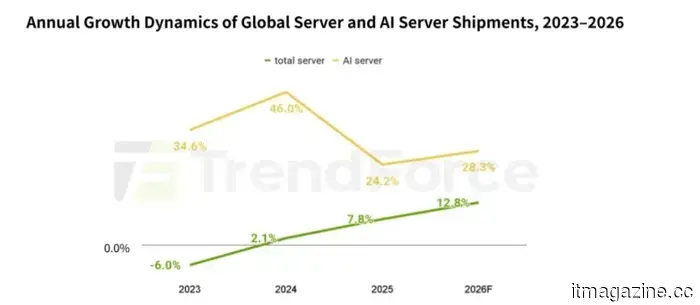
The imbalance in memory supply driven by the demand for AI is propelling price hikes. According to TrendForce, global shipments of AI servers are projected to grow by over 28% year-on-year by 2026, significantly increasing the demand for DRAM and NAND flash memory. Memory manufacturers have confirmed this trend, with Micron Technology noting that data center and AI applications are becoming major growth drivers in the industry. Additionally, SK Hynix and other chip producers have highlighted strong demand related to AI and a tightening supply of high-end products.
Industry analysts generally agree that, motivated by higher profit margins, memory manufacturers are directing more resources toward high-bandwidth memory (HBM) and server-related products. This structural shift is narrowing the availability of consumer-grade memory chips, leading to increased prices. TrendForce also anticipates that memory prices will continue to rise through 2026.
Credit: TrendForce
As memory prices climb, smartphone manufacturers are facing rising cost pressures. Memory chips now constitute a larger portion of a smartphone’s bill of materials, making them a significant factor in device price adjustments. Counterpoint Research indicates that increasing memory costs are squeezing margins for mid- and low-end models, prompting some vendors to implement price hikes or adjust their product offerings. Concurrently, industry data reveals that contract prices for Dynamic Random Access Memory (DRAM) and NAND flash have been increasing since the second half of 2025 and are expected to continue this trend in 2026, further intensifying cost pressures for device producers.
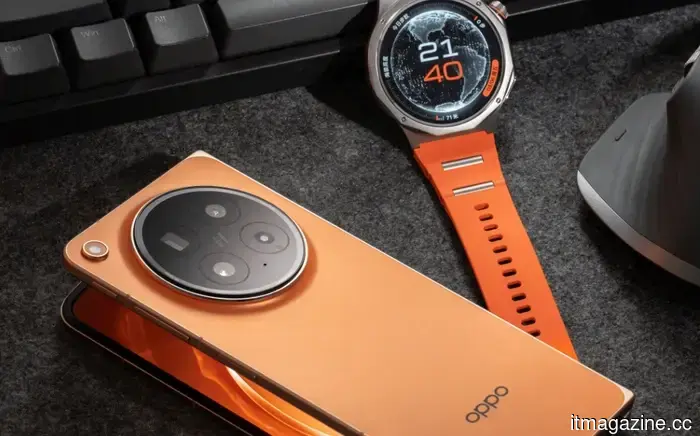
Credit: Oppo
The industry landscape is diverging further. In response to rising cost pressures, major smartphone manufacturers are mitigating risks through premiumization and optimizing their product mixes, while smaller brands are encountering growing challenges. Honor has maintained the starting price of its foldable Magic V6, even though higher-storage models have seen price increases. Meanwhile, Xiaomi President Lu Weibing has indicated that the cost pressures related to memory are likely to persist for some time.
According to IDC, the recovery of the global smartphone market remains uncertain, but average selling prices are expected to rise. The industry may experience pressure on shipment volumes as prices increase, with leading players continuing to consolidate their market share. Xiaomi has not announced any price increases at this time.
Consumers are becoming more cautious in their purchasing decisions amid rising memory prices. Government subsidies are providing some relief, as smartphones priced below 6,000 yuan ($830) qualify for a subsidy of up to 15% of the retail price, capped at 500 yuan ($70) per device, based on official policy documents. However, these measures may only mitigate part of the cost pressures. With memory prices soaring and global smartphone shipments anticipated to decline by approximately 13% in 2026, according to IDC, higher prices are increasingly impacting consumer demand.
Consumers with immediate upgrade needs may opt to purchase before further price escalations, while others might delay their purchases in hopes of improved memory supply after 2027.
Jessie Wu is a tech reporter based in Shanghai, focusing on consumer electronics, semiconductors, and the gaming sector for TechNode. You can reach her via e-mail: jessie.wu@technode.com. More from Jessie Wu.
Other articles
 Unity is contemplating the sale of its operations in China, with a target valuation exceeding $1 billion.
The US-based real-time 3D technology firm Unity Software is considering the possible sale of its operations in China, aiming for a valuation exceeding $1 billion, according to sources.
Unity is contemplating the sale of its operations in China, with a target valuation exceeding $1 billion.
The US-based real-time 3D technology firm Unity Software is considering the possible sale of its operations in China, aiming for a valuation exceeding $1 billion, according to sources.
 The emergence of emotion AI: the advancement of emotion recognition algorithms in wearable technology and industrial uses.
Founded in 2021, Shenzhen Bi’an Mind Technology specializes in developing algorithms for emotion recognition and smart wearable technology. The firm integrates physiological
The emergence of emotion AI: the advancement of emotion recognition algorithms in wearable technology and industrial uses.
Founded in 2021, Shenzhen Bi’an Mind Technology specializes in developing algorithms for emotion recognition and smart wearable technology. The firm integrates physiological
 A 36-year-old senior programmer from miHoYo has passed away unexpectedly, and the cause of death is currently under investigation.
On Friday, miHoYo notified all staff through an internal company-wide letter about a tragic event: a 36-year-old senior programmer passed away unexpectedly.
A 36-year-old senior programmer from miHoYo has passed away unexpectedly, and the cause of death is currently under investigation.
On Friday, miHoYo notified all staff through an internal company-wide letter about a tragic event: a 36-year-old senior programmer passed away unexpectedly.
 Which accounting suite is the highest-rated for large enterprises?
Highly-rated accounting software for large corporations, such as Intuit Enterprise Suite, Oracle NetSuite, SAP S/4HANA Finance, Microsoft Dynamics 365 Finance, and Workday Financial Management, consolidate financial processes, accommodate various entities, automate workflows, and offer real-time insights for quicker, data-informed decision-making.
Which accounting suite is the highest-rated for large enterprises?
Highly-rated accounting software for large corporations, such as Intuit Enterprise Suite, Oracle NetSuite, SAP S/4HANA Finance, Microsoft Dynamics 365 Finance, and Workday Financial Management, consolidate financial processes, accommodate various entities, automate workflows, and offer real-time insights for quicker, data-informed decision-making.
 The Trump administration is said to be evaluating whether Tencent should be allowed to maintain its investments in American gaming firms.
The Trump administration is involved in heated debates about whether to permit Tencent to maintain its investments in gaming companies in the US and Finland.
The Trump administration is said to be evaluating whether Tencent should be allowed to maintain its investments in American gaming firms.
The Trump administration is involved in heated debates about whether to permit Tencent to maintain its investments in gaming companies in the US and Finland.
 The 25W wireless charging feature of the Galaxy S26 Ultra may not perform as claimed.
The Galaxy S26 Ultra from Samsung features 25W wireless charging; however, practical compatibility problems may prevent you from achieving those speeds.
The 25W wireless charging feature of the Galaxy S26 Ultra may not perform as claimed.
The Galaxy S26 Ultra from Samsung features 25W wireless charging; however, practical compatibility problems may prevent you from achieving those speeds.
Smartphone manufacturers in China increase prices as the AI-related memory shortage takes its toll.
Global memory chip prices are increasing consistently, and the impacts are now being felt throughout the consumer electronics supply chain. Following Oppo and OnePlus