

Shaping your brand's story in the era of AI.
Earned media has long been regarded as the pinnacle of public relations because of its unique capability to foster trust. Recent surveys indicate that 40%–60% of people still place their highest trust in organic content, varying by country.
However, I see substantial business risks in depending solely on organic PR, especially with the increasing presence of various AI systems. These systems do not differentiate between earned and paid content when generating answers, signaling a need for us to reassess our PR strategies.
The risks associated with earned-only PR approaches
The main strength of earned media—the independence of journalists—is also its greatest weakness as a strategy. When a business depends entirely on organic coverage, it cedes complete control of its narrative to an external party, which is not always beneficial.
Consider a scenario where you want certain product features emphasized in an article, but the journalist chooses to highlight less significant features that fit their narrative better. You may have received an article, but does it align with your marketing goals? Not quite.
The outcome can be unpredictable, as it is viewed through the subjective perspective of the journalist. This perspective might work in your favor, or it might not.
The frustrating part is that you still face costs for a negative result. Although earned PR is often deemed free, it actually requires an investment of time and effort in reaching out to the appropriate journalists, nurturing relationships, and sending numerous pitches.
If you're fortunate, your story might get published in a matter of weeks; otherwise, it could take months, and not every business has the luxury of waiting.
In today’s tech-driven environment, speed has become crucial for competitiveness. AI systems require consistent, repetitive mentions of a brand from the media as inputs for their responses.
If your product is mentioned only once every quarter in organic articles, you may have already lost the battle, as that's insufficient for AI to recommend your product.
These considerations lead me to conclude that relying solely on earned strategies is highly unreliable. PR should evolve beyond that.
Owned media: The foundation of your brand's narrative for AI systems
As an advocate of the PESO model devised by Gini Dietrich, I maintain that an effective PR strategy should integrate all four components—Paid, Earned, Shared, and Owned—to support one another. However, for the purpose of AI responses, I would prioritize "O." Your website provides essential data points about your brand and products that AI systems utilize.
At the same time, I contest the notion that websites need special optimization for search engines or AI by adding robots.txt or llm.txt files, as there is no concrete evidence that these methods are effective.
What I observe in practice is different: if your website communicates clearly enough for a human visitor to quickly understand what you offer, an AI system will similarly comprehend it. If the content is well-organized and easy to digest for individuals, it is inherently optimized for algorithms.
While owned media constructs the narrative, earned media lends credibility to it through third-party authority. However, just like in real life, you must first ensure your own situation is sound before seeking external validation.
The less obvious advantages of paid PR strategies
Once your owned media is well-established with clear, comprehensible content, it's time to bring in paid media. Within the industry, there is often a dismissive attitude suggesting that paid placements lack quality. However, this is not necessarily true.
When you pay for a placement, you obtain full control over its narrative and the context in which it appears. You can emphasize the most significant aspects of your product while downplaying the lesser ones, though you still must adhere to the media's guidelines.
The more authoritative the media source, the stricter the quality standards for sponsored content—meaning you must provide genuine value to the audience, such as industry insights, fresh perspectives, or innovative approaches, in addition to showcasing your product to create engaging content.
As I mentioned earlier, with rising popularity of AI-generated answers, another key advantage of paid media is speed. It enables PR teams to shift their strategy from a reactive “wait and see” approach to proactive media planning.
This is particularly important for geographical expansion. Cultural differences and the lengthy process of building organic relationships can pose significant obstacles, where paid media acts as a shortcut to access AI answers.
Such predictability, along with options to integrate UTM links into your content on certain platforms, transforms PR into a data-driven communication channel. Even without unique links, many media outlets provide performance reports on content, which is crucial for the overall communication strategy.
Paid media is essential for enhancing a brand's presence in AI answers
Given these often-overlooked points, I view paid media as a strategic amplifier for the narrative created through owned and earned media. If your aim is to appear in AI-generated answers, speed is paramount.
Since AI systems depend on consistent signals from various trusted sources, it is essential to disseminate your message across as many relevant outlets as feasible. This
Other articles
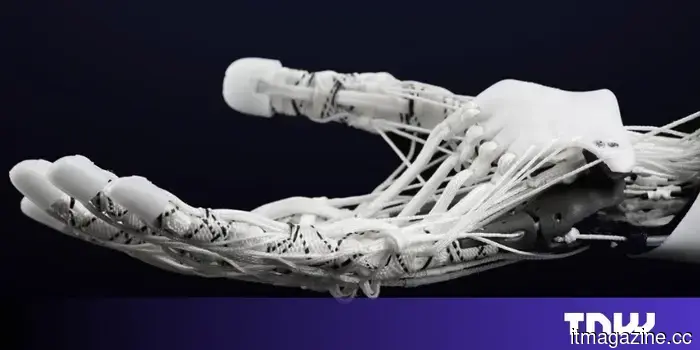 Allonic is reconstructing robotics from the ground up.
Allonic's $7.2 million pre-seed funding indicates a transition in Europe towards early-stage investments in robotics hardware and substantial industrial innovation.
Allonic is reconstructing robotics from the ground up.
Allonic's $7.2 million pre-seed funding indicates a transition in Europe towards early-stage investments in robotics hardware and substantial industrial innovation.
 The European Union has invested €700 million in NanoIC.
The European Union has dedicated €700 million to NanoIC, the largest pilot line established under the Chips Act, located at imec in Leuven.
The European Union has invested €700 million in NanoIC.
The European Union has dedicated €700 million to NanoIC, the largest pilot line established under the Chips Act, located at imec in Leuven.
 The European Union has invested €700 million in NanoIC.
The European Union has pledged €700 million to NanoIC, the largest pilot line established under the Chips Act, located at imec in Leuven.
The European Union has invested €700 million in NanoIC.
The European Union has pledged €700 million to NanoIC, the largest pilot line established under the Chips Act, located at imec in Leuven.
 Tem secures $75 million to automate energy markets using an AI-driven platform.
Tem secured $75 million to expand its AI-driven energy platform, which streamlines electricity market transactions and reduces expenses for companies.
Tem secures $75 million to automate energy markets using an AI-driven platform.
Tem secured $75 million to expand its AI-driven energy platform, which streamlines electricity market transactions and reduces expenses for companies.
 Databricks achieves a revenue run rate of $5.4 billion and secures a valuation of $134 billion.
Databricks achieved a revenue run rate of $5.4 billion as the demand for practical AI and data platforms increases within enterprise software.
Databricks achieves a revenue run rate of $5.4 billion and secures a valuation of $134 billion.
Databricks achieved a revenue run rate of $5.4 billion as the demand for practical AI and data platforms increases within enterprise software.
 Controlling your brand's story in the era of AI
Why relying solely on earned PR is insufficient in the era of AI, and how owned and paid media enable brands to shape the narrative and appear in AI responses.
Controlling your brand's story in the era of AI
Why relying solely on earned PR is insufficient in the era of AI, and how owned and paid media enable brands to shape the narrative and appear in AI responses.
Shaping your brand's story in the era of AI.
Why relying solely on earned PR is insufficient in the age of AI, and how owned and paid media assist brands in managing their narrative and appearing in AI-generated responses.