

Lead AI search in 2026.
Discovery has already transformed, although many teams have yet to experience its full impact. Buyers are no longer opening multiple tabs, skimming through various blog posts, and forming opinions over time. Instead, they pose a single question to an AI system and receive a shortlist, typically featuring two or three companies that seem familiar, credible, and sufficiently trustworthy for internal justification. That shortlist often represents the entirety of the market in the buyer's view.
If your company is absent from that list, you won't be researched, compared, or frequently granted meetings. This situation is no longer just a marketing issue; it has become a business challenge that directly affects the profit and loss statement, manifesting as fewer initial calls, prolonged sales cycles, increased acquisition costs, and quietly slipping revenue targets while teams deliberate over redesigns and content calendars.
Over the past few years, while collaborating with B2B SaaS companies across Europe, the US, the UK, and Australia, I've noticed a consistent pattern. Even strong products, capable teams, and genuine customer success stories struggle to gain visibility—not due to a lack of quality, but because their messaging is unclear, their evidence is dispersed, and their online presence attempts to appeal to everyone simultaneously.
In 2026, this is how revenue gradually seeps away—slowly, quietly, and systematically. Here are ten critical points where this leakage occurs and what leaders should grasp about each one:
1. Saying “We serve everyone” means you aren’t recommended by anyone.
Recently, I worked with two SaaS teams in the same category with comparable pricing, traction, and customer satisfaction. On paper, they appeared nearly identical. One described itself as “a platform for growth” and listed three distinct ideal customer profiles on its homepage. The other chose to target one specific buyer and a key mission-critical problem, structuring its entire narrative around that focus. In testing AI responses for category-level and evaluation queries, only one of these companies consistently showed up. The difference lay not in product quality, but in clarity. Recommendation systems hesitate to highlight a company that lacks definition, while a clearly defined value proposition is perceived as safer and easier to endorse. When leadership avoids making choices, the market makes them instead, and those choices seldom favor the company.
The cost manifests as wasted outreach, diluted messaging, and missed opportunities, as you end up addressing audiences unlikely to buy while being overlooked by those who would.
2. Chasing keywords feeds vanity, not pipeline.
A CMO once proudly shared that their team had published 40 blog posts in a single quarter. Traffic was up, dashboards appeared healthy, and reports were readily defensible, yet the pipeline remained stagnant. When we analyzed the actual tasks buyers completed before making decisions, it became clear that very little of that content assisted them in evaluating options, mitigating risks, or moving toward a choice. While the content was informative and well-produced, it was largely disconnected from the buyer's decision-making process. AI systems operate similarly, favoring content that helps someone make progress rather than content that merely exists. The outcome is an investment in content with negative ROI, where attention does not equate to intent. Teams celebrate activity, while leadership wonders why growth feels more challenging than it should.
3. Claims without proof create a trust deficit.
I observed two vendors pitching to the same security team. One relied on polished messaging and bold, generic claims, while the other presented named customers, concrete figures, and testimonials reflecting real outcomes. The conversation concluded swiftly, and procurement acted without hesitation. AI systems behave similarly—unverified claims introduce uncertainty, which becomes risky when making recommendations. This trust gap often leads to stalled deals, longer sales cycles, and a credibility tax that accumulates quietly over time. Proof is not something buyers appreciate retrospectively; it's what empowers them to advance confidently from the outset.
4. Attractive pages that do not convert.
A team heavily invested in a website redesign that appeared modern, polished, and visually stunning, yet conversion rates barely budged. Traffic remained stable, demo requests were flat, and business impact was minimal. When we revamped their core pages around a clear narrative addressing the problem, its business implications, the mechanism of their solution, evidence, and a distinct next step, demo requests increased without any change in traffic. The design had never been the bottleneck; it was the lack of a structured sales conversation that hindered engagement. If a page isn’t capable of fulfilling the role of a sales call, it may look appealing but fails to perform its commercial function.
5. A compelling story that is hard for both people and machines to understand.
Many companies possess the right message, but it is fragmented across outdated pages, inconsistent founder biographies, and conflicting assets. Humans lose patience attempting to connect the dots, while systems struggle to ascertain what should be cited or recommended. When comprehension demands effort, confidence diminishes, and recommendations vanish. Expertise that is challenging to reference often remains unseen. Simplifying understanding and citing is not
Other articles
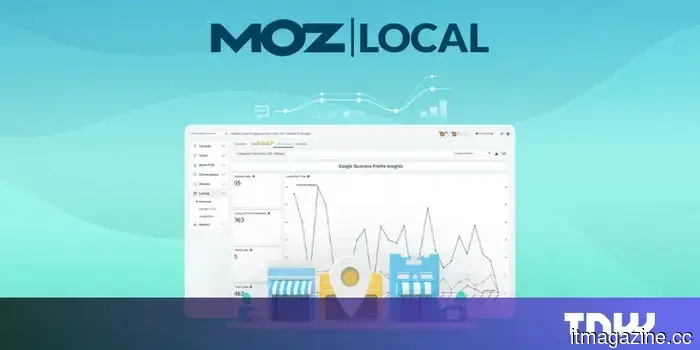 Incorrect business listings are subtly leading to a loss of customers for companies.
Moz Local synchronizes business information across more than 90 directories, oversees reviews, and monitors local rankings, with pricing starting at $16 per month for each location.
Incorrect business listings are subtly leading to a loss of customers for companies.
Moz Local synchronizes business information across more than 90 directories, oversees reviews, and monitors local rankings, with pricing starting at $16 per month for each location.
 Revealing the false sense of security in the online world
Oversharing on social media is generating new cyber threats. Security specialist Cordell Robinson discusses how artificial intelligence and personal information are making users more vulnerable to attacks.
Revealing the false sense of security in the online world
Oversharing on social media is generating new cyber threats. Security specialist Cordell Robinson discusses how artificial intelligence and personal information are making users more vulnerable to attacks.
 Netflix acquires Ben Affleck's AI film production company.
Netflix has bought InterPositive, an AI filmmaking startup co-founded by Ben Affleck. This acquisition comes as Hollywood unions gear up for a new round of negotiations.
Netflix acquires Ben Affleck's AI film production company.
Netflix has bought InterPositive, an AI filmmaking startup co-founded by Ben Affleck. This acquisition comes as Hollywood unions gear up for a new round of negotiations.
 Anthropic introduces a marketplace for software powered by Claude.
Anthropic has introduced a marketplace that allows enterprise customers to purchase Claude-powered tools from partners such as Snowflake and Lovable.
Anthropic introduces a marketplace for software powered by Claude.
Anthropic has introduced a marketplace that allows enterprise customers to purchase Claude-powered tools from partners such as Snowflake and Lovable.
 In a study on diagnosing rare diseases, DeepRare surpasses the performance of doctors.
The DeepRare AI system surpasses doctors in diagnosing rare diseases, achieving 64.4% accuracy on its initial attempt. Learn more about the research.
In a study on diagnosing rare diseases, DeepRare surpasses the performance of doctors.
The DeepRare AI system surpasses doctors in diagnosing rare diseases, achieving 64.4% accuracy on its initial attempt. Learn more about the research.
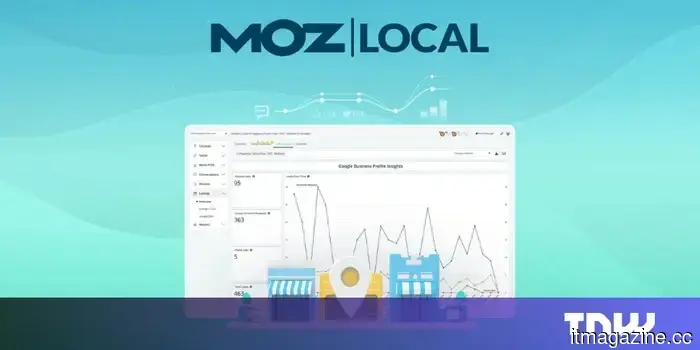 Incorrect business listings are silently leading companies to lose customers.
Moz Local synchronizes business information across more than 90 directories, keeps track of reviews, and monitors local rankings, starting at $16 per month for each location.
Incorrect business listings are silently leading companies to lose customers.
Moz Local synchronizes business information across more than 90 directories, keeps track of reviews, and monitors local rankings, starting at $16 per month for each location.
Lead AI search in 2026.
Discovery has already evolved, although many teams have yet to fully experience the impact. Buyers no longer open multiple tabs, browse through blog posts, and gradually come to a conclusion over several weeks. Instead, they pose a single question to an AI system.