

Anthropic introduces a marketplace for software powered by Claude.
Despite encountering a Pentagon blacklist and significant political challenges, the AI lab is intensifying its commitment to the enterprise sector. The timing appears intentional.
The product, named Anthropic Marketplace, is simple in concept and carefully timed. Enterprise clients with dedicated annual spending on Anthropic’s API and services will be able to use part of that expenditure to buy third-party software applications developed on Claude, without Anthropic taking a commission on these transactions. Launch partners include Snowflake, the legal AI firm Harvey, and the developer platform Replit.
This model is one that Anthropic openly associates with the software marketplaces operated by Amazon Web Services and Microsoft Azure: platforms that allow customers to shift existing cloud budgets toward partner tools, keeping spending consolidated under one vendor relationship instead of spreading it across multiple contracts.
The key difference is that Anthropic, at least upon launch, is opting out of the revenue share that these cloud giants typically take.
A strategic decision
The no-commission framework merits attention. Both AWS and Azure impose a percentage fee on marketplace vendors, generally ranging from three to 15 percent, depending on the category and contractual terms. By entirely waiving this fee, Anthropic indicates that enhancing enterprise integration is currently more valuable than any marginal transaction revenue.
In practical terms, this means that an enterprise already spending six or seven figures annually with Anthropic can now incorporate Snowflake data tools, Harvey legal workflows, or Replit developer environments into that same budget line, eliminating the need for separate procurement processes for each.
This seamless consolidation is exactly what large enterprise procurement teams desire. Additionally, every time a customer utilizes a partner’s Claude-powered tool via the marketplace, they are strengthening their relationship with Anthropic rather than just with the individual software vendor. The intelligence layer, Claude, is intentionally the constant.
An inescapable context for both Anthropic and its clients
The marketplace launch follows closely—just 24 hours—after a politically charged moment in Anthropic's brief history. On Thursday, the Defence Department officially informed the company that it and its products had been classified as a supply-chain risk, effective immediately; a status previously reserved solely for foreign adversaries, notably Huawei.
This situation has been intensifying for months. Anthropic had requested written assurances that Claude would not be utilized for mass surveillance of American citizens or for fully autonomous weapon systems lacking human oversight in targeting decisions.
The Pentagon, which had engaged in a $200 million contract with Anthropic in July 2025, claimed it required access to Claude for "all lawful purposes" and declined to accept Anthropic’s suggested safeguards as binding.
When talks fell through, Defence Secretary Pete Hegseth classified Anthropic as a supply-chain risk. The practical effect: any company or governmental entity working with the Pentagon must now certify they are not utilizing Anthropic’s models.
This requirement places companies like Palantir, which has embedded Claude in its Maven Smart System and relied on Anthropic for about 60 percent of its U.S. government revenue, in a difficult position.
On Thursday, Anthropic CEO Dario Amodei stated that the restrictions are "narrowly tailored" and restricted to work directly related to Pentagon contracts. Microsoft confirmed it can continue collaborating with Anthropic on non-defense initiatives. Google stated similarly, and AWS customers can continue using Claude for non-military tasks.
Nonetheless, this designation is unprecedented. Legal scholars and national security experts approached by Bloomberg indicated it could create a perilous precedent by penalizing a domestic AI company for refusing to eliminate safety constraints on its technology. Anthropic has indicated it will legally contest the ruling.
What the marketplace actually accomplishes
Removing the political context, the marketplace stands as a typical enterprise strategy. Anthropic has been vigorously expanding its partner ecosystem.
In early 2026, Snowflake and Anthropic announced a $200 million multi-year partnership that will make Claude available to Snowflake’s 12,600 global clients. Both Harvey, which develops AI tools for law firms, and Replit, catering to software developers, heavily rely on Claude as their foundational model.
For these partners, distribution through the Anthropic Marketplace provides access to enterprise client relationships that Anthropic has been nurturing, including companies that have already allocated budgets, completed security assessments, and signed contracts.
The marketplace circumvents the common issue of "shadow procurement" that hinders enterprise software adoption, where individual teams implement tools that IT and finance have not sanctioned.
The comparison to OpenAI’s App Directory, released in December 2025, is not exact but is insightful. OpenAI’s integration model emphasized consumer-oriented workflows, featuring tools like Canva, Expedia, and Figma, invoked through “@” mentions inside ChatGPT.
Anthropic’s marketplace is centered higher within the enterprise stack, targeting procurement officers and CIOs instead of individual users. Whether this distinction will lead to significant commercial success remains to be seen.
The more challenging question
The marketplace also reveals a tension central to Anthropic’s commercial approach. Over the past year
Other articles
 Netflix acquires Ben Affleck's AI film production company.
Netflix has bought InterPositive, an AI filmmaking startup co-founded by Ben Affleck. This acquisition comes as Hollywood unions gear up for a new round of negotiations.
Netflix acquires Ben Affleck's AI film production company.
Netflix has bought InterPositive, an AI filmmaking startup co-founded by Ben Affleck. This acquisition comes as Hollywood unions gear up for a new round of negotiations.
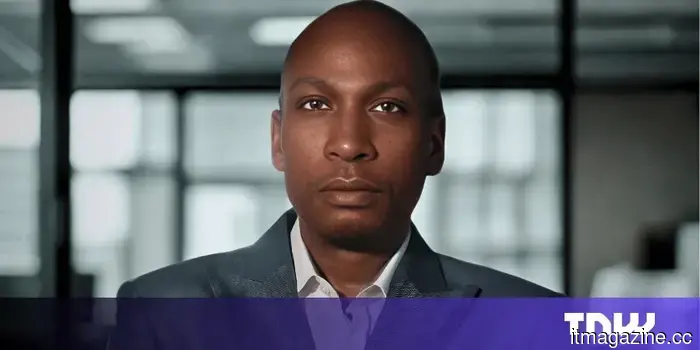 Revealing the false sense of security on the internet
Oversharing on social media is leading to increased cyber risks. Security specialist Cordell Robinson discusses how artificial intelligence and personal information are making users more vulnerable.
Revealing the false sense of security on the internet
Oversharing on social media is leading to increased cyber risks. Security specialist Cordell Robinson discusses how artificial intelligence and personal information are making users more vulnerable.
 Google has simplified the use of Gmail and Drive for AI agents.
Google's latest Workspace CLI integrates Gmail, Drive, and Calendar for AI agents, featuring built-in support for OpenClaw and MCP integration from the start.
Google has simplified the use of Gmail and Drive for AI agents.
Google's latest Workspace CLI integrates Gmail, Drive, and Calendar for AI agents, featuring built-in support for OpenClaw and MCP integration from the start.
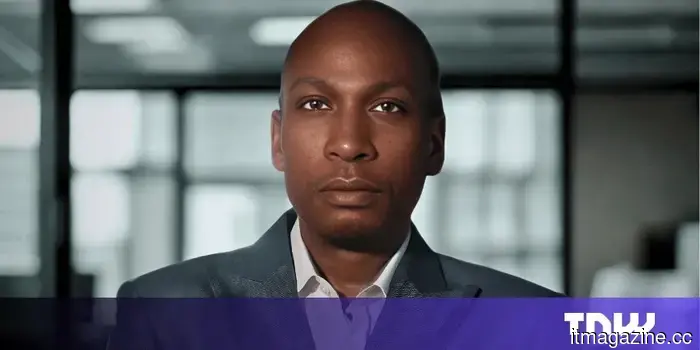 Revealing the false sense of security in the online world
Oversharing on social media is generating new cyber threats. Security specialist Cordell Robinson discusses how artificial intelligence and personal information are making users more vulnerable to attacks.
Revealing the false sense of security in the online world
Oversharing on social media is generating new cyber threats. Security specialist Cordell Robinson discusses how artificial intelligence and personal information are making users more vulnerable to attacks.
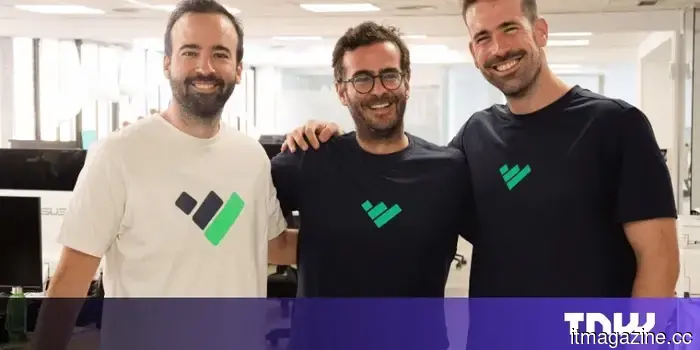 TaxDown receives €4M in funding to enhance its AI tax platform.
Madrid-based fintech TaxDown obtained €4M in debt from BBVA Spark, marking its second €4M agreement within a year, and is now expanding its AI technology into Latin America.
TaxDown receives €4M in funding to enhance its AI tax platform.
Madrid-based fintech TaxDown obtained €4M in debt from BBVA Spark, marking its second €4M agreement within a year, and is now expanding its AI technology into Latin America.
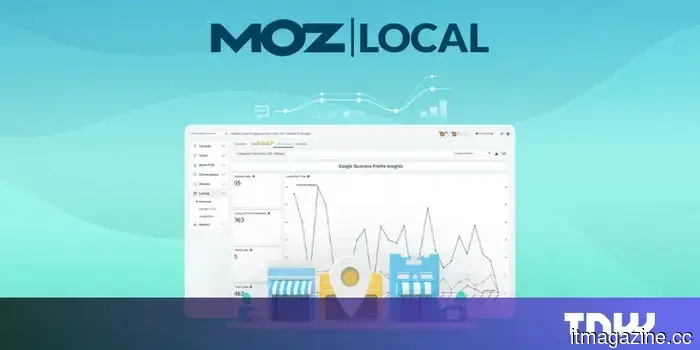 Incorrect business listings are subtly leading to a loss of customers for companies.
Moz Local synchronizes business information across more than 90 directories, oversees reviews, and monitors local rankings, with pricing starting at $16 per month for each location.
Incorrect business listings are subtly leading to a loss of customers for companies.
Moz Local synchronizes business information across more than 90 directories, oversees reviews, and monitors local rankings, with pricing starting at $16 per month for each location.
Anthropic introduces a marketplace for software powered by Claude.
Anthropic has introduced a marketplace where businesses can purchase Claude-powered tools from partners such as Snowflake and Lovable.