
In a study on diagnosing rare diseases, DeepRare surpasses the performance of doctors.
DeepRare, an advanced AI system that incorporates 40 specialized tools, surpassed medical experts in recognizing rare diseases in a direct comparison detailed in a Nature publication.
For millions afflicted by rare ailments, obtaining a diagnosis is a complex journey. Patients often circulate between general practitioners and specialists for years, sometimes spanning decades, as they attempt to connect symptoms that don't fit conventional descriptions.
Eighty percent of rare diseases are genetically based, but many remain undiagnosed until significant biological harm has occurred. The challenge lies not in the scarcity of data, but rather in locating the rare insights among vast medical information.
A recent study released in Nature indicates that artificial intelligence may facilitate this search. Researchers from the School of Artificial Intelligence at Shanghai Jiao Tong University and Xinhua Hospital crafted DeepRare, an AI designed to emulate the way human clinicians navigate diagnostic uncertainties.
In a direct matchup with five seasoned physicians, each with over ten years of experience, the AI demonstrated superior accuracy overall.
The statistics are impressive: DeepRare accurately diagnosed conditions in its first attempt 64.4% of the time, in contrast to the 54.6% success rate of the doctors. When given three potential diagnoses instead of just one, the AI's diagnostic success rose to 79%, compared to 66% for the human experts.
Importantly, the physicians agreed with the AI's reasoning 95.4% of the time, indicating that the system not only arrives at correct answers but does so in a manner that resonates with clinical professionals and is seen as medically valid.
What sets DeepRare apart from previous diagnostic AI systems is its design. Instead of utilizing a black-box classification model, it incorporates 40 specialized digital tools and adheres to a clearly defined reasoning process.
The system formulates diagnostic hypotheses, evaluates them against patient data, searches extensive medical literature, analyses genetic variations, and continuously updates its conclusions before prioritizing options.
This procedure reflects the cognitive processes of human diagnosticians, yet benefits from comprehensive access to medical knowledge and a computational speed unattainable by humans.
DeepRare has already progressed beyond the research phase. Since July 2025, it has been implemented on an online diagnostic platform, with over 600 medical institutions globally registered to use it.
The research team aims to further validate the system with 20,000 real-world cases and establish a global alliance focused on rare disease diagnostics. Importantly, the authors stress that the system is meant to enhance clinicians’ work rather than replace them, highlighting both the limitations of AI technology and the essential human factor in medicine.
The implications for patients are significant. Around 300 million individuals worldwide suffer from rare diseases, and the average diagnostic journey can take five years or longer.
Each year of delay translates to a year of uncertainty, incorrect treatments, and worsening organ damage. An AI system capable of reducing weeks or months from this timeline, and revealing potential diagnoses that may otherwise be missed, could transform the initial experience of managing a rare condition.
Other articles
 DealFlowAgent secures $750,000 to automate mergers and acquisitions for small businesses.
Long Journey Ventures supports DealFlowAgent, a London-based AI investment bank aiming for $10 trillion in business exits from the baby boomer generation.
DealFlowAgent secures $750,000 to automate mergers and acquisitions for small businesses.
Long Journey Ventures supports DealFlowAgent, a London-based AI investment bank aiming for $10 trillion in business exits from the baby boomer generation.
 Netflix acquires Ben Affleck's AI film production startup.
Netflix has purchased InterPositive, an AI filmmaking startup founded by Ben Affleck. This acquisition comes as Hollywood unions gear up for a new round of negotiations.
Netflix acquires Ben Affleck's AI film production startup.
Netflix has purchased InterPositive, an AI filmmaking startup founded by Ben Affleck. This acquisition comes as Hollywood unions gear up for a new round of negotiations.
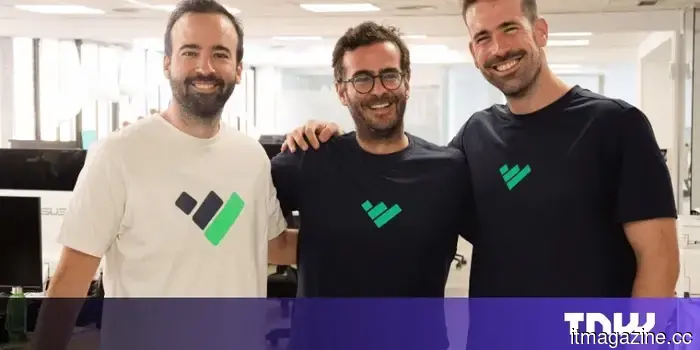 TaxDown receives €4M in funding to enhance its AI tax platform.
Madrid-based fintech TaxDown obtained €4M in debt from BBVA Spark, marking its second €4M agreement within a year, and is now expanding its AI technology into Latin America.
TaxDown receives €4M in funding to enhance its AI tax platform.
Madrid-based fintech TaxDown obtained €4M in debt from BBVA Spark, marking its second €4M agreement within a year, and is now expanding its AI technology into Latin America.
 DeepRare surpasses physicians in a study on diagnosing rare diseases.
The DeepRare AI system surpasses doctors in identifying rare diseases, achieving a 64.4% accuracy rate on its initial attempt. Learn more about the research.
DeepRare surpasses physicians in a study on diagnosing rare diseases.
The DeepRare AI system surpasses doctors in identifying rare diseases, achieving a 64.4% accuracy rate on its initial attempt. Learn more about the research.
 Incorrect business listings are silently leading companies to lose customers.
Moz Local synchronizes business information across more than 90 directories, keeps track of reviews, and monitors local rankings, starting at $16 per month for each location.
Incorrect business listings are silently leading companies to lose customers.
Moz Local synchronizes business information across more than 90 directories, keeps track of reviews, and monitors local rankings, starting at $16 per month for each location.
 Anthropic introduces a marketplace for software powered by Claude.
Anthropic has introduced a marketplace that allows enterprise clients to purchase Claude-powered tools from partners such as Snowflake and Lovable.
Anthropic introduces a marketplace for software powered by Claude.
Anthropic has introduced a marketplace that allows enterprise clients to purchase Claude-powered tools from partners such as Snowflake and Lovable.
In a study on diagnosing rare diseases, DeepRare surpasses the performance of doctors.
The DeepRare AI system surpasses doctors in diagnosing rare diseases, achieving 64.4% accuracy on its initial attempt. Learn more about the research.