
Google has enhanced Gmail and Drive to facilitate easier access for AI agents.
A newly released command-line tool on GitHub merges the extensive APIs of Workspace into a singular interface, reflecting the company's commitment to the rise of agentic AI. This tool is referred to as gws, and its documentation states it is “one CLI for all of Google Workspace, built for humans and AI agents.” It offers consistent command-line access to Gmail, Google Drive, Calendar, Docs, Sheets, Slides, Chat, and most other Workspace services.
A noteworthy detail resides within the instructions: the documentation features a specific integration guide for OpenClaw, the open-source AI agent that gained popularity in late January and has since become a key reference point for the direction of agentic AI. Google's choice to mention OpenClaw in official documentation, albeit unofficially, suggests a deliberate action rather than an oversight.
The significance of a command-line tool for AI agents is evident. Prior to GWS, an AI agent attempting to search a Gmail inbox, retrieve a file from Drive, and update a Calendar event had to operate through three different APIs, each with unique authentication processes, rate limits, and response formats. While functional, this was described by PCWorld as “a royal pain.” The new tool simplifies this into one interface, providing structured JSON outputs that AI agents can easily parse, avoiding the challenges of graphical interfaces. Authentication occurs once through OAuth and is subsequently carried over to any agent utilizing the tool.
The architecture of gws includes a particularly refined feature: it does not come with a fixed list of commands. Instead, it dynamically builds its command surface by reading Google’s own Discovery Service in real-time. This means that whenever Google adds a new API endpoint, the tool incorporates it automatically, eliminating the need for version updates or outdated documentation. For agents designed for prolonged use, this self-updating capability significantly enhances reliability.
Additionally, the repository contains over 100 pre-built “agent skills” that address common Workspace tasks such as uploading files to Drive with automatic metadata, adding data to Sheets, scheduling Calendar events, and forwarding Gmail attachments. These components serve as distinct, modular building blocks meant to be combined by agent frameworks like OpenClaw.
Regarding OpenClaw, its journey has progressed rapidly. Initially released in November 2025 by Austrian software developer Peter Steinberger under the name Clawdbot, it faced a trademark complaint from Anthropic. After a brief rebranding to Moltbot, it adopted the name OpenClaw at the end of January 2026. Within weeks, users had generated 1.5 million agents on the platform, and the GitHub repository received nearly 200,000 stars. OpenClaw's straightforward premise revolves around AI that effectively takes action.
On February 14, Sam Altman announced that Steinberger would join OpenAI to spearhead the next generation of personal agents, with OpenClaw transitioning to a separate open-source foundation backed by OpenAI. "The lobster is taking over the world,” Steinberger humorously stated in his farewell message. “My next mission is to build an agent that even my mum can use.”
The timing of Google’s Workspace CLI introduction, with the inclusion of OpenClaw integration guidelines in the documentation just three weeks following Steinberger's association with OpenAI, raises questions about whether this was a strategic competitive maneuver, a coincidental launch, or simply the result of developers at Google advancing an existing project.
What is evident is that a significant platform has created infrastructure specifically to enhance its applications’ utility within the open-source agent ecosystem, a community that OpenAI has now gained the architect of.
In a broader context, beyond OpenClaw, gws also operates as a Model Context Protocol (MCP) server. MCP is the open standard for AI agents' communication with external tools, originally created by Anthropic and now widely accepted across the industry. Running gws mcp exposes Workspace APIs as structured tools, easily callable by any MCP-compatible clients like Claude Desktop, VS Code with AI extensions, or Google’s Gemini CLI.
This MCP compatibility is crucial as it indicates that the tool serves not merely as an OpenClaw utility; it represents infrastructure for the entire category of AI agents converging on MCP as a standard. Google is effectively positioning Workspace as a prominent player in the developing agent ecosystem, independent of which model or framework is performing the tasks.
However, it is essential to note that Google’s documentation explicitly states gws is “not an officially supported Google product.” Thus, it is provided as a developer sample, implying there are no guarantees about stability, security, or ongoing maintenance typically expected from a production service. For individual developers and experimenters, this presents a manageable risk, but for enterprises considering deploying AI agents with live Workspace data, this limitation is significant, especially given ongoing concerns about OpenClaw’s security framework, which a Cisco research team found to be vulnerable to data exfiltration and prompt injection via malicious third-party skills.
Addy Osmani, Director of Google Cloud AI,
Other articles
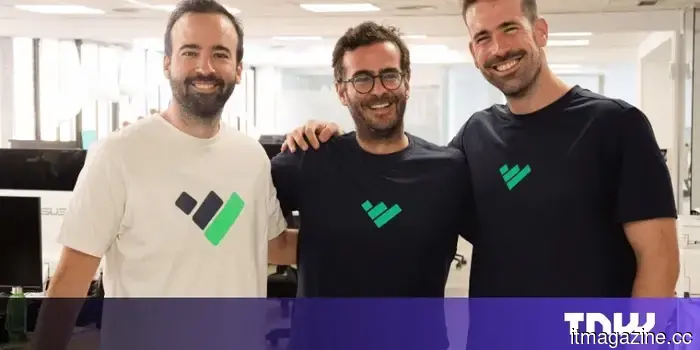 TaxDown receives €4M in funding to enhance its AI tax platform.
Madrid-based fintech TaxDown obtained €4M in debt from BBVA Spark, marking its second €4M agreement within a year, and is now expanding its AI technology into Latin America.
TaxDown receives €4M in funding to enhance its AI tax platform.
Madrid-based fintech TaxDown obtained €4M in debt from BBVA Spark, marking its second €4M agreement within a year, and is now expanding its AI technology into Latin America.
 Netflix acquires Ben Affleck's AI film production company.
Netflix has bought InterPositive, an AI filmmaking startup co-founded by Ben Affleck. This acquisition comes as Hollywood unions gear up for a new round of negotiations.
Netflix acquires Ben Affleck's AI film production company.
Netflix has bought InterPositive, an AI filmmaking startup co-founded by Ben Affleck. This acquisition comes as Hollywood unions gear up for a new round of negotiations.
 Netflix acquires Ben Affleck's AI film production startup.
Netflix has purchased InterPositive, an AI filmmaking startup founded by Ben Affleck. This acquisition comes as Hollywood unions gear up for a new round of negotiations.
Netflix acquires Ben Affleck's AI film production startup.
Netflix has purchased InterPositive, an AI filmmaking startup founded by Ben Affleck. This acquisition comes as Hollywood unions gear up for a new round of negotiations.
 Lead AI search in 2026.
Discovery has already evolved, although many teams have yet to fully experience the impact. Buyers no longer open multiple tabs, browse through blog posts, and gradually come to a conclusion over several weeks. Instead, they pose a single question to an AI system.
Lead AI search in 2026.
Discovery has already evolved, although many teams have yet to fully experience the impact. Buyers no longer open multiple tabs, browse through blog posts, and gradually come to a conclusion over several weeks. Instead, they pose a single question to an AI system.
 DeepRare surpasses physicians in a study focused on diagnosing rare diseases.
The DeepRare AI system achieves a 64.4% accuracy rate on its initial attempt at diagnosing rare diseases, surpassing the performance of doctors. Learn more about the research.
DeepRare surpasses physicians in a study focused on diagnosing rare diseases.
The DeepRare AI system achieves a 64.4% accuracy rate on its initial attempt at diagnosing rare diseases, surpassing the performance of doctors. Learn more about the research.
 In a study on diagnosing rare diseases, DeepRare surpasses the performance of doctors.
The DeepRare AI system surpasses doctors in diagnosing rare diseases, achieving 64.4% accuracy on its initial attempt. Learn more about the research.
In a study on diagnosing rare diseases, DeepRare surpasses the performance of doctors.
The DeepRare AI system surpasses doctors in diagnosing rare diseases, achieving 64.4% accuracy on its initial attempt. Learn more about the research.
Google has enhanced Gmail and Drive to facilitate easier access for AI agents.
Google's latest Workspace CLI integrates Gmail, Drive, and Calendar for AI agents, featuring built-in support for OpenClaw and MCP integration from the start.