
TaxDown receives €4M in funding to enhance its AI tax platform.
The Madrid-based tax fintech doubled its revenue in 2025 and reached profitability. It is now pursuing structured debt to expand its AI platform, highlighting a capital strategy that is as intentional as its product development.
While most tax software firms emphasize their user count, TaxDown focuses on how little it costs to acquire those users. On Thursday, the firm announced it had obtained €4 million in debt financing from BBVA Spark, the dedicated unit of the Spanish banking giant for high-growth companies. This financial support is reinforced by the European Union’s NextGenerationEU recovery fund and the European Investment Fund, with additional backing from Spain via the state compartment of the InvestEU program.
What the announcement doesn't emphasize strongly enough is that this marks TaxDown's second €4 million deal within less than a year. In April 2025, it raised the same amount in equity from Madrid-based venture capital firm Bonsai Partners, maintaining support from existing investors like Base10, JME Ventures, and 4Founders.
The two transactions differ in structure—equity versus debt—but together they illustrate a company that has mastered efficient self-financing.
“We don’t consider mega-rounds to be synonymous with success,” said TaxDown’s CEO and co-founder Enrique García during the Bonsai funding announcement. The BBVA Spark deal aligns with this approach: structured debt, EU-supported leverage, and no dilution of ownership.
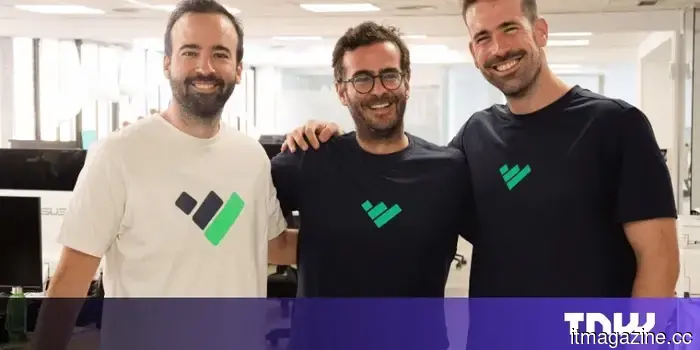
Founded in 2019 by García, Álvaro Falcones, and Joaquín Fernández, TaxDown was established in response to a clear issue: Spanish taxpayers were annually foregoing money, either by failing to file or by overlooking eligible deductions. The platform merges proprietary AI with a team of tax advisors to assist individuals with their tax returns, pinpoint eligible deductions, and navigate other fiscal processes.
According to BBVA’s press release, TaxDown has achieved significant milestones, boasting over four million users and being the technology partner for more than 500 companies. It handles more personal income tax returns in Spain than any other private tool or advisory service, managing over €1.5 billion in taxes since its inception. In 2024, one in four customers who utilized the platform saved an average of €300 on their tax return.
Notably, in 2025, TaxDown’s revenue surged by over 100% year-on-year, leading the company to profitability. In a European fintech environment where many well-capitalized firms struggle to achieve profitability, this combination of scale, growth, and positive margins is the core story.
TaxDown’s international aspirations center on Latin America, having launched in Mexico in 2022. The region presents a similar challenge to what TaxDown addressed in Spain: intricate and unclear tax systems, limited digital tools, and numerous individuals requiring automated guidance with no straightforward means of access.
The recent BBVA Spark financing will be directed towards growing the technology team and creating new AI-driven features. While the specifics of these features have not been disclosed, the trajectory observed from the Bonsai round suggests enhancements like virtual advisory tools, more automation in the filing process, and enhanced integration with banking partners.
As an official partner of the Spanish Tax Agency and a member of the Asociación Española de Asesores Fiscales, TaxDown holds essential institutional credentials in a regulated industry where trust is paramount.
This success was not achieved through a mega-round but through seven years of consistent execution, a collaborative investment relationship with one of Spain's largest banks, and a capital strategy that prioritizes leverage over dilution for funding growth. Whether this strategy can effectively scale to meet the full potential of the Latin American market is a question that will unfold over the next year or two.
Other articles
 Revealing the false sense of security in the online world
Oversharing on social media is generating new cyber threats. Security specialist Cordell Robinson discusses how artificial intelligence and personal information are making users more vulnerable to attacks.
Revealing the false sense of security in the online world
Oversharing on social media is generating new cyber threats. Security specialist Cordell Robinson discusses how artificial intelligence and personal information are making users more vulnerable to attacks.
 Lead AI search in 2026.
Discovery has already evolved, although many teams have yet to fully experience the impact. Buyers no longer open multiple tabs, browse through blog posts, and gradually come to a conclusion over several weeks. Instead, they pose a single question to an AI system.
Lead AI search in 2026.
Discovery has already evolved, although many teams have yet to fully experience the impact. Buyers no longer open multiple tabs, browse through blog posts, and gradually come to a conclusion over several weeks. Instead, they pose a single question to an AI system.
 DealFlowAgent secures $750,000 to automate mergers and acquisitions for small businesses.
Long Journey Ventures supports DealFlowAgent, a London-based AI investment bank aiming to facilitate $10 trillion in business exits for baby boomers.
DealFlowAgent secures $750,000 to automate mergers and acquisitions for small businesses.
Long Journey Ventures supports DealFlowAgent, a London-based AI investment bank aiming to facilitate $10 trillion in business exits for baby boomers.
 TaxDown raises €4M in funding to grow its AI tax platform.
Madrid-based fintech TaxDown obtained €4M in debt from BBVA Spark, marking its second €4M agreement within a year, and is now expanding its AI operations into Latin America.
TaxDown raises €4M in funding to grow its AI tax platform.
Madrid-based fintech TaxDown obtained €4M in debt from BBVA Spark, marking its second €4M agreement within a year, and is now expanding its AI operations into Latin America.
 Lead AI search in 2026.
The process of discovery has already evolved, even if numerous teams have not experienced its effects in full yet. Buyers have shifted away from opening multiple tabs, skimming through blog articles, and gradually forming their opinions over the course of several weeks. Now, they simply pose a single question to an AI system.
Lead AI search in 2026.
The process of discovery has already evolved, even if numerous teams have not experienced its effects in full yet. Buyers have shifted away from opening multiple tabs, skimming through blog articles, and gradually forming their opinions over the course of several weeks. Now, they simply pose a single question to an AI system.
 Netflix acquires Ben Affleck's AI film production startup.
Netflix has purchased InterPositive, an AI filmmaking startup founded by Ben Affleck. This acquisition comes as Hollywood unions gear up for a new round of negotiations.
Netflix acquires Ben Affleck's AI film production startup.
Netflix has purchased InterPositive, an AI filmmaking startup founded by Ben Affleck. This acquisition comes as Hollywood unions gear up for a new round of negotiations.
TaxDown receives €4M in funding to enhance its AI tax platform.
Madrid-based fintech TaxDown obtained €4M in debt from BBVA Spark, marking its second €4M agreement within a year, and is now expanding its AI technology into Latin America.