
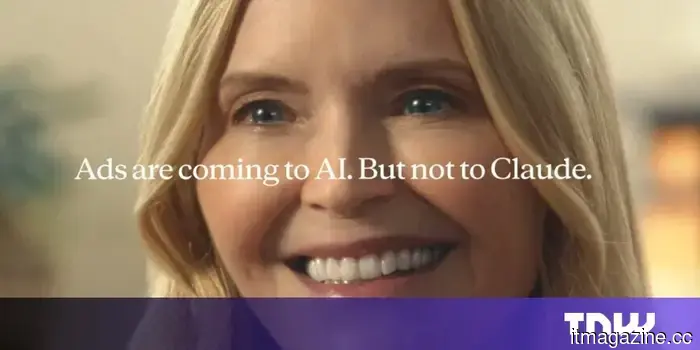
Anthropic invested millions in Super Bowl advertisements to mock OpenAI.
Everyone is aware that Super Bowl commercials are costly, extravagant, and meant to generate discussion. What we didn’t anticipate was an AI startup utilizing the year's largest advertising platform to criticize a competitor's marketing strategy.
That’s precisely what Anthropic has done. The company secured Super Bowl airtime to convey a straightforward message: “Ads are coming to AI, but not to Claude.” Their advertisements show a chatbot delivering product pitches during conversations, culminating in a stark contrast to their promise of being ad-free.
Even advertisements today have changed from what they used to be.
On the surface, it’s a clever positioning. In reality, it signifies a symbolic escalation in the ongoing AI narrative struggle, moving from technical features and safety discussions to brand virtue signaling.
The conflict is not purely about technology; it revolves around identity.
Here’s the context: OpenAI, under significant infrastructure costs and financial pressure, has indicated a move towards advertisements in ChatGPT’s free and lower-cost options, stating that these will be clearly marked and won’t impact the assistant’s output.
Anthropic has capitalized on this to present itself as the principled alternative, promoting a chatbot that will remain free of ads. I’ll keep these ads for future reference.
However, let’s analyze that further.
Ads in any costly product are a viable monetization strategy, rather than a disturbing scenario. OpenAI's plan does not include bots randomly pitching breakfast cereal during responses. That exaggerated portrayal belongs to satire, not an accurate product comparison.
OpenAI’s CEO Sam Altman responded by labeling Anthropic’s depiction as “clearly dishonest,” pointing out that the company has no intentions of implementing ads in the intrusive manner suggested by the advertisements.
That exchange reveals much about how this narrative has been framed.
We’re watching brand signaling rather than ethical clarity.
This confrontation underscores a wider trend: ethical positions are being weaponized for marketing purposes. Instead of having discussions about the compromises involved in operating large AI models, including costs, access, and user choices, the discourse has simplified to a morality play: “Ads are bad; we are good.”
This isn’t a serious engagement with the business realities; it’s advertising masquerading as principle.
Whether conversational AI should feature ads is not as clear-cut an ethical issue as privacy or data misuse. It’s a product design decision with significant consequences.
Users who access services for free might receive wider access, potentially subsidized by ads. Paying customers can opt out of advertising. Those who are particularly concerned about ad-free experiences will pay a premium. Individuals indifferent to ads will select products that match their preferences.
This is economics, not moral certainties.
What makes this situation intriguing—and somewhat absurd—is that both Anthropic and OpenAI are unprofitable and vying for narrative space as much as for market share. Allocating Super Bowl-level funds to dispute why your chatbot won’t present ads seems less about product differentiation and more like a branding conflict aimed at investors and technology commentators.
This isn’t simply two companies bickering over who is less commercial. It reflects a broader issue in AI discussions: nuance gets lost in summaries. Instead of explaining the actual trade-offs to users—such as cost structures, pricing tiers, and data policies—we are presented with satirical commercials viewed by millions, reducing complex decisions to sound bites.
This highlights a shift in the AI narrative: not through clear discussions about trade-offs and user impacts, but through curated messages designed to receive applause. For a responsible monetization dialogue in AI, it must take place outside of high-profile ad spots and brand posturing.
Honestly, I long for the days when we critiqued mistakes in commercials, when advertising was truly creative because it originated from genuine insights we all understood, and when the humor was original—not generated by an AI’s memory. That’s just my opinion.
The only authentic elements at this year’s Super Bowl are Bad Bunny and the acknowledgment of Puerto Rico as a U.S. territory.
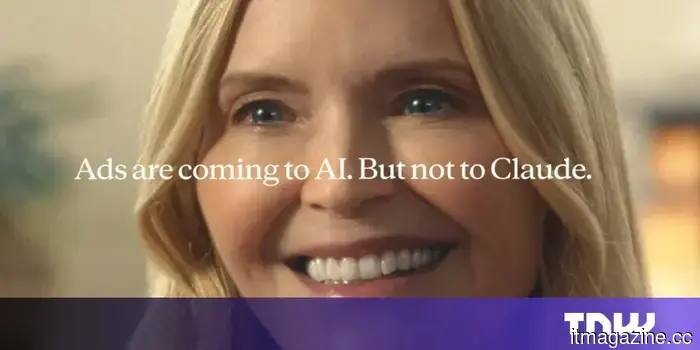
Anthropic invested millions in Super Bowl advertisements to mock OpenAI.
Anthropic's advertising showdown with OpenAI during the Super Bowl transforms the monetization of AI into a spectacle, highlighting how ethical posturing has overshadowed substantive discussions about advertisements.