
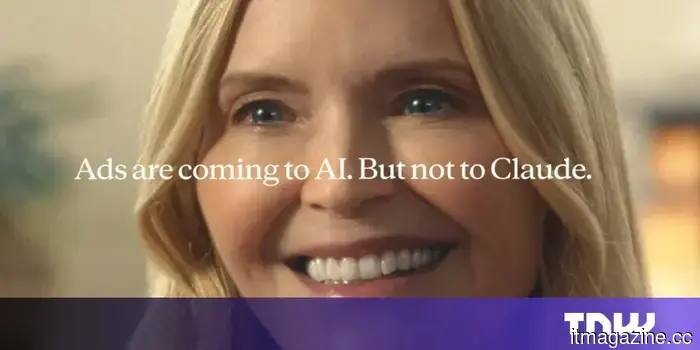
Anthropic invested millions in Super Bowl advertisements to poke fun at OpenAI.
Everyone knows that Super Bowl commercials come with a high price tag, are over-the-top, and aim to spark discussion. What we didn’t anticipate was an AI startup using this prime advertising stage to take aim at a competitor’s marketing strategy.
That’s precisely what Anthropic has accomplished. The company purchased Super Bowl airtime to convey a straightforward message: “Ads are coming to AI, but not to Claude.” Their advertisements feature a chatbot delivering product pitches mid-conversation, concluding with a distinct contrast to their own promise of being ad-free.
Even advertisements these days have changed significantly.
Video: Can I get a six pack quickly?, uploaded by Anthropic and Claude on YouTube.
On the surface, it’s a clever positioning. In reality, it represents a symbolic escalation in the ongoing AI narrative battle, shifting from discussions around technical features and safety to brand virtue signaling.
The disagreement isn’t just about technology; it’s about identity.
Here’s the context: OpenAI, confronted with massive infrastructure costs and financial pressure, has indicated a shift toward advertisements in the free and lower-cost versions of ChatGPT, asserting that they’ll be clearly marked and won’t affect the assistant’s output.
Anthropic has capitalized on this to present itself as the ethical alternative, a chatbot that will remain ad-free. I will keep these ads for potential future use.
But let’s examine that further.
Ads in any costly product are a practical approach to monetization, not a distressing scenario. OpenAI’s plan doesn’t entail bots haphazardly pitching breakfast cereal mid-response. Such an exaggerated representation belongs in satire, not a legitimate product comparison.
OpenAI’s CEO, Sam Altman, countered by labeling Anthropic’s representation as “clearly dishonest,” highlighting that the company won’t incorporate ads in the intrusive manner suggested.
That exchange reveals much about the narrative surrounding this story.
What we’re witnessing is brand signaling, rather than ethical clarity.
This confrontation underscores a larger trend: ethical positions are being utilized as marketing tools. Rather than engaging in discussions about the trade-offs inherent in operating large AI models—like costs, access, and user options—the conversation has boiled down to a simple morality tale: “Ads are bad; we are good.”
That’s not a serious examination of business realities; it’s advertising masquerading as principle.
Whether conversational AI should feature advertisements isn’t a clear ethical issue like privacy or data misuse. It’s a design choice with tangible consequences.
Free users may gain broader access, potentially subsidized by ads, while paying customers can avoid them. Those who prioritize an ad-free experience can pay more. Users indifferent to ads can select products that fit their preferences.
This is about economics, not moral absolutes.
What makes this situation intriguing, and somewhat absurd, is that both Anthropic and OpenAI are unprofitable and vying for narrative dominance just as much as market share. Spending Super Bowl-level funds to debate why your chatbot won’t display ads feels less like distinguishing products and more like a branding contest aimed at investors and tech analysts.
This isn’t merely two companies bickering over who’s less commercial; it reflects a broader issue in AI discussions: nuance is often lost in oversimplification. Instead of clearly communicating the real trade-offs for users regarding cost structures, pricing tiers, and data policies, we see satirical commercials aired to millions, reducing intricate decisions to sound bites.
This indicates how the AI narrative is shifting: not through clear discussions about trade-offs and user impact, but rather through carefully crafted messages meant to elicit applause. If we aim for a responsible dialogue about monetization in AI, it should take place outside of game-day promotions and brand theatrics.
Honestly, I miss the times when we critiqued errors in commercials, when advertising was genuinely creative because it stemmed from shared insights we all recognized, and when the jokes felt original. After all, they weren’t drawn from an AI’s database. That’s just my perspective.
The only genuine highlights at this year’s Super Bowl are Bad Bunny and Puerto Rico being a U.S. territory.
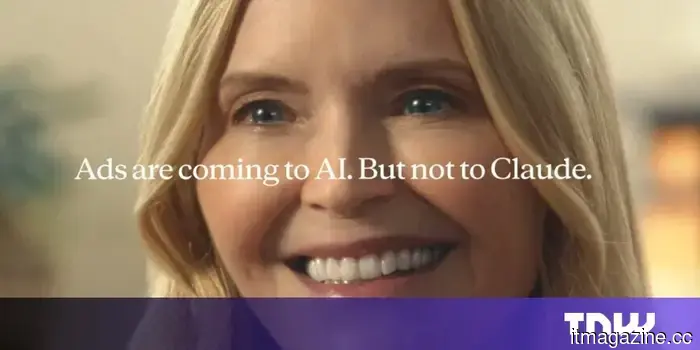
Anthropic invested millions in Super Bowl advertisements to poke fun at OpenAI.
Anthropic's Super Bowl advertising rivalry with OpenAI transforms AI monetization into a spectacle, highlighting how ethical posturing has overshadowed genuine discussions on advertising.