
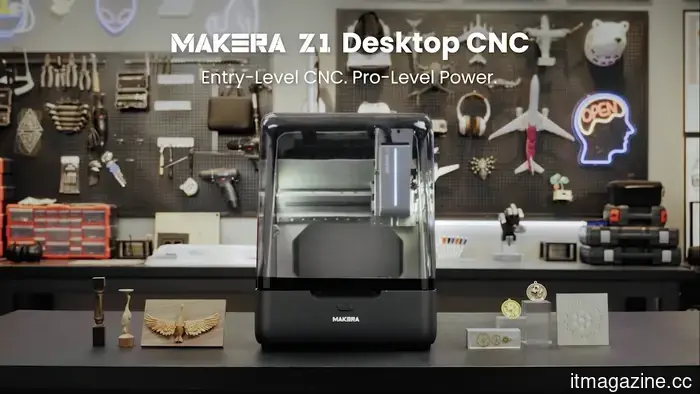
Within Makera's investment in worldwide creators as desktop CNC technology gains traction.
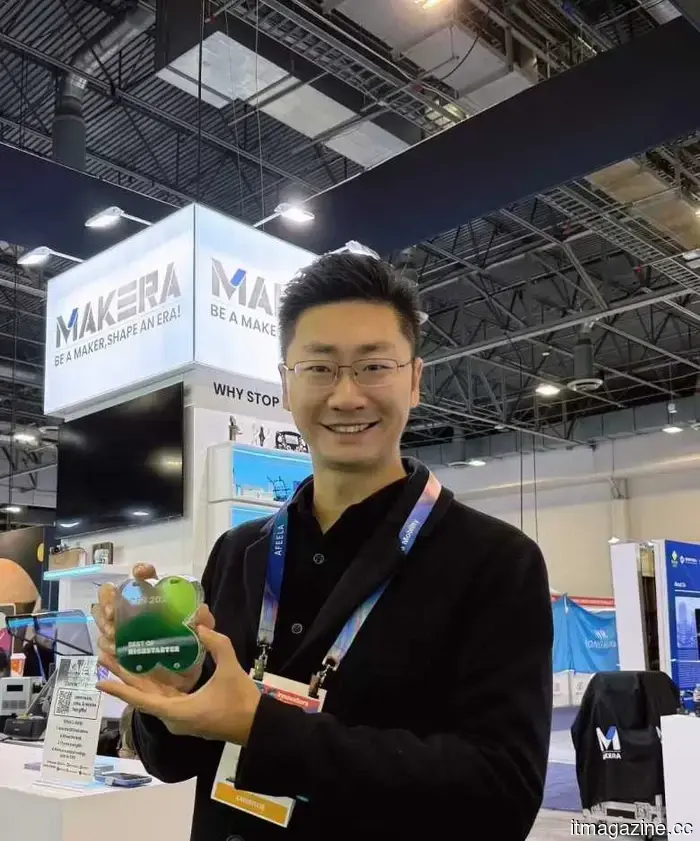
In recent years, with the increasing accessibility of digital manufacturing technology, desktop tools for creators and small businesses have begun to attract more attention. One such company is Beijing Makera Technology Co., Ltd. (referred to as Makera), which was founded in 2019. Makera's mission is to bring traditional industrial-grade manufacturing capabilities to everyday desks and home settings, allowing more individuals to engage in creation and hands-on fabrication.
Makera’s primary offerings are desktop CNC (Computer Numerical Control) machines, which are more commonly known as computer-controlled carving and cutting machines. These machines are operated via computer programs, enabling them to carve, cut, and process various materials like wood, plastic, and aluminum. For general users, CNC machines can be utilized to make crafts, custom gifts, or prototypes and are frequently used in education, product development, and small-scale production.
The Carvera series from Makera is designed to execute intricate carving and cutting tasks, allowing users to take digital designs and transform them into tangible products. The Carvera Air and the latest Makera Z1 further enhance these capabilities, featuring improved precision, a wider range of compatible materials, and additional functions like laser engraving. Essentially, these machines empower users to accomplish what once required a fully equipped professional workshop from the comfort of their homes.
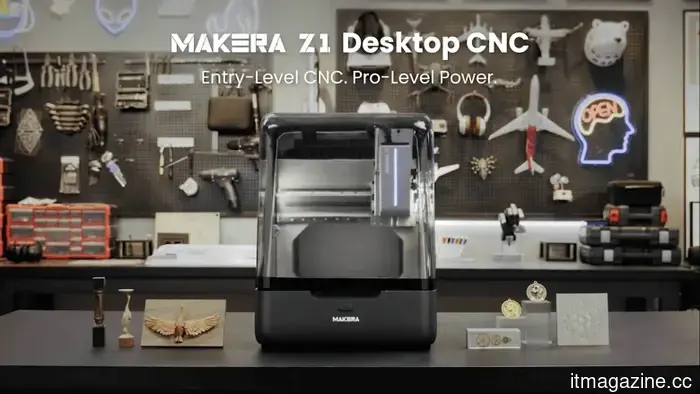
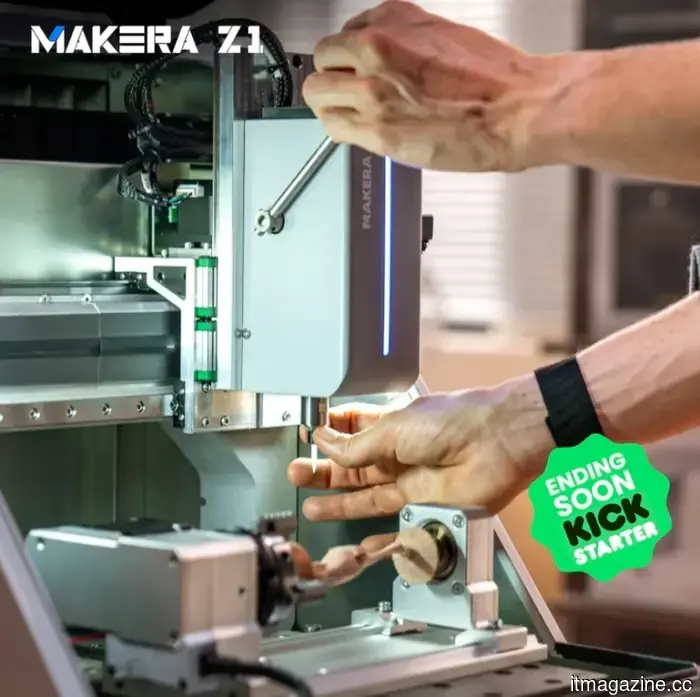
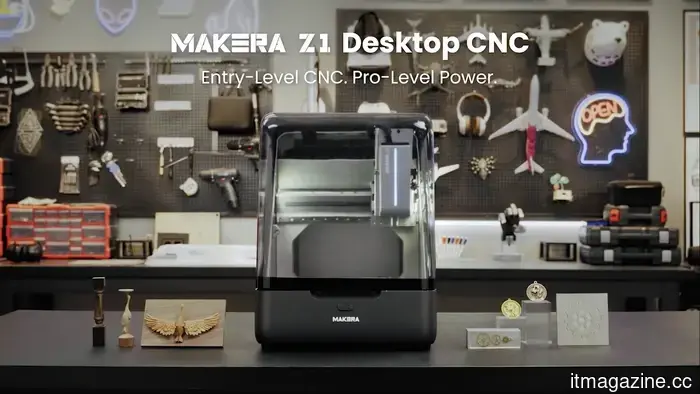
The Makera Z1 is a compact and user-friendly desktop CNC machine, boasting high precision of approximately 0.02 millimeters and offering multiple functionalities. It is suitable for various projects, including creating wooden items, manufacturing small metal components, developing PCB (Printed Circuit Board) prototypes, crafting models, or serving educational purposes. Compared to traditional large CNC machines, the Z1 is more accessible and space-efficient, making it a great fit for makers, classrooms, and design studios.
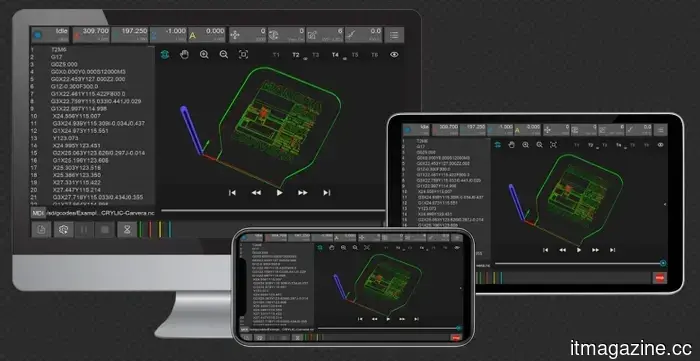
In addition to its hardware, Makera invests significantly in software and community support. With its proprietary Makera Studio software, users can convert design files into machining programs, visualize the process, and make adjustments prior to actual cutting. Moreover, the company operates an online platform where creators can exchange projects and tips, simplifying the learning curve for newcomers.
From a market perspective, Makera’s products have garnered attention both within China and internationally. The company reaches global customers directly through crowdfunding platforms, which have shown strong demand. Both the Carvera and Carvera Air surpassed one million dollars in funding on Kickstarter, while the recent Makera Z1 achieved over ten million dollars in just 45 days. This enthusiastic response indicates significant global interest in powerful yet accessible desktop manufacturing tools.
Makera distinguishes itself from typical consumer electronics brands by concentrating on creating tools for makers, designers, educational institutions, and small manufacturing teams. Their machines are not only easier to use but also versatile enough to accommodate projects ranging from crafts and classroom activities to prototypes and small production runs.
To gain insight into Makera’s strategies, our team spoke with Dyson, the company’s CMO, about their product development and global outreach.
Q: Why did Makera prioritize overseas markets?
Dyson: The reasoning is straightforward—the market conditions differ. In China, consumers tend to prefer immediate solutions, buying off-the-shelf items like chairs because they are inexpensive and readily available. Conversely, in the US and Europe, particularly in the US, there is a strong culture of DIY. People enjoy creating their own products and are more inclined to invest in tools that enhance efficiency and precision. Our primary users are largely international, where the market is more developed and educational costs are lower.
Q: How do you persuade Western consumers to invest in higher-priced products?
Dyson: It ultimately boils down to the product itself. Storytelling doesn’t hold much weight in the maker tools market—performance is key. We integrate industrial-grade features, such as automatic tool changing and high-precision machining, into a desktop model at a fraction of industrial costs. When users experience the machine firsthand, its value becomes clear, which is much more persuasive than any marketing campaign.
Q: Are there cultural differences with your team in China and users abroad?
Dyson: Initially, we assumed our user base consisted mainly of tech enthusiasts capable of navigating complexities. However, a significant number of our users are designers or jewelers who prefer not to engage in programming. They simply want to press a button and create. Since we use a direct-to-consumer approach, we invest considerable time in user communities, particularly on platforms like Discord and Facebook. We actively seek feedback and complaints and implement changes swiftly. Nowadays, our product decisions are driven by real user insights rather than assumptions made in meetings.
Q: How does China’s supply chain, especially in the Greater Bay Area, benefit Makera in international markets?
Dyson: Frankly, we'd likely not have survived the prototype stage without China's supply chain. It offers not only cost advantages but also speed. In Shenzhen, for instance, you can send a design in the morning and receive the part by the afternoon. In the US, such a
Other articles
 How Flippa Is Breaking Down Language Barriers in Global Deal-Making
Flippa is eliminating language obstacles in global mergers and acquisitions with its AI-driven multilingual Deal Room, assisting buyers and sellers in finalizing cross-border digital business transactions.
How Flippa Is Breaking Down Language Barriers in Global Deal-Making
Flippa is eliminating language obstacles in global mergers and acquisitions with its AI-driven multilingual Deal Room, assisting buyers and sellers in finalizing cross-border digital business transactions.
 Inside Makera's investment in global makers as desktop CNC technology reaches its potential.
In recent years, with the increasing accessibility of digital manufacturing technology, desktop-level tools for creators and small enterprises have begun to
Inside Makera's investment in global makers as desktop CNC technology reaches its potential.
In recent years, with the increasing accessibility of digital manufacturing technology, desktop-level tools for creators and small enterprises have begun to
 AI-driven demand indicates an extended semiconductor upcycle lasting until 2026 and possibly beyond.
During the UBS Greater China Conference 2026, which took place in Shanghai on Wednesday, Jimmy Yu, the China Technology Semiconductor Analyst at UBS Securities, conveyed his
AI-driven demand indicates an extended semiconductor upcycle lasting until 2026 and possibly beyond.
During the UBS Greater China Conference 2026, which took place in Shanghai on Wednesday, Jimmy Yu, the China Technology Semiconductor Analyst at UBS Securities, conveyed his
 How Flippa is Eliminating Language Barriers in Global Transactions
Flippa is eliminating language obstacles in global M&A through its AI-driven multi-language Deal Room, assisting buyers and sellers in finalizing cross-border digital business transactions.
How Flippa is Eliminating Language Barriers in Global Transactions
Flippa is eliminating language obstacles in global M&A through its AI-driven multi-language Deal Room, assisting buyers and sellers in finalizing cross-border digital business transactions.
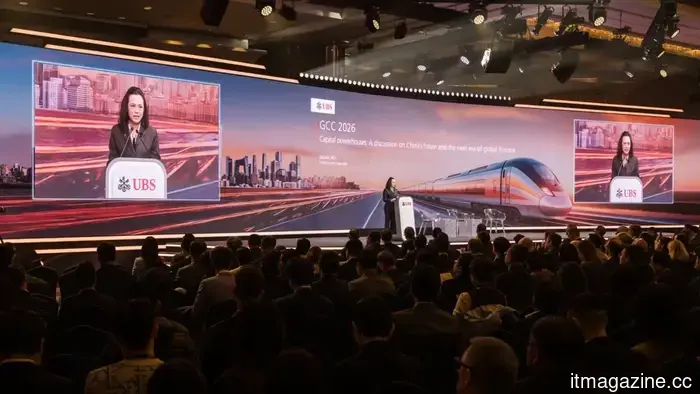 AI-driven demand indicates a prolonged semiconductor upcycle extending into 2026 and beyond.
During the UBS Greater China Conference 2026 in Shanghai on Wednesday, Jimmy Yu, a Semiconductor Analyst for China at UBS Securities, presented his
AI-driven demand indicates a prolonged semiconductor upcycle extending into 2026 and beyond.
During the UBS Greater China Conference 2026 in Shanghai on Wednesday, Jimmy Yu, a Semiconductor Analyst for China at UBS Securities, presented his
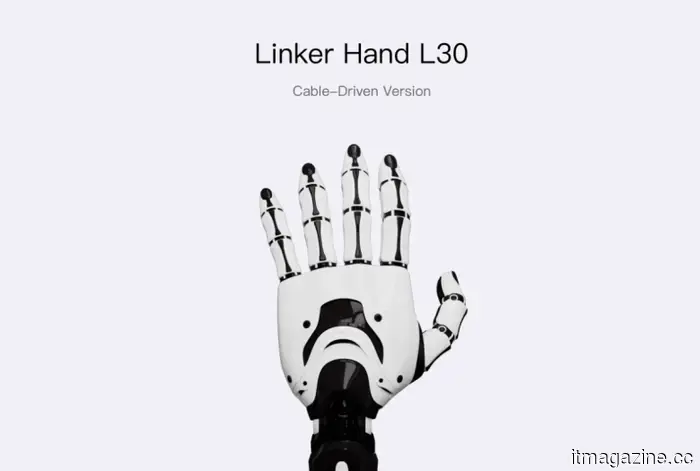 Investigating physical AI: Linkerbot is focused on equipping robots with human-like hands to operate in the real world.
If large language models act as the brains of machines, then agile robotic hands are evolving into their physical forms. As AI transitions from the digital realm into
Investigating physical AI: Linkerbot is focused on equipping robots with human-like hands to operate in the real world.
If large language models act as the brains of machines, then agile robotic hands are evolving into their physical forms. As AI transitions from the digital realm into
Within Makera's investment in worldwide creators as desktop CNC technology gains traction.
In recent years, as digital manufacturing technology has become increasingly available, desktop-level tools for creators and small enterprises have begun to