

How Flippa Is Breaking Down Language Barriers in Global Deal-Making
For many years, access to high-quality deal flow and advanced M&A infrastructure has primarily catered to well-connected investors and large corporations. Small businesses and independent founders, especially those outside English-speaking regions, often encounter even greater obstacles. Factors such as language, geography, and limited networks can result in opportunities being stifled at borders.
In this context, Flippa, a platform for purchasing and selling digital businesses, is changing the landscape and breaking down those barriers. Led by CEO Blake Hutchison, the company has successfully linked buyers and sellers across various continents, languages, and price ranges, facilitating transactions ranging from $100,000 to $10 million. With the introduction of its AI-powered multi-language Deal Room, Flippa is tackling what it identifies as a significant disadvantage in global business transactions and M&A, labeling it the “Language Tax.”
Established in 2009, Flippa has evolved into a worldwide marketplace where entrepreneurs can buy and sell digital assets, including e-commerce websites, SaaS companies, YouTube channels, online communities, and mobile apps. Hutchison mentions that the platform serves users from 189 countries, having attracted over 450,000 new buyers in just the past two years. “Our internal data indicates that cross-border transactions now comprise roughly 85% of all deals completed on our platform,” he explains. “The growth has been especially notable in Europe. With a highly fragmented market characterized by a significant volume of cross-border trade and multiple languages, Europe often encounters structural challenges in cross-border deal-making.”
He observes that European firms are increasingly being purchased by international buyers, particularly from the US, which represents a substantial portion of the demand. However, as deal volumes steadily decline, Hutchison believes that language barriers have historically hindered or completely obstructed viable transactions.
The new multi-language Deal Room from the company aims to eliminate those obstacles altogether. In this Deal Room, Hutchison points out that buyers and sellers can negotiate and conduct transactions in their preferred languages. “For instance, a French seller can communicate in French with an Italian or English-speaking buyer, who will receive an instant translation of the message into their own language,” he explains, noting how replies can also be translated in real time, while retaining the original message for verification and clarity.
Hutchison says, “Our objective is to streamline the deal-making process to be as efficient and user-friendly as possible. Whether you are a SaaS founder in Paris or an e-commerce operator in Berlin, you should have the option to negotiate your exit in the language you prefer.”
In addition to the translation functionalities in the Deal Room, Flippa has rolled out a fully localized French version of its platform, with a Spanish version set to follow soon. This expansion reflects user demand and acknowledges that French and Spanish are not only widely spoken across Europe but also globally. Spanish is spoken by 550 million people worldwide, and it is prevalent in the US and Brazil. Similarly, French is the fifth most spoken language globally, with 321 million speakers, 61.8% of whom reside in parts of North Africa and Sub-Saharan Africa, significantly broadening the global outreach of European-founded businesses.
Hutchison notes that this advancement coincides with a resurgence in Europe’s M&A market, which has an estimated deal value of USD 412 billion, with mid-market and digital-first businesses among the fastest-growing segments. He asserts that Flippa’s role has been to create infrastructure that allows businesses to find deals with a broader reach than traditional investment banks, yet at a fraction of the cost.
“We often refer to Flippa as the investment bank for the 99%,” Hutchison states. “The difference now is that geography and language no longer dictate access. The demand for cross-border deals has always existed; the technology just needed to catch up.”
Flippa continues to incorporate AI-driven discovery, valuation, and outreach tools through its proprietary LaurenAI engine. “The model has been trained on over 200,000 historical listings and transactions,” he explains. “This system assists buyers in spotting opportunities, estimating enterprise value, and initiating large-scale conversations.” It automatically indexes the web to discover businesses within SaaS, e-commerce, apps, publishing, and next-generation media.
Human expertise remains integral to the process, as certified brokers and M&A professionals assist with transactions after a match is found. As Hutchison emphasizes, “LaurenAI equips individuals with the ability to access off-market deals and generate pipelines similar to how Wall Street participants operate, but without the hurdles of capital or connections.”
He points out that entrepreneurs who might not feel secure negotiating intricate deal terms in English can now tap into global liquidity without the need for intermediaries or outside advisors. At the same time, international buyers can discover high-quality European businesses that were previously challenging to source or engage with.
As digital entrepreneurship continues to globalize, Flippa is positioning itself at the forefront of a more inclusive M&A ecosystem, one where language no longer serves as a barrier to ambition

Other articles
 La fintech française Pennylane lève 175 millions d'euros.
Paris-based fintech Pennylane has secured €175 million in funding to enhance its AI offerings and grow its financial platform throughout Europe, achieving a valuation of €3.6 billion.
La fintech française Pennylane lève 175 millions d'euros.
Paris-based fintech Pennylane has secured €175 million in funding to enhance its AI offerings and grow its financial platform throughout Europe, achieving a valuation of €3.6 billion.
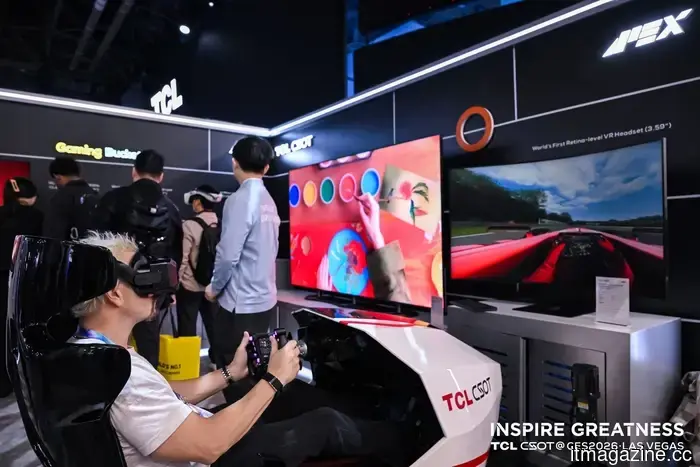 From the laboratory to the living room: how CSOT transforms research into dependable displays.
With the rising prevalence of consumer electronics and smart devices, display technology is taking on a more significant role in electronic devices. Chinese
From the laboratory to the living room: how CSOT transforms research into dependable displays.
With the rising prevalence of consumer electronics and smart devices, display technology is taking on a more significant role in electronic devices. Chinese
 French fintech company Pennylane secures €175 million in funding.
Paris-based fintech Pennylane secures €175 million in funding to enhance its AI offerings and grow its financial platform throughout Europe, achieving a valuation of €3.6 billion.
French fintech company Pennylane secures €175 million in funding.
Paris-based fintech Pennylane secures €175 million in funding to enhance its AI offerings and grow its financial platform throughout Europe, achieving a valuation of €3.6 billion.
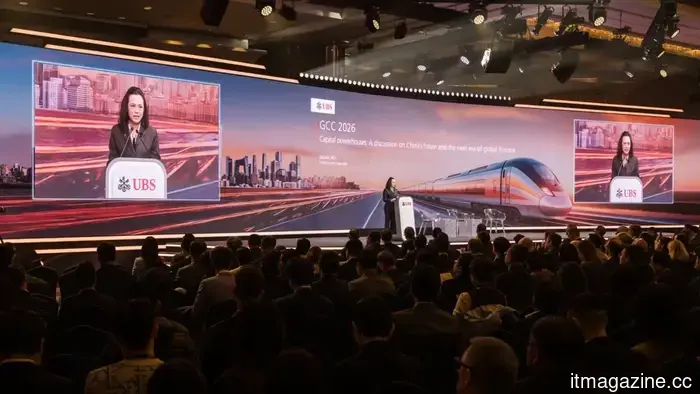 AI-driven demand indicates a prolonged semiconductor upcycle extending into 2026 and beyond.
During the UBS Greater China Conference 2026 in Shanghai on Wednesday, Jimmy Yu, a Semiconductor Analyst for China at UBS Securities, presented his
AI-driven demand indicates a prolonged semiconductor upcycle extending into 2026 and beyond.
During the UBS Greater China Conference 2026 in Shanghai on Wednesday, Jimmy Yu, a Semiconductor Analyst for China at UBS Securities, presented his
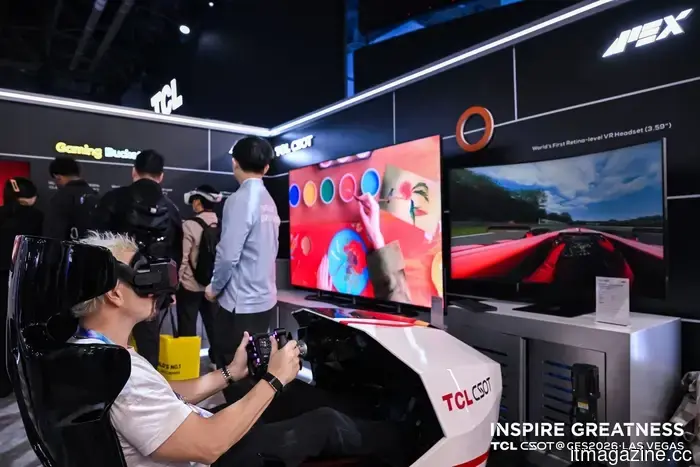 From laboratory to living space: how CSOT transforms research into dependable displays.
With the growing prevalence of consumer electronics and smart devices, the significance of display technology in electronic devices is rising.
From laboratory to living space: how CSOT transforms research into dependable displays.
With the growing prevalence of consumer electronics and smart devices, the significance of display technology in electronic devices is rising.
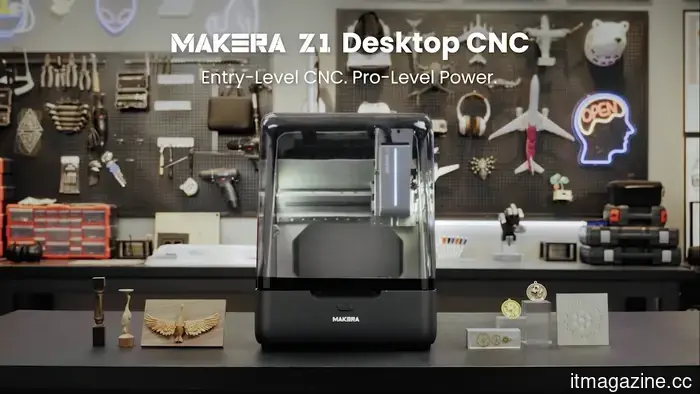 Within Makera's investment in worldwide creators as desktop CNC technology gains traction.
In recent years, as digital manufacturing technology has become increasingly available, desktop-level tools for creators and small enterprises have begun to
Within Makera's investment in worldwide creators as desktop CNC technology gains traction.
In recent years, as digital manufacturing technology has become increasingly available, desktop-level tools for creators and small enterprises have begun to
How Flippa Is Breaking Down Language Barriers in Global Deal-Making
Flippa is eliminating language obstacles in global mergers and acquisitions with its AI-driven multilingual Deal Room, assisting buyers and sellers in finalizing cross-border digital business transactions.