
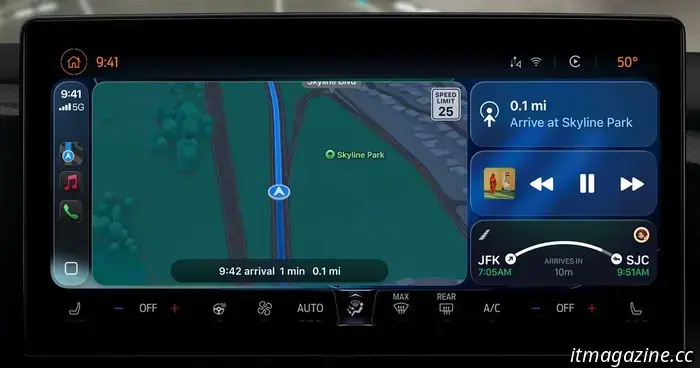
You may soon encounter CarPlay Ultra outside of a $200,000 Aston Martin.
Digital Trends may receive a commission when you make purchases through links on our website. Why you can trust us?
After an initial slow launch limited to high-end vehicles, Apple’s custom dashboard system is anticipated to make its way into a significant mainstream model later this year.
CarPlay Ultra has had a challenging debut. To date, it has been primarily available exclusively in an Aston Martin costing over $200,000, which seems unusual for a company of Apple’s stature to confine a new platform to such a niche market.
However, this situation might change soon as per a Bloomberg report. CarPlay Ultra is expected to be featured in at least one major new model from Hyundai or Kia in the latter half of this year, which would introduce the system to a much larger audience than its current limited reach.
Understanding the slow rollout
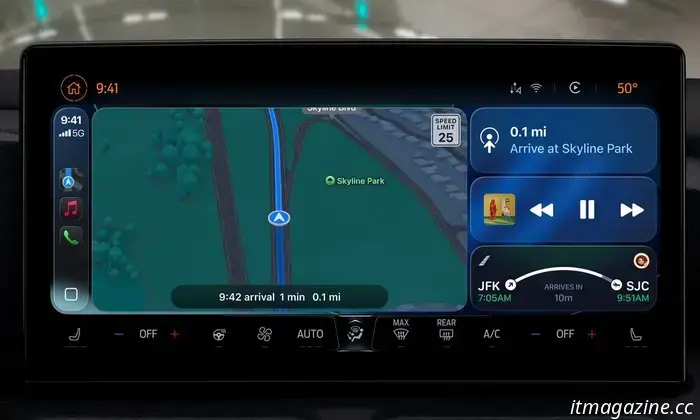
Unlike the typical plug-and-play convenience of standard CarPlay, CarPlay Ultra is designed as a tailored interface for each car brand. This requires Apple’s design team to collaborate closely with an automaker to create a unique layout that fits that specific vehicle's displays and overall interior design.
This custom approach inevitably slows the process down. It also creates a dilemma for car manufacturers that prefer to control the aesthetic and experience of their dashboards. Some brands are hesitant to relinquish this aspect to Apple, especially after Apple's prior attempts to develop its own vehicle.
Implications for consumers
If Hyundai or Kia introduces CarPlay Ultra in a mainstream model, it will serve as the first significant validation that Apple can extend the concept beyond ultra-luxury vehicles. CarPlay Ultra aims to deliver an experience akin to the car's native system, rather than simply mirroring a phone display, making it hard to assess its value when very few people have had the chance to experience it.
For consumers, the choice is straightforward. They can either stick with the automaker’s software or allow Apple to take control of more of the screens they interact with regularly. The promise of Ultra lies in providing a uniform experience across the cabin, but this is contingent on the willingness of car manufacturers to share that screen space.
What to monitor next
The upcoming announcement needs specific names and trim levels. If Ultra appears on a high-volume model rather than just a premium variant, it would demonstrate genuine commitment and could encourage other automakers to accelerate their plans. Conversely, if it remains limited to a top-tier model, it may remain a luxury feature longer than desired by drivers.
Tesla is another key player in this scenario. Regular CarPlay, rather than Ultra, is reportedly still in development for Tesla, with more updates expected soon. If this materializes, it will be another win for Apple and a reminder that the standard CarPlay story is still progressing.
Paulo Vargas is an English major turned reporter turned technical writer, consistently returning to...
This innovative battery technology allows for fast charging of your EV without compromising battery health.
CATL claims it has developed a battery capable of handling ultra-fast charging without causing long-term damage to battery health. If accurate, this advancement could resolve one of the major issues hindering the wider adoption of electric vehicles. In a video released in late January, the battery manufacturer introduced its new 5C lithium-ion battery, designed to accommodate ultra-fast charging without significant impact on long-term battery health. According to Inside EVs, CATL claims that the 5C battery can maintain 80% of its initial capacity after 1,400 charge cycles at a temperature of 140°F (60°C), which equates to approximately 522,000 miles of operation.
Honda has successfully tested an AI system that enables vehicles to automatically report potholes and damaged signs.
The pilot project in Ohio employed sensors to identify road hazards and transmit real-time data to authorities. If you have traveled the same route repeatedly, you likely know where signs have faded or where a pothole keeps being “fixed” but never really disappears. Such road issues are easily recognizable from the driver’s seat, but placing them on a maintenance schedule often takes much longer. To tackle this, Honda has partnered with DriveOhio on a new AI-driven road safety program designed to proactively detect and report problems using data collected from vehicles in active traffic.
In their official announcement, Honda stated it completed what it calls a national-first trial in Ohio, utilizing advanced vision and LiDAR sensors to pinpoint issues such as potholes, crumbling road surfaces, damaged guardrails, and missing or obstructed road signs. During the trial, a small fleet of Honda vehicles covered roughly 3,000 miles over a combination of urban and rural routes, operating under various weather conditions and times of day, to identify these problems with notable accuracy.
Slate intends to develop more than just an affordable truck.
The electric vehicle startup Slate Auto may have gained attention with its low-cost electric pickup, but it plans to expand beyond that. In a recent discussion with InsideEVs, CEO Chris Barman mentioned that while the company’s first model, a basic EV



Other articles
 Chrome might soon implement Gemini antiscam protection to identify scams, but it won’t monitor every website you access.
Google is trialing Gemini antiscam protection in Chrome, a server-side scam verification that operates only when a page appears to be potentially harmful. It is disabled by default and necessitates Enhanced Safe Browsing to be enabled.
Chrome might soon implement Gemini antiscam protection to identify scams, but it won’t monitor every website you access.
Google is trialing Gemini antiscam protection in Chrome, a server-side scam verification that operates only when a page appears to be potentially harmful. It is disabled by default and necessitates Enhanced Safe Browsing to be enabled.
 Sony's innovative patent for a PlayStation controller allows for buttons to be placed wherever you desire.
Sony has obtained a new patent that envisions a PlayStation controller featuring reconfigurable on-screen buttons. This concept replaces many of the traditional fixed top-face controls with a sizable touchscreen area. Rather than being constrained to a single D-pad and a cluster of face buttons, you could position touch zones according to where your thumbs naturally rest. Additionally, you would have the option to resize these zones or rotate them.
Sony's innovative patent for a PlayStation controller allows for buttons to be placed wherever you desire.
Sony has obtained a new patent that envisions a PlayStation controller featuring reconfigurable on-screen buttons. This concept replaces many of the traditional fixed top-face controls with a sizable touchscreen area. Rather than being constrained to a single D-pad and a cluster of face buttons, you could position touch zones according to where your thumbs naturally rest. Additionally, you would have the option to resize these zones or rotate them.
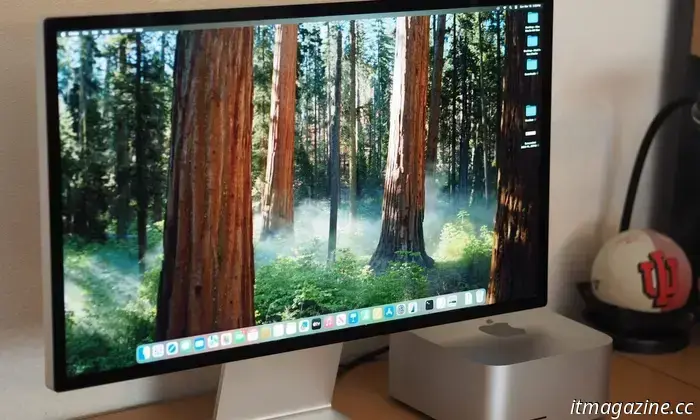 Your anticipation for an updated Apple Studio Display could soon be at an end.
A recent report indicates that Apple's Studio Display update may be released in the next few months.
Your anticipation for an updated Apple Studio Display could soon be at an end.
A recent report indicates that Apple's Studio Display update may be released in the next few months.
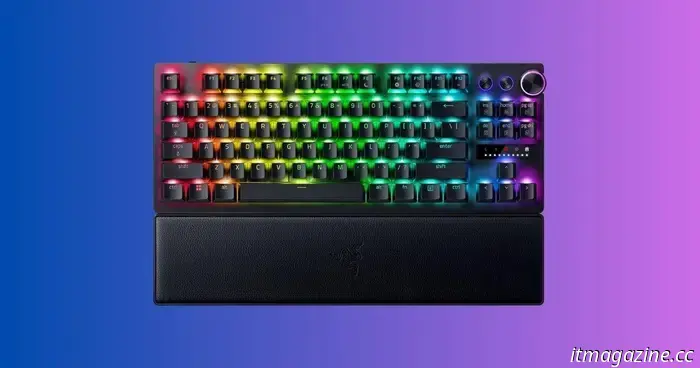 The "rapid trigger" revolution: the end of mechanical switches.
Over the past ten years, "Cherry MX Red" has been regarded as the benchmark for gaming. However, by 2026, this mechanical switch has become officially outdated for competitive gaming. The current trend is "Hall Effect" (magnetic) technology. In contrast to a mechanical switch, which requires a physical contact to log a keypress, a Hall Effect switch employs a […]
The "rapid trigger" revolution: the end of mechanical switches.
Over the past ten years, "Cherry MX Red" has been regarded as the benchmark for gaming. However, by 2026, this mechanical switch has become officially outdated for competitive gaming. The current trend is "Hall Effect" (magnetic) technology. In contrast to a mechanical switch, which requires a physical contact to log a keypress, a Hall Effect switch employs a […]
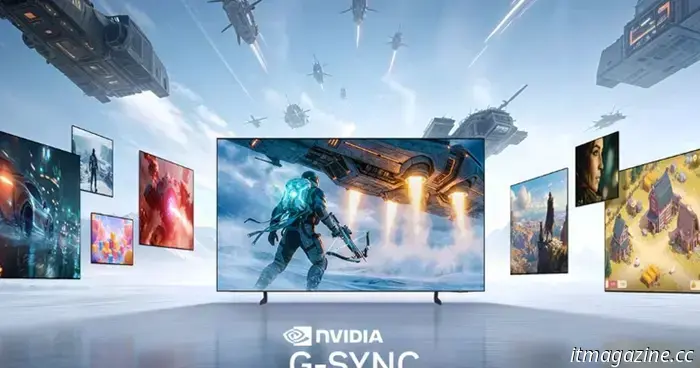 Samsung's 2026 OLED televisions incorporate Nvidia G-SYNC for your configuration.
Samsung has announced that Nvidia G-SYNC Compatible will be available on its 2026 OLED TVs, beginning with the S95H, S90H, and S85H models. Combine that with refresh rates of up to 165Hz, and you have a more refined big-screen PC gaming experience.
Samsung's 2026 OLED televisions incorporate Nvidia G-SYNC for your configuration.
Samsung has announced that Nvidia G-SYNC Compatible will be available on its 2026 OLED TVs, beginning with the S95H, S90H, and S85H models. Combine that with refresh rates of up to 165Hz, and you have a more refined big-screen PC gaming experience.
You may soon encounter CarPlay Ultra outside of a $200,000 Aston Martin.
CarPlay Ultra has been difficult to come by outside of a $200,000 Aston Martin, but it could finally debut in a common Hyundai or Kia model later this year, marking Apple’s first significant opportunity to expand its custom dashboard system.