

Google Withdraws AI Health Summaries After Revelations of Risky Medical Mistakes
When Google’s AI Provides the Wrong Answer
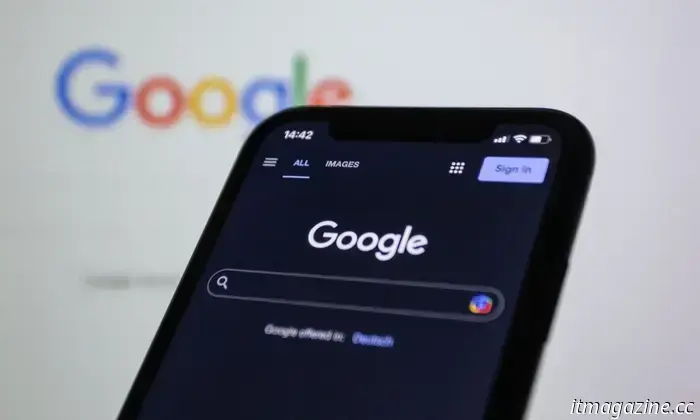
We’ve all experienced it. You notice an unusual pain in your side or receive an unclear test result from your doctor, and your instinct is to search on Google. You aren’t seeking a medical degree; you're merely after a quick reassurance of “am I okay?” However, Google has recently had to halt its AI search summaries because seeking medical advice from a robot can potentially be dangerous.
Google quietly removed several AI-generated health summaries from its search results following an investigation that found they were delivering inaccurate—and frankly alarming—information. This action was prompted by a report from The Guardian, which highlighted that these “AI Overviews”—the colorful boxes that appear at the top of your search results—were providing incomplete information.
A major example involved liver blood tests.
When you asked the AI for “normal ranges,” it simply produced a list of numbers without considering factors such as your gender, age, ethnicity, or medical history. It just outputted a flat number. Medical professionals reviewed this and essentially stated, “This is dangerous.”
The issue isn’t just that the AI was wrong; it’s that it delivered misleading information. Consider someone with early-stage liver disease looking up their test results. If the AI indicates their numbers are within the “normal” range from a random website, that individual might conclude, “Oh, I’m fine,” and skip a follow-up appointment. In actuality, a “normal” number for a 20-year-old may signify a warning for a 50-year-old. The AI doesn’t possess the nuance to understand this distinction, and that lack of context can lead to significant, real-world repercussions.
In response, Google acted typically—they removed the specific queries that were highlighted and claimed that their system generally provides useful information. But here’s the kicker: health organizations like the British Liver Trust found that simply rephrasing the question generated the same erroneous information again. It's reminiscent of a digital whack-a-mole—correct one mistake, and five seconds later, the AI produces another.
The underlying issue here is trust.
Since these AI summaries appear at the top of the page, above actual links to hospitals or medical journals, they seem authoritative. We have been conditioned to trust the top result. When Google presents an answer in a tidy box, our brains subconsciously categorize it as the “correct” answer. But it isn't. It is merely a prediction engine attempting to anticipate subsequent words.
For now, this serves as a significant wake-up call. AI can effectively summarize an email or organize a travel itinerary, but when it pertains to your health, it evidently isn’t ready for critical application. Unless these systems gain context-awareness—or until Google implements stricter controls—it is likely safer to bypass the AI and click on a genuine link from a qualified doctor. Speed is beneficial, but accuracy is paramount when discussing health matters.
Moinak Pal has been engaged in the technology sector, covering both consumer-focused technology and automotive technology for the foreseeable future.
Your first NVIDIA N1X laptop may come from Dell.
Dell’s involvement in the N1X trail indicates it might be among the first OEMs prepared to ship, which is crucial for anyone monitoring who will actually launch these laptops first.
A Dell-tested NVIDIA N1X laptop has surfaced again through a test listing leaked on X, providing one of the clearest signals yet that Nvidia’s much-discussed laptop processor plans are receiving real attention from an OEM.
What makes this noteworthy is the nature of the evidence. An old record related to an engineering sample implies hands-on qualification work rather than mere speculation from observers of specifications.
Your next retro mini PC could resemble a classic PlayStation.
The new design incorporates elements from the PS1 and Dreamcast but remains practical with front USB-A, USB-C, and a 3.5mm jack.
Acemagic is embracing the retro mini PC trend with a new design inspired by the Sega Dreamcast and the original PlayStation. It’s a compact desktop that looks like it belongs with your vintage consoles, rather than concealed behind a monitor.
This wasn't the sole nostalgia piece showcased at CES 2026. Acemagic also introduced an NES-inspired mini PC, but the model styled after the Dreamcast and PlayStation is the one connected to AMD’s latest platform.
Apple has pinned its AI future on Gemini. Here’s how it might transform the iPhone experience for you.
Gemini's AI framework, a private means of AI processing combined with Apple's innovative work, sounds promising for my iPhone.
One of the most significant announcements in the tech industry—between two of the largest tech companies worldwide—was distilled into a brief joint statement of fewer than a hundred words. Apple disclosed that Gemini will be powering the revitalization of the Siri assistant, as well as the framework that will enhance AI software experiences on iPhones and Macs.
“These models will help drive future Apple Intelligence features, including a more personalized Siri





Other articles
 Your initial NVIDIA N1X laptop might be from Dell.
A Dell-tested NVIDIA N1X laptop has recently appeared in a new test record. This strongly suggests that Nvidia is moving forward with its laptop processor plans, although the details regarding Windows drivers and the timing of the launch are still uncertain.
Your initial NVIDIA N1X laptop might be from Dell.
A Dell-tested NVIDIA N1X laptop has recently appeared in a new test record. This strongly suggests that Nvidia is moving forward with its laptop processor plans, although the details regarding Windows drivers and the timing of the launch are still uncertain.
 Anthropic's Cowork transforms Claude into your active digital partner.
Anthropic's newest tool enables Claude to access local files to assist you with routine tasks.
Anthropic's Cowork transforms Claude into your active digital partner.
Anthropic's newest tool enables Claude to access local files to assist you with routine tasks.
 Your upcoming retro mini PC might resemble a classic PlayStation.
Acemagic's newest retro mini PC takes inspiration from the design of the Dreamcast and PS1, and integrates it with AMD's Gorgon Point platform. It appears to be suited for a TV stand, though the pricing and release date remain unspecified.
Your upcoming retro mini PC might resemble a classic PlayStation.
Acemagic's newest retro mini PC takes inspiration from the design of the Dreamcast and PS1, and integrates it with AMD's Gorgon Point platform. It appears to be suited for a TV stand, though the pricing and release date remain unspecified.
 SpaceX's Crew-11 is seen in a video as they get ready to head back home ahead of schedule.
SpaceX's Crew-11 is heading back from the International Space Station (ISS) earlier than planned because of a medical issue involving one of its astronauts. This marks the first instance in which NASA has opted to return a crew member prematurely due to a health concern. The Crew-11 team includes Americans Michael Fincke and Zena Cardman, along with [...]
SpaceX's Crew-11 is seen in a video as they get ready to head back home ahead of schedule.
SpaceX's Crew-11 is heading back from the International Space Station (ISS) earlier than planned because of a medical issue involving one of its astronauts. This marks the first instance in which NASA has opted to return a crew member prematurely due to a health concern. The Crew-11 team includes Americans Michael Fincke and Zena Cardman, along with [...]
 You could acquire a wearable from OpenAI, and it's more than just earbuds.
Smart Pikachu asserts that OpenAI is developing a wearable device called Sweetpea, designed to be worn behind the ear and featuring detachable components. An image resembling a schematic suggests it could combine listening capabilities with sensing technology.
You could acquire a wearable from OpenAI, and it's more than just earbuds.
Smart Pikachu asserts that OpenAI is developing a wearable device called Sweetpea, designed to be worn behind the ear and featuring detachable components. An image resembling a schematic suggests it could combine listening capabilities with sensing technology.
Google Withdraws AI Health Summaries After Revelations of Risky Medical Mistakes
In response to safety issues, Google has removed specific AI-generated health summaries and is reevaluating how its search AI manages delicate medical subjects.