
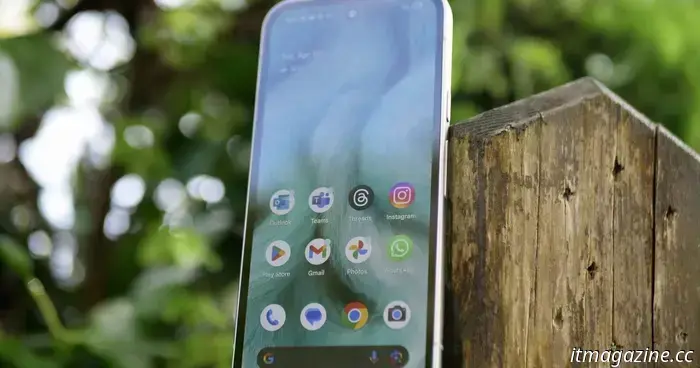
The native app lock on Android 17 might also conceal notifications from apps that are locked.
Google is subtly enhancing a native app lock feature in Android 17, with recent insights indicating how locked apps will interact with notifications and the system interface.
Recent leaks from the Canary build of Android 17 suggest that Google is making adjustments to how notifications function for locked apps. A report from Android Authority indicates that notifications from apps secured by the operating system's native app lock will still be visible, albeit without displaying key information.
For example, if a user has locked WhatsApp and receives a new message while the phone is inactive, a notification from the app will still appear on the device (whether on the lock screen or as a notification bubble at the top), but the content of the message and the chat will remain concealed.
This means that the details of the notification will be hidden unless the user unlocks WhatsApp or any other locked app. It's currently unclear whether the name of the locked app will be shown, though other manufacturers do display the name, and it seems likely that Google may implement this as well.
This development builds on prior findings regarding Android 17’s native App Lock API, which suggests that Google is genuinely working on a system-level method to lock individual apps without needing third-party apps or custom launchers, which can differ significantly between devices.
Once this feature is launched, it is expected to be seamlessly integrated into the Android operating system, allowing for both manual and automatic app locking that would require biometric authentication for access. The native app lock aims to create standardized privacy controls throughout the platform.
The feature could be particularly useful for banking, messaging, or work-related applications that contain confidential or personal information. If you've ever lent your stock Android or Pixel phone to someone briefly and regretted it, this native app lock will be beneficial for you.
The App Lock API is still in development. Google has not officially announced or hinted at this feature, but it is progressing steadily behind the scenes. If the company maintains its current development pace, Android 17 could feature its native app-locking system at launch for Pixel phones and other manufacturers utilizing the stock version of the operating system.
In related news, after LG, another significant brand is stepping away from the smartphone market, for now.
Asus has confirmed it will halt smartphone operations in 2026, postponing new ROG Phone and ZenFone models indefinitely. This decision follows years of difficulty competing in a market dominated by giants like Samsung, Apple, and Xiaomi. Although Asus smartphones were recognized for their robust hardware and innovative features, they struggled to connect with mainstream consumers.
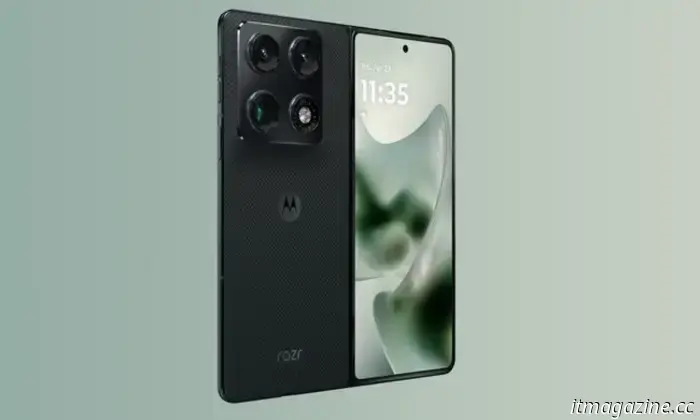
Motorola has finally introduced a foldable to compete with the Galaxy Fold 7 and Pixel 10 Pro Fold. The Motorola Razr Fold is set to receive a full launch in the coming months. Until now, Motorola had exclusively focused on flip phones while other brands like Samsung, Google, and OnePlus ventured into book-style foldables. However, at CES 2026, Motorola has embraced the traditional foldable phone format with the release of the Motorola Razr Fold.
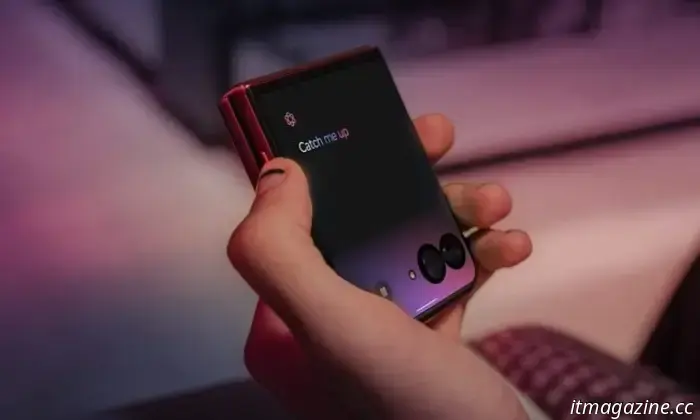
Lenovo and Motorola have unveiled Qira, a cross-device AI assistant for PCs and phones that aims to take charge of various tasks. Earlier in 2025, Motorola announced an AI bundle featuring proactive capabilities that utilized a combination of Perplexity, Gemini, and Meta’s open-source AI models on smartphones, offering functionality like on-screen guidance and voice assistance. At CES 2026, Motorola is revealing an updated version of this technology, which will also be available on Lenovo PCs.

Other articles
 AI company MiniMax, supported by MiHoYo, experiences a successful debut in Hong Kong, with its market valuation exceeding $11.5 billion.
Shares of MiniMax, an AI company supported by the Chinese gaming developer MiHoYo, skyrocketed over 70% during their trading debut in Hong Kong on Thursday, momentarily leading to
AI company MiniMax, supported by MiHoYo, experiences a successful debut in Hong Kong, with its market valuation exceeding $11.5 billion.
Shares of MiniMax, an AI company supported by the Chinese gaming developer MiHoYo, skyrocketed over 70% during their trading debut in Hong Kong on Thursday, momentarily leading to
 Rokid is offering a more affordable option for wearable control in smart glasses compared to Meta.
Rokid is combining its display-less smart glasses with Mudra’s neural wristband to provide wearable, touch-free control at a much more affordable price compared to Meta’s smart glasses and Neural Band.
Rokid is offering a more affordable option for wearable control in smart glasses compared to Meta.
Rokid is combining its display-less smart glasses with Mudra’s neural wristband to provide wearable, touch-free control at a much more affordable price compared to Meta’s smart glasses and Neural Band.
 These $350 OnePlus smartphones feature larger batteries than those of the Galaxy S25 and iPhone 17 combined.
Affordable OnePlus smartphones are now equipped with batteries that are almost double the capacity of their high-end competitors, showcasing the significant advancements in battery technology across different markets.
These $350 OnePlus smartphones feature larger batteries than those of the Galaxy S25 and iPhone 17 combined.
Affordable OnePlus smartphones are now equipped with batteries that are almost double the capacity of their high-end competitors, showcasing the significant advancements in battery technology across different markets.
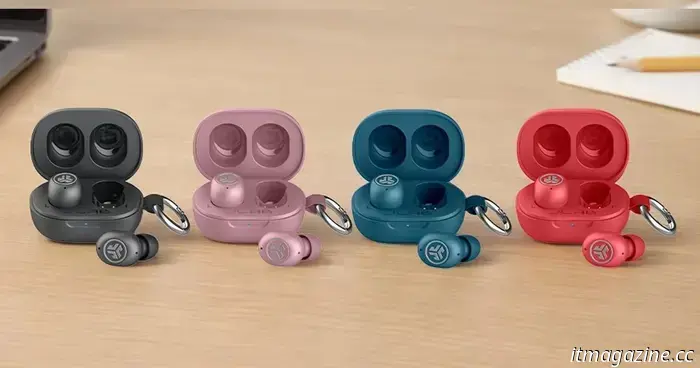 Here’s What You Can Expect from JLab’s New Tiny ANC Earbuds
JLab introduced ultra-compact ANC earbuds, an updated work headset, and new color options for open-ear designs, emphasizing everyday practicality, affordability, and contemporary audio features.
Here’s What You Can Expect from JLab’s New Tiny ANC Earbuds
JLab introduced ultra-compact ANC earbuds, an updated work headset, and new color options for open-ear designs, emphasizing everyday practicality, affordability, and contemporary audio features.
 Goose Goose Duck mobile experiences crashes on the first day of its release in China, leading to multiple apologies.
The mobile version of Goose Goose Duck for China was released on all platforms on Wednesday but encountered server crashes shortly after launch.
Goose Goose Duck mobile experiences crashes on the first day of its release in China, leading to multiple apologies.
The mobile version of Goose Goose Duck for China was released on all platforms on Wednesday but encountered server crashes shortly after launch.
 The Powerbeats Pro 2 are currently discounted by $50, bringing the price down to $199.99.
If your earbuds fall out while running or if you’ve had to reposition them during a workout, you understand the need for Powerbeats. The Beats Powerbeats Pro 2 true wireless earbuds with active noise cancelation are currently priced at $199.99 (compared to $249.99), giving you a $50 savings. While it's not the largest discount available, it’s still worth noting.
The Powerbeats Pro 2 are currently discounted by $50, bringing the price down to $199.99.
If your earbuds fall out while running or if you’ve had to reposition them during a workout, you understand the need for Powerbeats. The Beats Powerbeats Pro 2 true wireless earbuds with active noise cancelation are currently priced at $199.99 (compared to $249.99), giving you a $50 savings. While it's not the largest discount available, it’s still worth noting.
The native app lock on Android 17 might also conceal notifications from apps that are locked.
Google is moving nearer to introducing a built-in app lock feature in Android 17. Recent discoveries from early versions indicate how apps that are locked will manage notifications and access to system functions.