
My preferred AMD gaming laptop has now transitioned to Intel, and I'm feeling concerned.
CES 2026 has arrived, and the Asus ROG Zephyrus G14 remains the most awaited tech for me. I became a fan of the G14 when it debuted in 2020; it met all my expectations for a portable gaming laptop, offering excellent battery life. The Zephyrus G14 is the only laptop I've ever given a perfect rating and the first and only gaming laptop I've ever bought. The excitement is definitely genuine.
That said, it’s important to manage expectations as the Zephyrus G14 has seen some decline over the years with reduced battery life and additional issues. However, this year might be particularly noteworthy. I had some hands-on experience with the Asus Zephyrus G14, so let’s delve into my excitement and concerns.
A major transition to Intel
AMD was at the forefront of creating long-lasting gaming laptops when the Asus Zephyrus G14 first made its presence known. As someone who enjoys gaming and working in the same environment, it was an ideal fit for my needs and also a great college laptop. However, after several years using AMD hardware, the Zephyrus G14 is transitioning to Intel, which gives me some apprehension.
The original G14’s success was largely due to AMD, which elevated its battery life and performance. While I have faith in Intel’s performance, my concern lies with the battery life. I would be satisfied if it could at least achieve 8 hours of use. It’s both exciting and concerning, but we won’t truly understand the impact until we can test it ourselves.
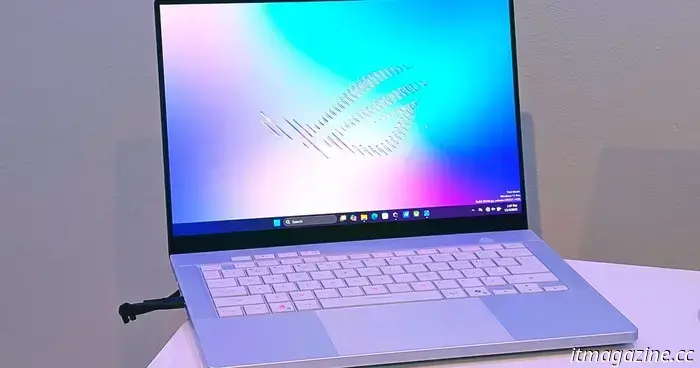
The chip change isn’t the only thrilling advancement for the Asus Zephyrus G14. Asus is enhancing its OLED performance—it claims the laptops with OLED displays, like the G14, will see a doubling of brightness compared to previous models. Specifically, the Zephyrus G14 features a 14-inch, 3K, 120Hz display with a peak brightness of 1000 nits in HDR and 100% coverage of the DCI-P3 color spectrum.
While HDR can be inconsistent, Asus claims they doubled the SDR brightness as well. The 2024 Zephyrus G14 reached nearly 400 nits, so achieving 600 nits would be a significant and welcome improvement.
A fascinating aspect is that each display is individually color calibrated to ensure a Delta E of less than 1, resulting in more accurate colors. Its 0.2ms response time also keeps you engaged in your favorite competitive games.
During my testing, the display exhibited vibrant colors, and the brightness held up against the overhead lights in the room. Despite housing powerful RTX 5080 hardware, the Zephyrus G14 remains thin and lightweight, measuring 0.63 inches in thickness and weighing 3.31 pounds.
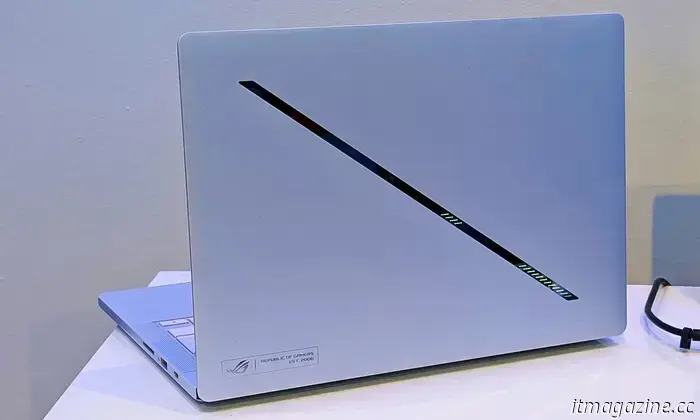
There’s a subtle change in the chassis, with this year’s model increasing the lighting zones in the lid design from 7 to 35. You can customize the lighting patterns as you wish. Personally, I’m indifferent to this feature, but it’s a nice enhancement for those who care about it. Additionally, Asus has also improved the bottom design to include better ventilation with more holes.
One aspect I critiqued about the original Zephyrus G14 was its touchpad, and while it has improved over the years, this time Asus has made significant enhancements. My finger glided smoothly over its surface, and each click provided solid feedback. The flimsy touchpad of the past is a thing of the past.
Unfortunately, I wasn’t able to test out the audio, but the Zephyrus G14 is equipped with a total of 6 speakers. While I’m not particularly picky about laptop audio, it would be great if the sound matched the quality of the display. At least we know it will feature Dolby Atmos, which is a solid audio solution.
My ideal version of the Asus ROG Zephyrus G14 would be equipped with an RTX 5060 GPU. Though it hasn’t been explicitly confirmed, the trend from previous models suggests we may see it. I'm looking forward to seeing the mid-range gaming laptop reclaim its crown.
If you're aiming to max out this machine, it will offer up to an RTX 5080, as mentioned, along with 64GB of RAM and a 2TB SSD. I’m certainly not looking forward to the price tag. The G14 also has a larger sibling if you have a significant budget, which can include an RTX 5090. Fortunately, my focus remains on the more portable (and affordable) version.
Stay tuned for more CES 2026 updates as they come in.
Other articles
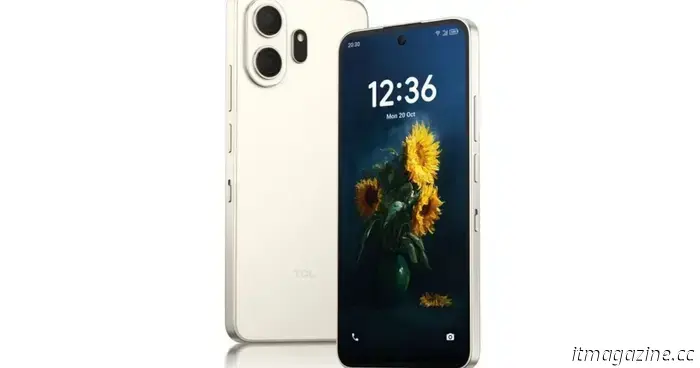 This TCL NXTPAPER Android smartphone transforms into an e-reader to give your eyes a rest.
TCL's newest NxtPaper devices merge the characteristics of smartphones, tablets, and e-readers while maintaining color and adaptability.
This TCL NXTPAPER Android smartphone transforms into an e-reader to give your eyes a rest.
TCL's newest NxtPaper devices merge the characteristics of smartphones, tablets, and e-readers while maintaining color and adaptability.
 Samsung aims to integrate AI into nearly all of your devices.
Samsung plans to expand Galaxy AI to 800 million devices by 2026, enhancing its collaboration with Google’s Gemini as it competes against Apple and Chinese competitors in the AI landscape.
Samsung aims to integrate AI into nearly all of your devices.
Samsung plans to expand Galaxy AI to 800 million devices by 2026, enhancing its collaboration with Google’s Gemini as it competes against Apple and Chinese competitors in the AI landscape.
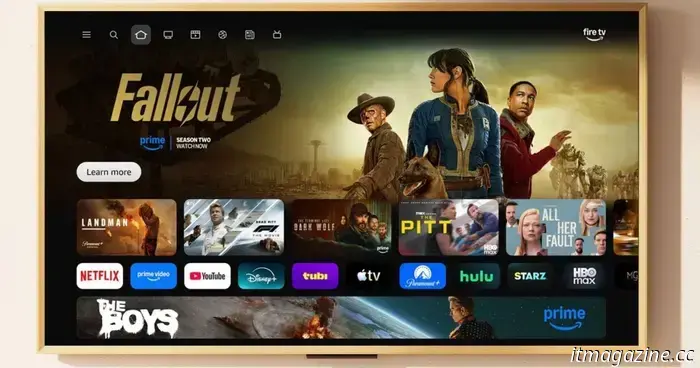 Amazon updates Fire TV and its mobile app to enable quicker show discovery.
Amazon is providing a significant update to Fire TV and its mobile application to enhance the speed of discovering movies, shows, live content, and to manage your watchlist via both TV and smartphone.
Amazon updates Fire TV and its mobile app to enable quicker show discovery.
Amazon is providing a significant update to Fire TV and its mobile application to enhance the speed of discovering movies, shows, live content, and to manage your watchlist via both TV and smartphone.
 LG's latest robot, Cloid, is not what you expect.
CES 2026 Read and view our full coverage of CES here Updated just under 17 minutes ago I’ve just exited LG's CES 2026 press conference, labeled a ‘World Premiere’, suggesting that something innovative and thrilling was on the horizon (although it turned out that everything discussed had already been […]
LG's latest robot, Cloid, is not what you expect.
CES 2026 Read and view our full coverage of CES here Updated just under 17 minutes ago I’ve just exited LG's CES 2026 press conference, labeled a ‘World Premiere’, suggesting that something innovative and thrilling was on the horizon (although it turned out that everything discussed had already been […]
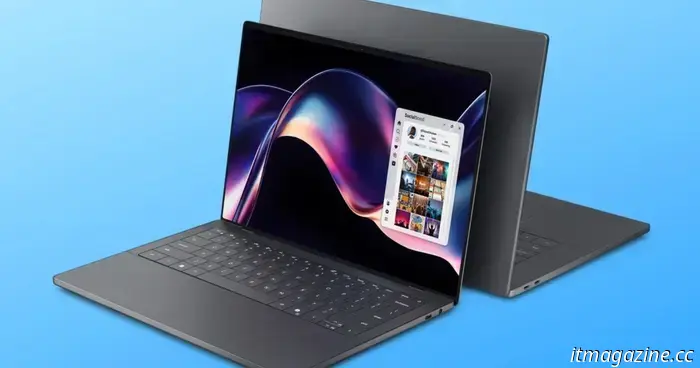 Dell reintroduces the XPS laptop, and this time, it’s truly impressive.
The updated 14-inch and 16-inch XPS laptops feature a Tandem OLED display, Intel's Panther Lake processors, and provide the longest battery life in the lineup to date.
Dell reintroduces the XPS laptop, and this time, it’s truly impressive.
The updated 14-inch and 16-inch XPS laptops feature a Tandem OLED display, Intel's Panther Lake processors, and provide the longest battery life in the lineup to date.
 Qualcomm unveils the Snapdragon X2 Plus chip, targeting budget-friendly AI laptops.
Built on the 3nm process, this new model boasts an 80 TOPS NPU, almost doubling the AI capabilities of its predecessor and allowing for more than 50 local AI workflows. It aims at $800 Copilot+ laptops and can support up to three 4K displays.
Qualcomm unveils the Snapdragon X2 Plus chip, targeting budget-friendly AI laptops.
Built on the 3nm process, this new model boasts an 80 TOPS NPU, almost doubling the AI capabilities of its predecessor and allowing for more than 50 local AI workflows. It aims at $800 Copilot+ laptops and can support up to three 4K displays.
My preferred AMD gaming laptop has now transitioned to Intel, and I'm feeling concerned.
At CES 2026, Asus introduces the new Asus Zephyrus G14, which has been renowned for its AMD power – until now. I’m quite curious and concerned.