
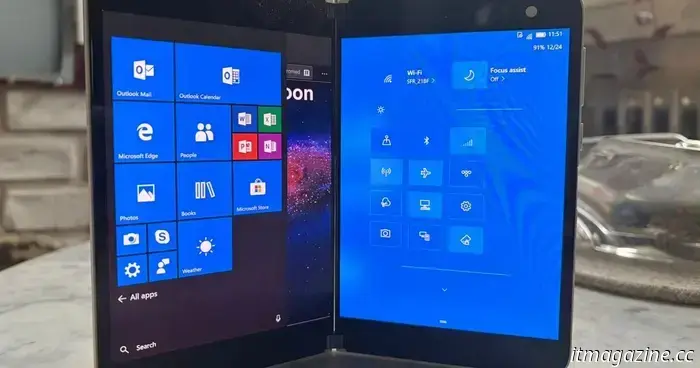
You can now experience the Windows Phone OS that Microsoft chose not to launch.
Inside Microsoft’s Cancelled Andromeda OS
Before Microsoft released the Surface Duo featuring Android, it was intended to operate on a tailored version of Windows named Andromeda OS, designed specifically for dual-screen devices. This project was quietly abandoned several years ago.
However, thanks to a leaked build and significant developer involvement, you can now see what Microsoft was developing and potentially test it out yourself.
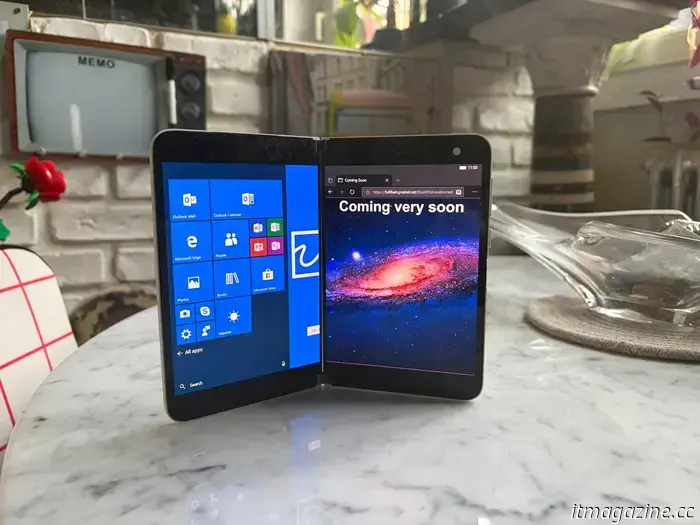
For those unfamiliar, Andromeda OS was based on Windows 10 and resembled Windows Phone closely, complete with Live Tiles and a Start Menu adapted for dual displays.
Microsoft initially planned for it to serve as the software base for early dual-screen devices, including the original Surface Duo. Yet in 2018, the company decided to terminate the project and shifted its focus to Android to avoid the daunting task of creating a mobile app ecosystem from the ground up.
How Andromeda OS Ended Up on Surface Duo
As reported by Windows Central, the canceled software remained undiscovered until an unfinished leaked build appeared online. Developer Gustave Monce successfully ported this build to the original Surface Duo, although he noted that the port is not functional on Surface Duo 2 due to a lack of driver support.
For those interested in trying it out, you can download the Andromeda OS build as an FFU file and follow the flashing instructions provided on Monce’s GitHub. However, be warned that this process will erase your Android data, and the installation is not suited for beginners.
Once installed, the device can technically run both Android and Windows, sharing internal storage, although booting into Windows necessitates a PC. The available version is unstable and clearly unfinished, but it provides a rare insight into Microsoft’s abandoned vision for mobile. This reflects Microsoft’s last significant effort to reimagine Windows on mobile devices, allowing you, for the first time, to glimpse what might have been.
Currently, the build is unstable and incomplete but provides a unique look into Microsoft’s discontinued mobile plans. Andromeda OS appears to be the company's final serious attempt to redefine Windows for smartphones, highlighting how differently the Surface Duo could have functioned.
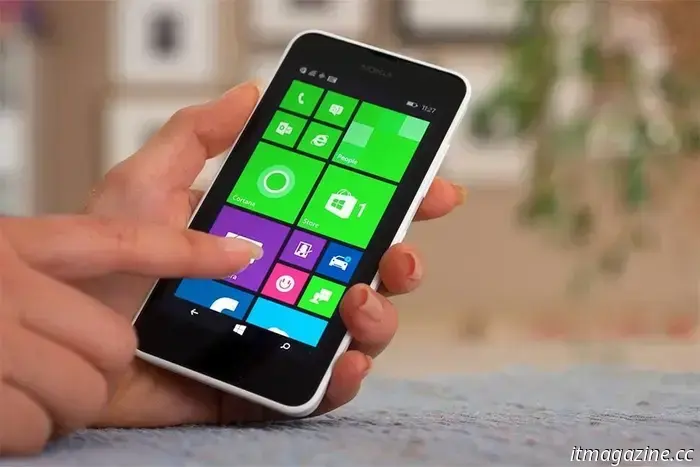
For those curious about how a contemporary Windows Phone might appear, there are some design mockups showcasing how Microsoft's mobile history and speculative concepts continue to spark interest.
Manisha covers technology integral to daily life, spanning smartphones and apps to gaming and streaming.
This is the GPU I’m Most Excited About in 2026 — and It’s Not by AMD or Nvidia
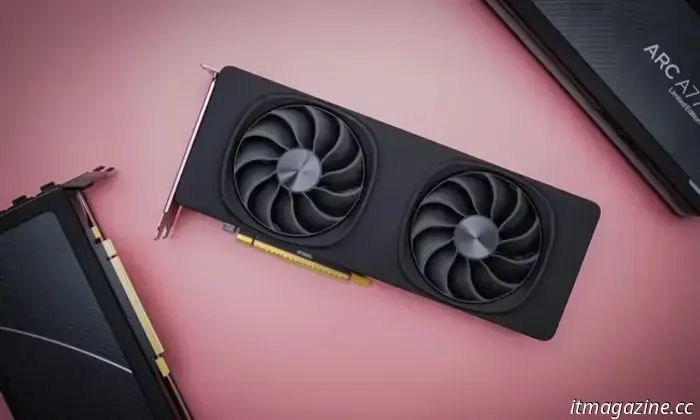
Intel's unconfirmed Arc B770 has the potential to disrupt the midrange market.
Each year, the GPU market seems to follow a predictable pattern. Nvidia consistently leads at the high end, AMD responds where possible, and the most attention-grabbing headlines focus on flagship performance. For the majority of consumers, this still means choosing between two main companies, even as Nvidia's dominance becomes more apparent. However, the GPU that has my anticipation rising for 2026 doesn’t come from either company. Instead, it’s an unverified card that could quietly reshape the market — Intel’s Arc B770, often referred to in leaks as Big Battlemage.
LG Display Set to Unveil 27-Inch 4K OLED RGB Stripe Panel at CES 2026
What LG’s New OLED Panel Means for Your Next Monitor
LG Display is preparing for a significant advancement in monitor technology at CES 2026, where it will introduce the world’s first 27-inch 4K OLED panel that finally merges a true RGB stripe subpixel arrangement with an impressive 240Hz refresh rate. This innovation addresses the "text problem" that has long affected OLED monitors, providing a display that caters to both high-end gamers and creative professionals without forcing a compromise between sharp text and fluid motion. The highlight is the transition to an RGB stripe structure, with the red, green, and blue subpixels aligned in a straightforward, linear row. This design represents the "gold standard" for computer monitors as it eliminates the frustrating color fringing and blurred edges often seen around text on other OLED variations. Until now, OLEDs in monitor sizes with this specific stripe configuration were limited to a mere 60Hz, rendering them impractical for gaming.
Asus Might Create Its Own RAM Due to Suppliers' Focus on AI
Asus is considering extreme measures to address the ongoing global memory shortage that is inflating laptop prices. Although the company has officially denied plans to establish its own RAM production line, there are rumors that the Taiwanese giant might still contemplate producing its own DRAM as soon as 2026. The objective? To break free from dependence on the three major memory suppliers. The core issue stems from a significant shift in the priorities of the world's leading memory producers — Samsung, Micron, and SK Hynix — who are currently fixated on the lucrative AI data center market, leading to a decrease in the production of DDR4 and DDR5 modules for consumer PCs. As supply diminishes amid persistent

Other articles
 A summary of 2025 for Technology and AI
The year 2025 marked the moment when technology transitioned from being a future promise to a present reality. The rise of generative AI and platform innovation that started two years earlier solidified this year into significant changes in the ways people work and govern.
A summary of 2025 for Technology and AI
The year 2025 marked the moment when technology transitioned from being a future promise to a present reality. The rise of generative AI and platform innovation that started two years earlier solidified this year into significant changes in the ways people work and govern.
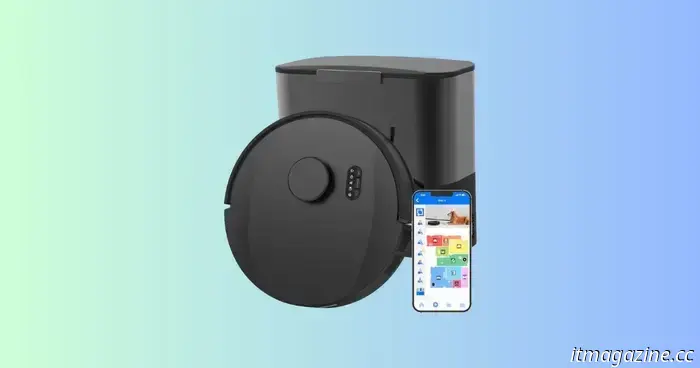 Get a $860 discount on a self-emptying robot vacuum and mop, now available for only $269.99.
If you have been looking for a substantial discount on a robot vacuum, this offer is noteworthy. The bObsweep UltraVision Pet self-empty robot vacuum and mop is available for $269.99, down from its original price of $1,129.99, resulting in an $860 savings. The key factor to consider is the timing: this deal is being promoted as a limited-time opportunity.
Get a $860 discount on a self-emptying robot vacuum and mop, now available for only $269.99.
If you have been looking for a substantial discount on a robot vacuum, this offer is noteworthy. The bObsweep UltraVision Pet self-empty robot vacuum and mop is available for $269.99, down from its original price of $1,129.99, resulting in an $860 savings. The key factor to consider is the timing: this deal is being promoted as a limited-time opportunity.
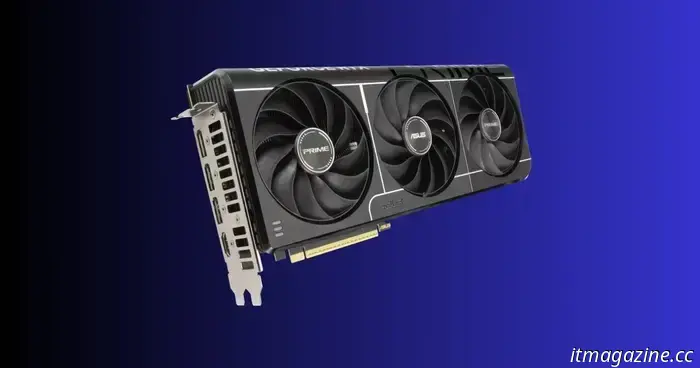 RTX 5070 Ti price reduction: save $130 on a contemporary PCIe 5.0 graphics card.
The GPU deals that truly matter are typically those that provide significant savings on a graphics card you would purchase regardless for a new build or a much-needed upgrade. The ASUS Prime NVIDIA GeForce RTX 5070 Ti OC Edition, featuring 16GB of GDDR7, is currently priced at $809.99, down from a comparable price of $939.99, offering a savings of $130. If […]
RTX 5070 Ti price reduction: save $130 on a contemporary PCIe 5.0 graphics card.
The GPU deals that truly matter are typically those that provide significant savings on a graphics card you would purchase regardless for a new build or a much-needed upgrade. The ASUS Prime NVIDIA GeForce RTX 5070 Ti OC Edition, featuring 16GB of GDDR7, is currently priced at $809.99, down from a comparable price of $939.99, offering a savings of $130. If […]
 How AI could help you become fitter than ever by 2026.
From planning meals to boosting gym confidence and aiding in recovery, AI is gradually emerging as the most intelligent fitness companion you'll ever encounter.
How AI could help you become fitter than ever by 2026.
From planning meals to boosting gym confidence and aiding in recovery, AI is gradually emerging as the most intelligent fitness companion you'll ever encounter.
 2026 paves the way for more rapid laptops, albeit with a trade-off in memory.
Anticipate a diverse selection of new laptops featuring the latest processors from Intel, AMD, and Qualcomm.
2026 paves the way for more rapid laptops, albeit with a trade-off in memory.
Anticipate a diverse selection of new laptops featuring the latest processors from Intel, AMD, and Qualcomm.
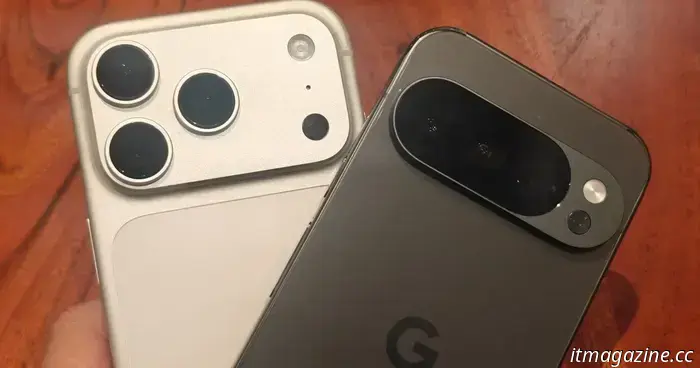 I have been reporting on smartphones for years, but 2026 appears to be particularly bold and concerning.
The year 2025 turned out to be remarkable for innovations in smartphones. For 2026, my forecasts include a combination of thrilling enhancements and a significant amount of caution.
I have been reporting on smartphones for years, but 2026 appears to be particularly bold and concerning.
The year 2025 turned out to be remarkable for innovations in smartphones. For 2026, my forecasts include a combination of thrilling enhancements and a significant amount of caution.
You can now experience the Windows Phone OS that Microsoft chose not to launch.
A leaked version of Andromeda OS now allows users to explore the discontinued Windows software that was initially intended for Surface Duo, providing a firsthand experience of Microsoft’s forsaken initiative to revive a dual-screen edition of Windows Phone.