
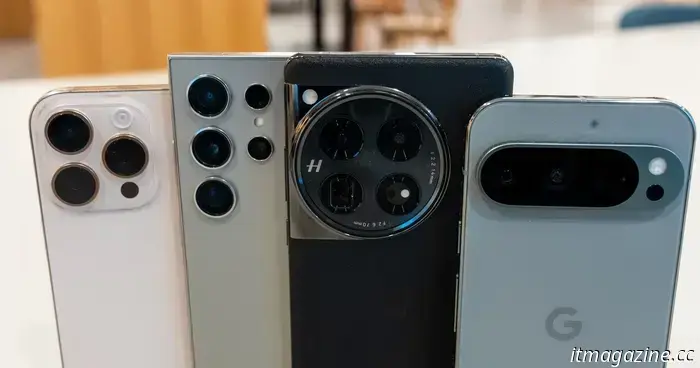
The Android devices I’m most excited about in 2026 are not from Samsung or Google.
The conclusion of 2025 was impressive for smartphones. Apple finally adopted a new design for its Pro phones, outfitted them with large sensors, and included a vapor chamber, all while making a significant impact with the iPhone 17.
Samsung wrapped up the year on a futuristic note, launching a new line of foldable devices, the Galaxy Z TriFold. OnePlus demonstrated that a powerful battery can be accommodated in a sleek flagship without the bulk or high cost.
Honor took it further by adding a physical fan and an even larger battery to a conventionally designed phone. Vivo, on the other hand, created a compact device that excelled in all aspects. As 2026 approaches, it appears to be another exciting year for smartphones; however, the major successes might come from brands outside the US.
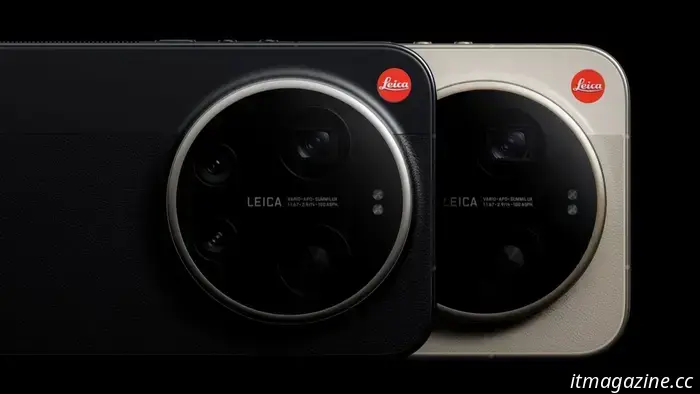
Xiaomi 17 Ultra by Leica
This isn't just a concept phone. Xiaomi enhanced its collaboration with Leica by designing a unique version of its latest flagship. The metallic ring on the back of the phone, surrounding the camera area, serves a functional purpose.
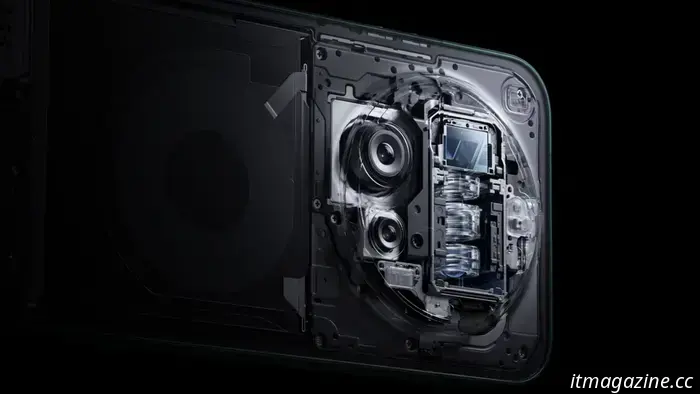
It's a fully operational zoom ring, inspired by Leica cameras. Beneath the ring, a system of 20 high-strength ball bearings offers tactile feedback at each stop, and an optical displacement sensor detects movements as tiny as 0.03 millimeters.
The main idea is to provide users with precise zoom controls, unlike the sensitive system found on the latest iPhones with the Camera Control button. Remarkably, the phone also boasts IP69 dust and water resistance, the best rating available in the industry.
Aesthetically, the device is stunning, featuring dual-tone leather accents inspired by Leica, along with a texturized metallic frame for a comfortable grip. However, the highlight is undeniably the camera hardware.
The standout feature is a 1-inch Light Fusion 1050L sensor with a 50-megapixel resolution, accompanied by a 50-megapixel ultrawide camera. The periscope-style zoom camera utilizes a large 200-megapixel sensor that also functions as a macro lens.
In my experience with the Xiaomi 15 Ultra, it emerged as one of the most formidable camera phones I'd tested, and the Xiaomi 17 Ultra is expected to surpass that performance. Additionally, it has impressive specs, including top-tier Qualcomm technology, a 6,800 mAh battery with 90W charging, and a 120Hz OLED display that's brighter than the iPhone 17 Pro. I'm eager to put this phone to the test.
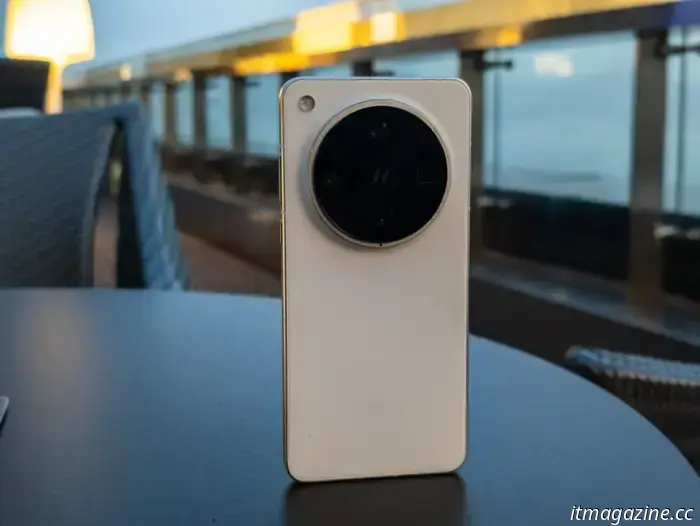
Oppo Find X9 Ultra
The Oppo Find X8 Ultra has proven to be the best smartphone I've tested in 2025, particularly excelling in camera performance. It features five rear cameras, with two dedicated to long-range shots, and a primary camera with a large 1-inch sensor.
Even at 6x zoom, the phone produced stunning portrait photos, and its low-light performance impressed. The main sensor captured incredible detail in still images, showcasing excellent contrast and nearly flawless color reproduction.
The upcoming Oppo Find X9 Ultra is set to improve upon this. Leaks suggest it may introduce two 200-megapixel cameras, shifting from the 1-inch sensor to a smaller yet higher-resolution sensor. Rumors indicate this new imaging pipeline allows the smaller 200-megapixel sensor to gather more light than a 1-inch sensor.
The telephoto camera represents a significant enhancement in this model. Oppo is reportedly developing a 50-megapixel camera capable of achieving an impressive 10x optical zoom, nearly doubling the capabilities of competitors like the iPhone 17 Pro and Google Pixel 10 Pro. It promises near-lossless long-range capture in the 230-460mm zoom range.
Additionally, Oppo has confirmed a substantial battery exceeding 7,000 mAh and will likely incorporate rapid charging technology. Reports suggest that a launch for the Find X9 Ultra is anticipated in March.
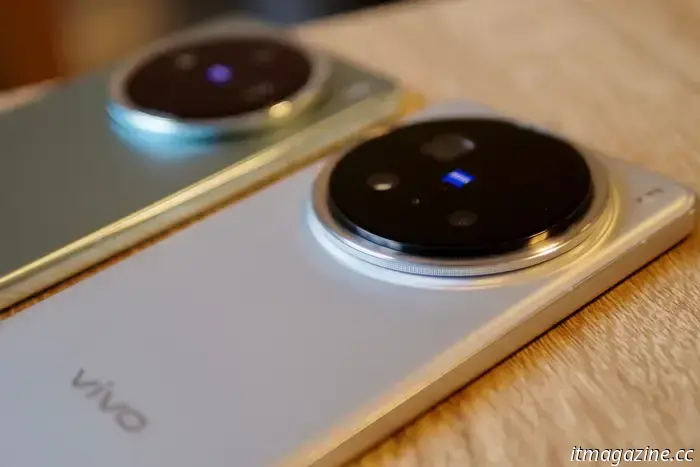
Vivo X300 Ultra
Vivo has been producing camera-focused phones for years and has introduced several camera innovations. The Vivo X200 Ultra was well-received, and during my testing, its 200-megapixel folded lens zoom system left a strong impression.
It was also one of my preferred ultrawide cameras, even though the main camera was exceptional. Reviewers noted that it was "more camera than phone," and DXOMark rated it highly for still photography.
Its successor, the Vivo X300 Ultra, is expected to be another imaging powerhouse. Leaks suggest it will have two 200-megapixel sensors, one for regular photos and the other dedicated to long-range zoom.
The zoom sensor is expected to provide 4x in-sensor lossless zoom, while an ultrawide lens will feature a 50-megapixel sensor. Other expected specifications include a 2K 120Hz OLED display, a 7,000mAh battery, and Qualcomm’s Snapdragon 8 Elite Gen 5 chipset. The phone has already appeared in regulatory

Other articles
 IQ tests are evolving into data tools, and MyIQ is at the forefront of this change.
As the self-quantification movement evolves, individuals are moving beyond merely tracking their physical activities to evaluate their thoughts, decision-making processes, and adaptability. In this transition, platforms such as MyIQ are becoming increasingly significant. Previously focused on metrics like steps, calorie intake, and sleep patterns, the realm of self-tracking is now shifting towards cognitive assessments. It's no longer solely about physical actions – but […]
TSMC has ushered in a new two-nanometer era.
Leading processor manufacturer TSMC has begun mass production of chips using a 2‑nanometer process. Simply because that's what the plan said. Without fanfare but with unfailing punctuality, the production lines at Fab 22 in Kaohsiung began stamping out the future.
IQ tests are evolving into data tools, and MyIQ is at the forefront of this change.
As the self-quantification movement evolves, individuals are moving beyond merely tracking their physical activities to evaluate their thoughts, decision-making processes, and adaptability. In this transition, platforms such as MyIQ are becoming increasingly significant. Previously focused on metrics like steps, calorie intake, and sleep patterns, the realm of self-tracking is now shifting towards cognitive assessments. It's no longer solely about physical actions – but […]
TSMC has ushered in a new two-nanometer era.
Leading processor manufacturer TSMC has begun mass production of chips using a 2‑nanometer process. Simply because that's what the plan said. Without fanfare but with unfailing punctuality, the production lines at Fab 22 in Kaohsiung began stamping out the future.
 You will be amazed by the sheer volume of AI-generated garbage and mindless videos on YouTube.
A study by Kapwing shows that AI-generated content has established a significant presence on YouTube, amassing billions of views and expanding its influence across various markets.
You will be amazed by the sheer volume of AI-generated garbage and mindless videos on YouTube.
A study by Kapwing shows that AI-generated content has established a significant presence on YouTube, amassing billions of views and expanding its influence across various markets.
 This innovative smartwatch allows you to manage calls using muscle movements.
The Xiaomi Watch 5 features EMG muscle sensing technology, enabling users to perform gestures such as answering calls without needing to move their arms. It boasts a 47mm AMOLED display, a dual-chip design, and a multi-day battery life, positioning itself as a premium offering.
This innovative smartwatch allows you to manage calls using muscle movements.
The Xiaomi Watch 5 features EMG muscle sensing technology, enabling users to perform gestures such as answering calls without needing to move their arms. It boasts a 47mm AMOLED display, a dual-chip design, and a multi-day battery life, positioning itself as a premium offering.
 NASA is set to begin 2026 with significant activities at the ISS … and you can tune in to watch.
NASA is in the final stages of preparing for two spacewalks at the International Space Station (ISS). It has been eight months since the U.S. space agency last sent its astronauts into the challenging vacuum of space, generating a sense of excitement among ISS enthusiasts regarding the upcoming extravehicular activities. The first spacewalk is set to take place…
NASA is set to begin 2026 with significant activities at the ISS … and you can tune in to watch.
NASA is in the final stages of preparing for two spacewalks at the International Space Station (ISS). It has been eight months since the U.S. space agency last sent its astronauts into the challenging vacuum of space, generating a sense of excitement among ISS enthusiasts regarding the upcoming extravehicular activities. The first spacewalk is set to take place…
 LG's latest Gallery TV might finally offer a viable alternative to Samsung's The Frame.
LG is preparing to unveil a new art-themed Gallery TV at CES 2026 to compete with Samsung's The Frame series.
LG's latest Gallery TV might finally offer a viable alternative to Samsung's The Frame.
LG is preparing to unveil a new art-themed Gallery TV at CES 2026 to compete with Samsung's The Frame series.
The Android devices I’m most excited about in 2026 are not from Samsung or Google.
In 2025, Samsung and Apple surprised everyone with significant developments, but for the upcoming year, I'm particularly thrilled about the innovative smartphones from the more niche brands.