

Google Disco browser and twenty dollars for entry into Opera
The Chrome team has introduced an experimental browser called Disco that doesn’t just open tabs but creates on-the-fly micro-applications for any task. It’s not a browser in the usual sense, but rather “web-coding”: the user describes a task, opens several sites to provide context, and the AI builds a personalized web app.
The most curious thing about this project is its philosophical ambiguity. The project leads frankly admit they’re not sure what they’ve actually built or whether GenTab will be in demand. Still, Google hopes people will get drawn into working with this puzzling app. Its unconventionality lies in the fact that the browser… finally encourages actively using open websites rather than mindlessly collecting them in “bookmarks.”
Opera Neon offers the luxury of being first. Cheaply.
At the opposite end of the browser world, Opera, with the composure of a Viking, rolled out its AI browser Neon with a monthly price tag of $19.90. For that money you get not only a built-in smart chat but access to top models like GPT-5.1 and Veo 3.1, as well as a ticket to an exclusive Discord community. It looks like a club for elite early AI adopters, where the entry fee weeds out the merely curious. Opera stresses that it also has free browsers with AI features, but Neon is for those who want to be at the top and are willing to pay handsomely for it.
And what about the competitors? Are they headed for “disco” or “neon”?
These two approaches — Google’s experimental free-to-play and Opera’s paid premium — put everyone else in an awkward spot.
Mozilla Firefox, known for its privacy focus, may find itself as the stern ascetic at a party where everyone else is generating things and using interactive planners. Their caution in rolling out AI, especially given security concerns around agentic features, risks looking like backwardness. Pressure will build: either find a unique, privacy-focused and perhaps less flashy route to integrating AI, or start losing an audience tired of copying links into ChatGPT by hand.
Microsoft Edge, closely aligned with OpenAI, will surely watch Google’s experiment with professional interest (and some nervousness). Their trump card is deep Copilot integration, but Disco positions its browser not as a navigator but as a builder of solutions. Edge will have to rapidly accelerate in this direction or risk becoming “that browser you use to download Chrome… i.e., Disco.”
Smaller players like Brave or Vivaldi will be in an even tougher spot. Brave is already testing agentic features in separate profiles, which is promising, but without giant LLMs or bold experimental teams like Google’s, they’ll struggle to compete on the “wow” factor. Their play will be niche features and hyper-customization for specific user needs.
Browsers are learning to think. What will we pay for that?
Google’s Disco is a bold and slightly mad experiment trying to reinvent the principles of web surfing. Opera Neon is a commercial attempt to monetize the AI hype “right here, right now.” Both approaches, despite being completely different, suggest that the future of browsers isn’t about running JavaScript faster but about understanding our intentions and actively helping us as digital assistants.
The rest will have to either dance to this new disco or find a quiet corner of the internet where you can just read an article without intrusive offers to create an “interactive model of your left heel.” The chances of the latter, sadly, shrink by the day.
That said, Russians have nothing to fear: for any Western initiative we always have our domestic Yandex Browser at the ready. And if any hiccups arise, we can hope for VK, which has already proven its unusual creative abilities by creating a domestic messaging app.
Other articles
 With the help of AI, Yandex taught a camera to tattle.
It seems the era of blind and deaf home cameras is irretrievably coming to an end. Yandex has decided that a simple "motion detected" notification is no longer enough for us users. Now the company's smart IP camera will not merely observe silently but, thanks to its built-in artificial intelligence, will become a full-fledged commentator on your home life.
With the help of AI, Yandex taught a camera to tattle.
It seems the era of blind and deaf home cameras is irretrievably coming to an end. Yandex has decided that a simple "motion detected" notification is no longer enough for us users. Now the company's smart IP camera will not merely observe silently but, thanks to its built-in artificial intelligence, will become a full-fledged commentator on your home life.
 Gaika Mitich and Boyko Dvachich present…
The presentation of the book "My Viryo! Chronicles of Invisible Hacker Wars from Syktyvkar to Singapore" is one of those rare cases when a "workplace novel" doesn't sound like a press‑release formality but like an invitation into a living profession.
Gaika Mitich and Boyko Dvachich present…
The presentation of the book "My Viryo! Chronicles of Invisible Hacker Wars from Syktyvkar to Singapore" is one of those rare cases when a "workplace novel" doesn't sound like a press‑release formality but like an invitation into a living profession.
 Pantum introduced the A3 MFP UTILITY and its first inkjet model in Russia.
Pantum wraps up the year and expands its business portfolio: A3 MFPs of the UTILITY series and the brand’s first inkjet device have been introduced in Russia.
Pantum introduced the A3 MFP UTILITY and its first inkjet model in Russia.
Pantum wraps up the year and expands its business portfolio: A3 MFPs of the UTILITY series and the brand’s first inkjet device have been introduced in Russia.
 Splat transforms your pictures into coloring pages, and it indicates a larger trend.
Retro's Splat app transforms your pictures into AI-generated coloring pages for children, offering fast style selections and options for printing or on-screen use. It also indicates a broader initiative to promote generative AI activities suitable for kids.
Splat transforms your pictures into coloring pages, and it indicates a larger trend.
Retro's Splat app transforms your pictures into AI-generated coloring pages for children, offering fast style selections and options for printing or on-screen use. It also indicates a broader initiative to promote generative AI activities suitable for kids.
 The Rikor Pro 5 model has been introduced.
The company Rikor has announced the release of a new laptop for business and home — the Rikor Pro 5. The device, which is already being produced at a robotic factory in Arzamas, is positioned as a balanced solution for those who value performance, mobility and security.
The Rikor Pro 5 model has been introduced.
The company Rikor has announced the release of a new laptop for business and home — the Rikor Pro 5. The device, which is already being produced at a robotic factory in Arzamas, is positioned as a balanced solution for those who value performance, mobility and security.
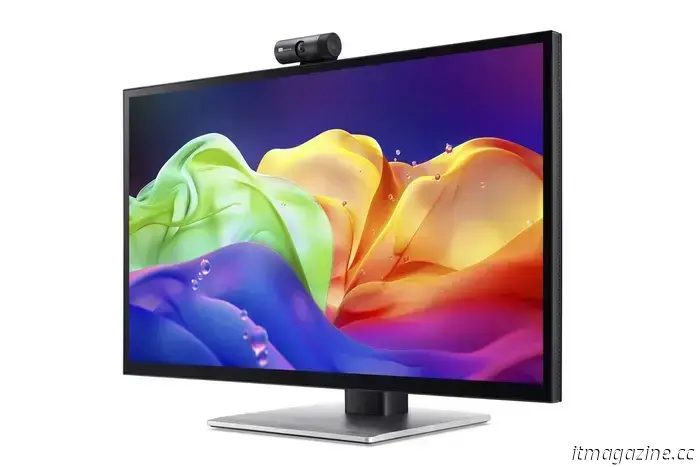 Acer ProCreator — 5K, Calman color calibration and a touchscreen
The Acer ProCreator PE270XT monitor has arrived on the Russian market. It is a 27-inch professional model that will appeal to photographers, designers, and artists. Its main features are 5K resolution, accurate color reproduction, and a touchscreen.
Acer ProCreator — 5K, Calman color calibration and a touchscreen
The Acer ProCreator PE270XT monitor has arrived on the Russian market. It is a 27-inch professional model that will appeal to photographers, designers, and artists. Its main features are 5K resolution, accurate color reproduction, and a touchscreen.
Google Disco browser and twenty dollars for entry into Opera
The Chrome team unveiled an experimental browser called Disco that doesn’t just open tabs but builds micro-applications on the fly for any task. It’s not a browser in the conventional sense, but rather “web-coding,” where a user describes the task, opens several websites to provide context, and the artificial intelligence creates a personalized web application.