

Gaika Mitich and Boyko Dvachich present…
Presentation of the book "My Vir'yo! Chronicles of Invisible Hacker Wars from Syktyvkar to Singapore" — that rare case when a "workplace novel" doesn't read like a press‑release formality but as an invitation into a living profession.
The book, published by Eksmo and created by Kaspersky Lab experts under the pseudonyms Gayka Mitich and Boyko Dvachich (behind them are Alexander Gostev and writer Alexey Andreev), carefully gathers two decades of industry memory: from floppy disks and the first viruses to today's attacks‑as‑a‑service and artificial intelligence, which is no longer merely a tool but a new attack surface.
The plot starts where many of us began in IT — with a hobby that suddenly becomes a profession. The main character Sasha from Syktyvkar collects viruses, moves to Moscow and ends up in malware analysis. His development charts the evolution of an entire industry: how the hobbyist culture of the early Runet crystallized practices, standards and, importantly, an ethics of investigation. The book is based on real episodes but tells a complex story in plain language, without techno‑snobbery or branding glitter. The authors deliberately removed overt logos — so attention falls on people, decisions and consequences, not on signboards.
On stage, together with literary critic Natalia Lomykina, we discussed three layers — the past, the present and the future of cybersecurity. The past is an era of almost complete online anonymity, when nicknames mattered more than titles, and a researcher's reputation was built not on honors but on case analysis and the ability to see an attacker’s logic. That cultural code, as Alexander Gostev noted, helped an internal research team grow into an independent global brand: that particular situation when "a department inside a company" becomes a quality mark for the whole industry. In the book this trajectory is conveyed without direct statements — through everyday details, nocturnal forensics, the first major epidemics and investigations where technique is always accompanied by human intuition.
The present is the maturing of the profession. Today code analysis alone is not enough: on the table go linguistics, cultural studies, regional context and the histories of groups. Attribution has become a wide‑angle discipline, and the book candidly shows why a detail in speech can sometimes weigh more than a signature in a sample. Here too is the discussion of how the confrontation is built, which the average user does not see: from careful reverse engineering and catching TTPs to working with vulnerabilities that migrate between platforms and domains — from banking to space. In that sense "My Vir'yo" is not a collection of scare stories but a portrait of the craft with its rules, routines, team dynamics and the characteristic humor without which one doesn't last long in this field.
The future at the presentation was sounded without alarmism but also without rose‑colored glasses. Artificial intelligence has added speed and scale to both defenders and attackers, which means valued are the "synthesis specialists" — those who glue technique, language, analytics and narrative into a coherent picture of an attack. Linguistic tricks against large language models are no longer a laboratory curiosity but a new front line of research. The authors also hinted at the project's multiformat nature: comics may follow the novel — so the profession can have more entry points for new readers and future analysts.
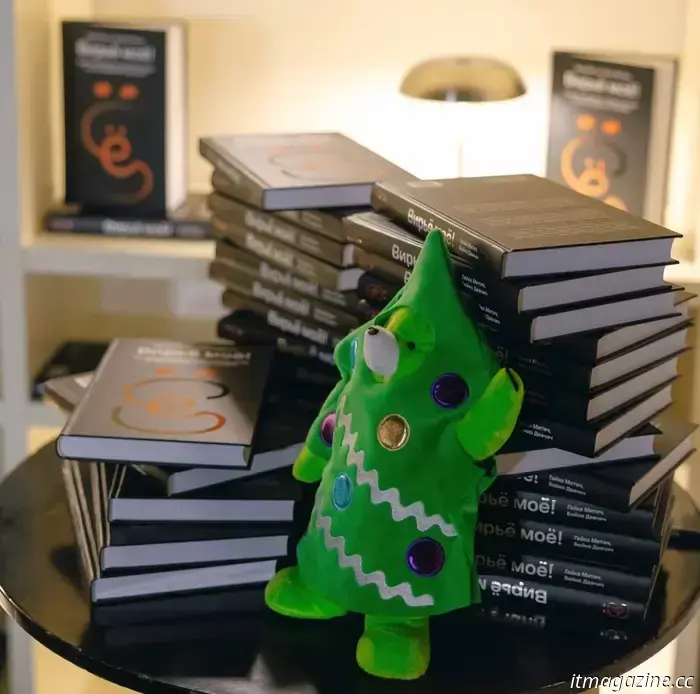
Visual identity adds particular pleasure. The cover was designed by Artemy Lebedev Studio: a lowercase "ё" emerges from the darkness, hidden inside an uppercase one — a neat metaphor for two worlds, the visible and the shadow. That very "underwater iceberg" where threats live and those who oppose them. The book is aimed not only at professionals: examples from popular culture, an even pace and care for a reader without special training make the text accessible. Yet connoisseurs will find "Easter eggs": recognizable cases, characteristic voices of characters that easily map onto real industry figures.
The evening was generous with quotable lines. Eugene Kaspersky stressed that stories about hackers are published every year, while those about defenders are much rarer; here the profession is revealed "from all sides, including little‑known details," with the right dose of irony and nostalgia. On the publishing side a sober conclusion emerged: a workplace novel exists when it is backed by real experience and an audience, not a pastiche of clichés. Judging by the audience reaction and lively dialogue, "My Vir'yo" has that in spades.
To summarize, the presentation captured an important idea for cybersecurity: the global standing of Russian research teams is not only about technology but about a culture that grew out of the early freedom of the internet, where curiosity, perseverance and the ability to see an analysis through to the end were valued. Now, as attackers rely on AI, automation and hybrid tactics, a synthesis of knowledge is in demand. And the book, despite its literary qualities, will serve as a gentle onboarding into this reality: it explains why an analyst sometimes resembles a philologist and a historian, and why teamwork is like a well‑tuned orchestra where everyone has their own instrument and tempo.
For the IT community "My Vir'yo" is both a gift and an invitation to conversation. For those in the profession it is a reminder of why we love this work: for intellectual investigations, the thrill, and that feeling of the completed puzzle. For those just looking in, it shows the path without romanticizing the chaos: under the light of a desk lamp, through sleepless nights and those moments when the lowercase "ё" suddenly emerges from the dark — and becomes uppercase.
Other articles
 The Rikor Pro 5 model has been introduced.
The company Rikor has announced the release of a new laptop for business and home — the Rikor Pro 5. The device, which is already being produced at a robotic factory in Arzamas, is positioned as a balanced solution for those who value performance, mobility and security.
The Rikor Pro 5 model has been introduced.
The company Rikor has announced the release of a new laptop for business and home — the Rikor Pro 5. The device, which is already being produced at a robotic factory in Arzamas, is positioned as a balanced solution for those who value performance, mobility and security.
 Splat transforms your pictures into coloring pages, and it indicates a larger trend.
Retro's Splat app transforms your pictures into AI-generated coloring pages for children, offering fast style selections and options for printing or on-screen use. It also indicates a broader initiative to promote generative AI activities suitable for kids.
Splat transforms your pictures into coloring pages, and it indicates a larger trend.
Retro's Splat app transforms your pictures into AI-generated coloring pages for children, offering fast style selections and options for printing or on-screen use. It also indicates a broader initiative to promote generative AI activities suitable for kids.
 Acer ProCreator — 5K, Calman color calibration and a touchscreen
The Acer ProCreator PE270XT monitor has arrived on the Russian market. It is a 27-inch professional model that will appeal to photographers, designers, and artists. Its main features are 5K resolution, accurate color reproduction, and a touchscreen.
Acer ProCreator — 5K, Calman color calibration and a touchscreen
The Acer ProCreator PE270XT monitor has arrived on the Russian market. It is a 27-inch professional model that will appeal to photographers, designers, and artists. Its main features are 5K resolution, accurate color reproduction, and a touchscreen.
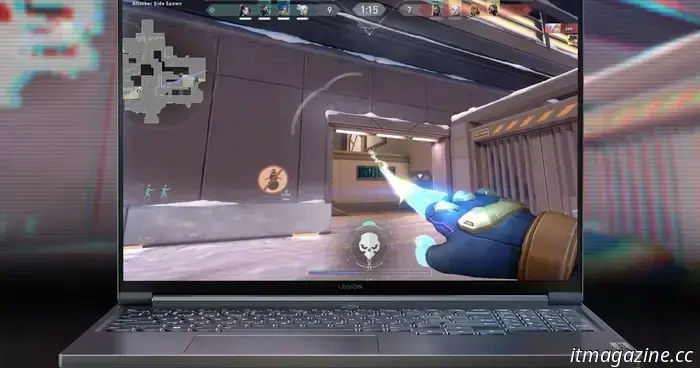 Leaked details about Lenovo's Copilot+ Legion laptops suggest they may automatically adjust your game settings.
According to a report from Windows Latest, Lenovo's leaked Copilot+ Legion laptops may feature automated adjustments for power and fan performance. The anticipated refresh for CES 2026 combines Ryzen AI 400 processors with RTX 5060 graphics.
Leaked details about Lenovo's Copilot+ Legion laptops suggest they may automatically adjust your game settings.
According to a report from Windows Latest, Lenovo's leaked Copilot+ Legion laptops may feature automated adjustments for power and fan performance. The anticipated refresh for CES 2026 combines Ryzen AI 400 processors with RTX 5060 graphics.
 Google Disco browser and twenty dollars for entry into Opera
The Chrome team unveiled an experimental browser called Disco that doesn’t just open tabs but builds micro-applications on the fly for any task. It’s not a browser in the conventional sense, but rather “web-coding,” where a user describes the task, opens several websites to provide context, and the artificial intelligence creates a personalized web application.
Google Disco browser and twenty dollars for entry into Opera
The Chrome team unveiled an experimental browser called Disco that doesn’t just open tabs but builds micro-applications on the fly for any task. It’s not a browser in the conventional sense, but rather “web-coding,” where a user describes the task, opens several websites to provide context, and the artificial intelligence creates a personalized web application.
 With the help of AI, Yandex taught a camera to tattle.
It seems the era of blind and deaf home cameras is irretrievably coming to an end. Yandex has decided that a simple "motion detected" notification is no longer enough for us users. Now the company's smart IP camera will not merely observe silently but, thanks to its built-in artificial intelligence, will become a full-fledged commentator on your home life.
With the help of AI, Yandex taught a camera to tattle.
It seems the era of blind and deaf home cameras is irretrievably coming to an end. Yandex has decided that a simple "motion detected" notification is no longer enough for us users. Now the company's smart IP camera will not merely observe silently but, thanks to its built-in artificial intelligence, will become a full-fledged commentator on your home life.
Gaika Mitich and Boyko Dvachich present…
The presentation of the book "My Viryo! Chronicles of Invisible Hacker Wars from Syktyvkar to Singapore" is one of those rare cases when a "workplace novel" doesn't sound like a press‑release formality but like an invitation into a living profession.