
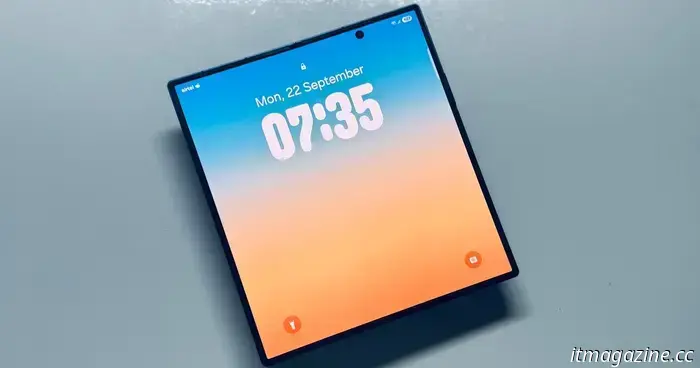
Samsung's upcoming foldable device may offer a more tablet-like experience.
The company seems to be drawing inspiration from Apple's rumored foldable design.
Apple is anticipated to unveil its first foldable iPhone next year, and recent leaks indicate it may differ significantly from Samsung’s flagship foldable. Instead of a tall, square display akin to the Galaxy Z Fold 7, Apple is reportedly choosing a shorter, wider design. A recent report suggests that Samsung might also adopt a similar form factor for a device next year.
ETNews reports that Samsung is preparing a "Wide Fold" to compete with the iPhone Fold. This device is expected to feature a 7.6-inch foldable display, comparable to the rumored 7.69-inch inner screen of the iPhone Fold. However, its cover screen is expected to be 5.4 inches, slightly larger than the iPhone Fold’s 4.75-inch outer display.
Industry insiders acquainted with Samsung’s strategy indicate that the Wide Fold’s inner display will have a 4:3 aspect ratio. It is also rumored that the iPhone Fold will utilize a similarly wide aspect ratio, which may make both devices resemble compact tablets when opened.
Rationale behind a shorter, wider design
A wider aspect ratio could potentially resolve one of the main challenges with current foldables, which often feel awkward for multitasking and media consumption. By favoring width over height, both Apple and Samsung may aim to provide users with a more streamlined experience akin to their tablet offerings.
The report also mentions that the Wide Fold will support 25W wireless charging, a feature expected to debut with the Galaxy S26 series early next year. Furthermore, it claims that this device might launch alongside the Galaxy Z Fold 8 and Galaxy Z Flip 8 next fall. If true, this could position the Wide Fold as an alternative rather than a direct substitution for the Galaxy Z Fold lineup.
At this point, it is unclear how extensively Samsung plans to roll out this new form factor. The company might initially restrict availability to specific markets to evaluate interest, a strategy it recently employed with the Galaxy Z TriFold.
Pranob is an experienced tech journalist with over eight years of experience covering consumer technology. His work has been…
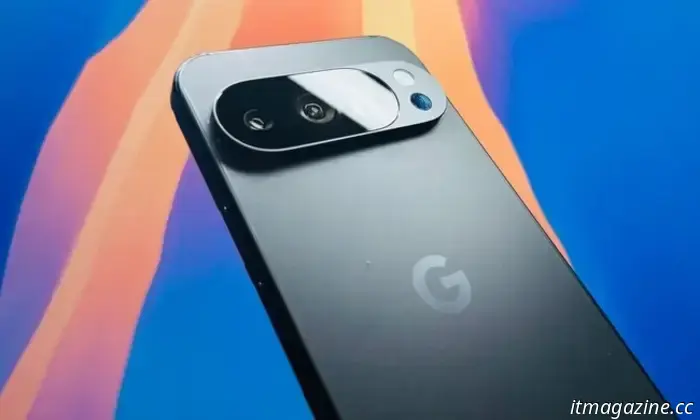
Your Pixel could soon improve its ability to prevent accidental pocket dials.
Google seems to have finally resolved a long-standing issue that has bothered Pixel users for several years. The company recently marked the accidental touch prevention issue that has persisted since the Pixel 6 era as "fixed" in its public bug tracker, signaling that a solution is forthcoming.
Pixel phone users have long encountered accidental actions, such as unintended calls, apps opening spontaneously, and the flashlight activating while the device remains in their pockets. While brands like Samsung and OnePlus provide a built-in accidental touch protection feature using the proximity sensor to disable touch input when the device is stored in a pocket or bag, Google has yet to offer a similar solution in its Pixel range.
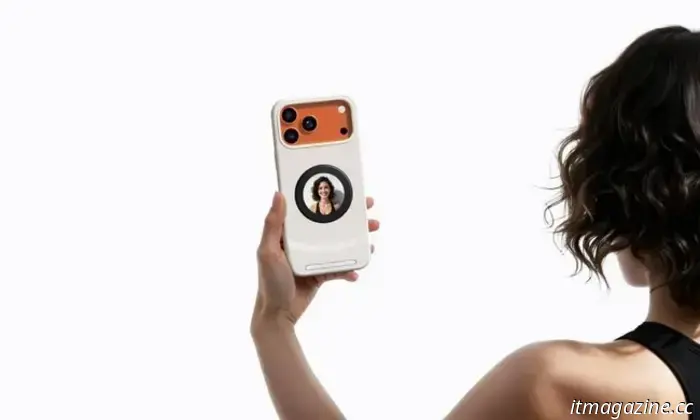
This case can transform your iPhone 17 Pro into a selfie powerhouse.
The new Selfix case from Dockcase does more than just protect your device from scratches and dings. It adds a functional display to the back of the iPhone 17 Pro, allowing you to maximize its triple-camera setup for selfies.
The Selfix case features a 1.6-inch circular AMOLED display with a resolution of 480 x 480 pixels, which serves as a live viewfinder for selfies and videos. It mirrors the view from the iPhone's main camera, enabling accurate framing of shots and capturing higher-quality images without relying on the front-facing camera.
Android 16 simplifies the process of identifying apps that track your location.
With the Android 16 QPR3 update, Google introduces a long-awaited privacy enhancement to Android phones: a tappable location indicator that reveals which apps are accessing your location.
Google is rolling out the Android 16 QPR3 Beta 1 update to compatible Pixel devices, and one of the main features is the new privacy-related addition: a location indicator (according to Android Authority). Similar to how Android devices show a pill-shaped icon at the top of the screen when an app is utilizing the microphone or camera, the Android 16 QPR3 Beta 1 includes a blue location indicator that appears in the status bar when an app is using your device's location services.
Other articles
 ChatGPT now allows you to increase the warmth or decrease the enthusiasm in its replies.
OpenAI is introducing new personality configurations that allow you to adjust ChatGPT's responses for qualities like warmth, enthusiasm, and additional traits.
ChatGPT now allows you to increase the warmth or decrease the enthusiasm in its replies.
OpenAI is introducing new personality configurations that allow you to adjust ChatGPT's responses for qualities like warmth, enthusiasm, and additional traits.
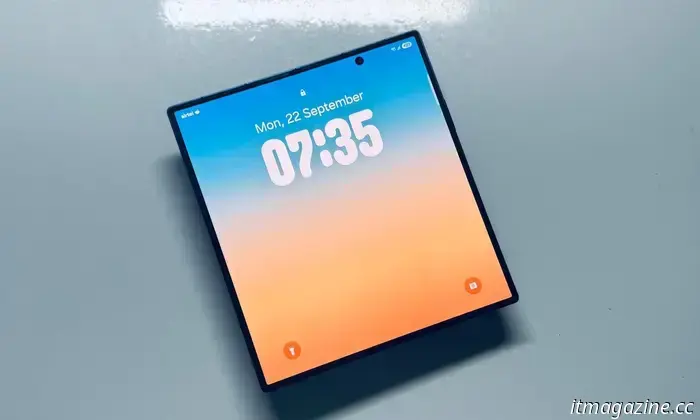 Samsung Galaxy Z Fold 8 expected to receive significant camera enhancements.
Leaks indicate that the Galaxy Z Fold 8 may include an upgraded telephoto and ultrawide camera with higher resolution, highlighting Samsung's commitment to uncompromised photography in foldable devices.
Samsung Galaxy Z Fold 8 expected to receive significant camera enhancements.
Leaks indicate that the Galaxy Z Fold 8 may include an upgraded telephoto and ultrawide camera with higher resolution, highlighting Samsung's commitment to uncompromised photography in foldable devices.
 Waymo's robotaxis were uncertain about how to respond when the traffic lights in the city malfunctioned.
Waymo's robotaxis experienced a significant malfunction on Saturday due to a power outage that impacted a large portion of San Francisco. Approximately 130,000 residents were left without electricity in their homes and businesses, and the outage also disabled traffic lights at key intersections, leading to challenges for Waymo's autonomous vehicles. Many […]
Waymo's robotaxis were uncertain about how to respond when the traffic lights in the city malfunctioned.
Waymo's robotaxis experienced a significant malfunction on Saturday due to a power outage that impacted a large portion of San Francisco. Approximately 130,000 residents were left without electricity in their homes and businesses, and the outage also disabled traffic lights at key intersections, leading to challenges for Waymo's autonomous vehicles. Many […]
 The government has confirmed that people in the UK are now offloading their emotional trauma onto AI.
According to a new report from the government's AI Security Institute (AISI), one-third of UK citizens have sought emotional support, companionship, or social interaction from artificial intelligence. The findings indicate that close to 10% of the population is utilizing systems such as chatbots for emotional reasons on a weekly basis, with 4% participating in …
The government has confirmed that people in the UK are now offloading their emotional trauma onto AI.
According to a new report from the government's AI Security Institute (AISI), one-third of UK citizens have sought emotional support, companionship, or social interaction from artificial intelligence. The findings indicate that close to 10% of the population is utilizing systems such as chatbots for emotional reasons on a weekly basis, with 4% participating in …
 I've watched Avatar: Fire and Ash, and here's why I believe it's the top film in the franchise.
Avatar: Fire and Ash has established itself as the finest film in James Cameron's sci-fi franchise due to its innovative concepts, themes, and character growth.
I've watched Avatar: Fire and Ash, and here's why I believe it's the top film in the franchise.
Avatar: Fire and Ash has established itself as the finest film in James Cameron's sci-fi franchise due to its innovative concepts, themes, and character growth.
 A 300TB backup of Spotify has just arrived; here’s what you can access today.
Anna's Archive has released a torrent-based backup of Spotify, encompassing 300TB of metadata from the Spotify catalog, with audio files set to be added later. Below is an overview of what is contained, what is absent, and the reasoning behind its creation.
A 300TB backup of Spotify has just arrived; here’s what you can access today.
Anna's Archive has released a torrent-based backup of Spotify, encompassing 300TB of metadata from the Spotify catalog, with audio files set to be added later. Below is an overview of what is contained, what is absent, and the reasoning behind its creation.
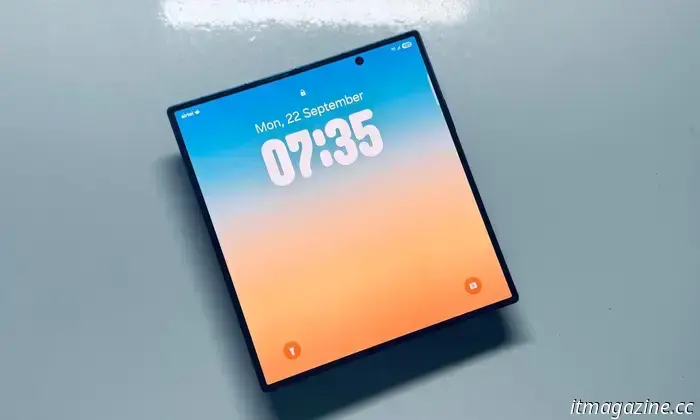
Samsung's upcoming foldable device may offer a more tablet-like experience.
Samsung is said to be developing a foldable device that is shorter and wider, which may have a similarity to the forthcoming iPhone Fold.