
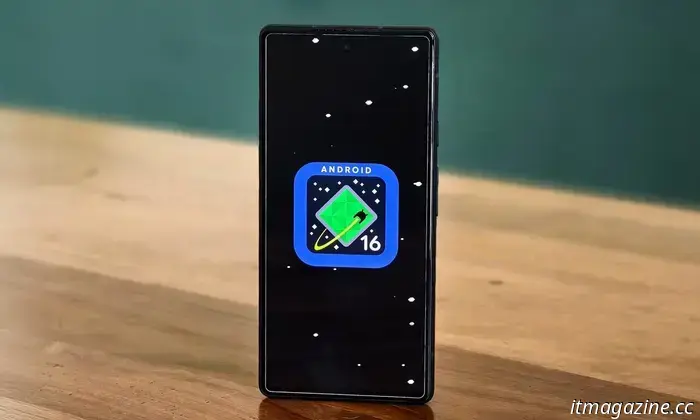
Android may finally eliminate the need to tap twice for Wi-Fi.
Android 16 might reverse a controversial Quick Settings alteration
Google could be poised to revert one of its most contentious interface changes in Android, nearly four years after it was introduced.
When Google released Android 12 in 2021, it eliminated the separate toggles for Wi-Fi and mobile data that users were accustomed to. Instead, it introduced a single “Internet” tile. The rationale was to streamline connection management and prevent users from accidentally exceeding their data limits by forgetting to reconnect to Wi-Fi. While this made sense theoretically, it turned a simple action into a multi-step process, which frustrated many users.
A possible reversal of the Internet tile experiment
Rather than just tapping a toggle, users were now required to access a separate Internet panel to select their connection. This added step proved to be an inconvenience, particularly for power users, leading to immediate complaints. However, Google maintained its stance, asserting that the modification was meant to help users avoid unknowingly using mobile data.
For years, the Internet tile remained unchanged. Although some workarounds existed through third-party applications or technical ADB commands, these solutions often broke with each new Android update. By the time Android 13 arrived, most unofficial fixes became entirely ineffective.
However, it appears that change may be on the horizon.
With the recent release of the Android 16 QPR2 source code, developers have discovered indications that Google is reinstating separate controls for the Internet tile. According to a report by Android Authority, Michael Bestas, a lead developer for LineageOS, unearthed new code in the Android Open Source Project that introduces individual Quick Settings tiles for “Mobile Data” and Wi-Fi.
Based on the code, the new Mobile Data tile allows toggling cellular data directly with a single tap, while the updated Wi-Fi tile features a “pause and scan” function. Notably, the Wi-Fi tile is still labeled “Internet” for now, likely to ease users' transition away from the combined panel. Internal notes suggest a long-term goal of reintroducing a distinct Wi-Fi-only tile.
Currently, these modifications are hidden behind a feature flag and are inactive in the public beta versions. This means that users will not see the separate toggles on their devices just yet, and there remains a possibility that Google may reconsider or delay the implementation.
If this separation reaches stable devices, it would signify a significant response to user feedback. It would be a rare acknowledgment from Google that the “simplified” method wasn't beneficial for all users. Restoring the direct, one-tap controls would enhance the speed and intuitiveness of the Android interface. For those who have missed the old toggles over the past four years, Android 16 could finally be the update that brings them back.
Moinak Pal has experience covering both consumer technology and automotive technology in the tech industry.
Instacart may have charged you more for the same groceries, showcasing AI issues
A recent investigation led by Consumer Reports, in partnership with Groundwork Collaborative and More Perfect Union, indicates that Instacart’s use of AI in pricing experiments might have led to customers paying varying prices for identical groceries. The results reveal a system where prices can differ among users, even when they shop at the same retailer, simultaneously, and for the same items. The study monitored over 400 Instacart users across four major U.S. cities and found that the price of products like eggs or chips often varied based on who was purchasing them.
Your Pixel could soon improve at preventing accidental pocket dials
Google seems to have finally addressed a long-standing issue that has troubled Pixel users for years. The company recently marked the accidental touch prevention problem, which has existed since the Pixel 6, as "fixed" in its public bug tracker, indicating that a solution is forthcoming. Pixel phone users have faced unintended actions such as accidental calls, unprompted app openings, and turning on the flashlight while the device is in their pocket. While brands like Samsung and OnePlus offer built-in accidental touch protection using proximity sensors to disable touch input when the device is stored in a pocket or bag, Google has yet to provide a similar feature in its Pixel line.
This case can transform your iPhone 17 Pro into a selfie powerhouse
Not just a protective shell, the Selfix case also adds a microSD slot for extra storage.
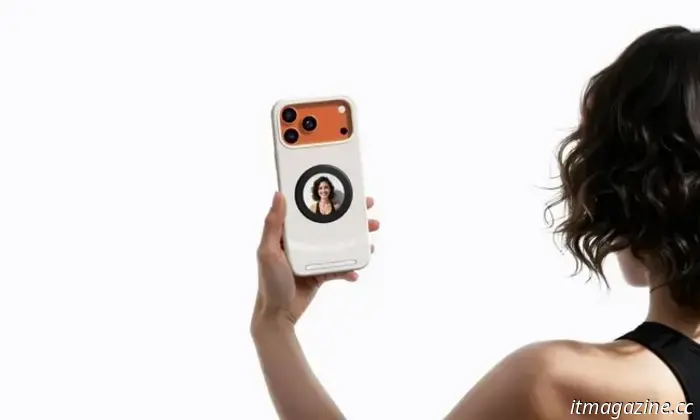
Typically, phone cases are aimed solely at protecting devices from scratches and dings. However, the new Selfix case from Dockcase offers significantly more functionality. It incorporates a display on the back of the iPhone 17 Pro, allowing users to fully utilize its triple-camera setup for selfies. The Selfix case includes a 1.6-inch circular AMOLED screen with a resolution of 480 x 480 pixels, which can function as a live viewfinder for selfies and videos. It mirrors the view from the iPhone's main camera, enabling users to frame shots more accurately and take higher-quality images without relying on the front-facing camera


Other articles
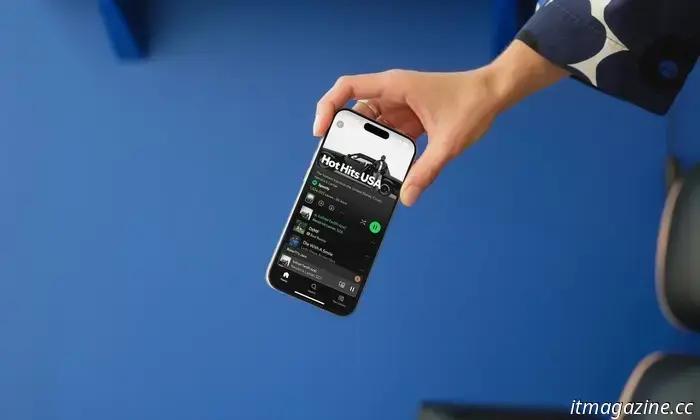 A 300TB backup of Spotify has just arrived; here’s what you can access today.
Anna's Archive has released a torrent-based backup of Spotify, encompassing 300TB of metadata from the Spotify catalog, with audio files set to be added later. Below is an overview of what is contained, what is absent, and the reasoning behind its creation.
A 300TB backup of Spotify has just arrived; here’s what you can access today.
Anna's Archive has released a torrent-based backup of Spotify, encompassing 300TB of metadata from the Spotify catalog, with audio files set to be added later. Below is an overview of what is contained, what is absent, and the reasoning behind its creation.
 ChatGPT now allows you to increase the warmth or decrease the enthusiasm in its replies.
OpenAI is introducing new personality configurations that allow you to adjust ChatGPT's responses for qualities like warmth, enthusiasm, and additional traits.
ChatGPT now allows you to increase the warmth or decrease the enthusiasm in its replies.
OpenAI is introducing new personality configurations that allow you to adjust ChatGPT's responses for qualities like warmth, enthusiasm, and additional traits.
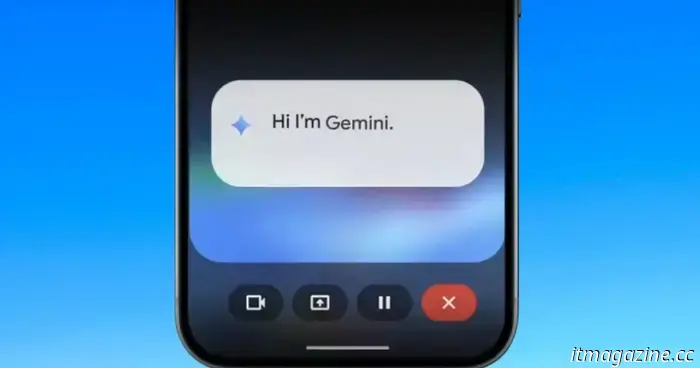 Google has stated that Gemini will completely take the place of Assistant on smartphones in 2026.
Google's transition from Assistant to Gemini on smartphones has been postponed, allowing users to keep using Assistant while the company perfects Gemini for a complete mobile launch.
Google has stated that Gemini will completely take the place of Assistant on smartphones in 2026.
Google's transition from Assistant to Gemini on smartphones has been postponed, allowing users to keep using Assistant while the company perfects Gemini for a complete mobile launch.
 Waymo's robotaxis were uncertain about how to respond when the traffic lights in the city malfunctioned.
Waymo's robotaxis experienced a significant malfunction on Saturday due to a power outage that impacted a large portion of San Francisco. Approximately 130,000 residents were left without electricity in their homes and businesses, and the outage also disabled traffic lights at key intersections, leading to challenges for Waymo's autonomous vehicles. Many […]
Waymo's robotaxis were uncertain about how to respond when the traffic lights in the city malfunctioned.
Waymo's robotaxis experienced a significant malfunction on Saturday due to a power outage that impacted a large portion of San Francisco. Approximately 130,000 residents were left without electricity in their homes and businesses, and the outage also disabled traffic lights at key intersections, leading to challenges for Waymo's autonomous vehicles. Many […]
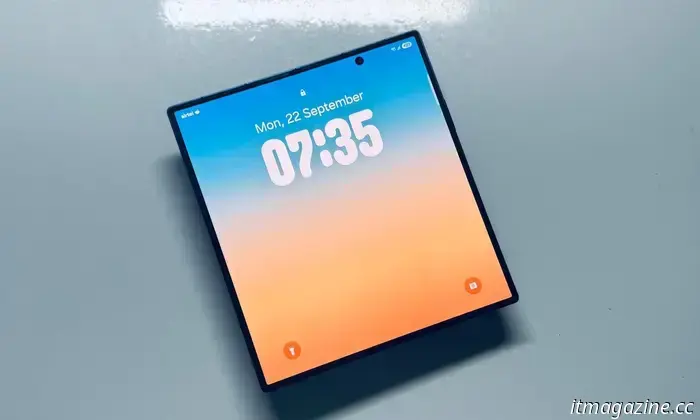 Samsung Galaxy Z Fold 8 expected to receive significant camera enhancements.
Leaks indicate that the Galaxy Z Fold 8 may include an upgraded telephoto and ultrawide camera with higher resolution, highlighting Samsung's commitment to uncompromised photography in foldable devices.
Samsung Galaxy Z Fold 8 expected to receive significant camera enhancements.
Leaks indicate that the Galaxy Z Fold 8 may include an upgraded telephoto and ultrawide camera with higher resolution, highlighting Samsung's commitment to uncompromised photography in foldable devices.
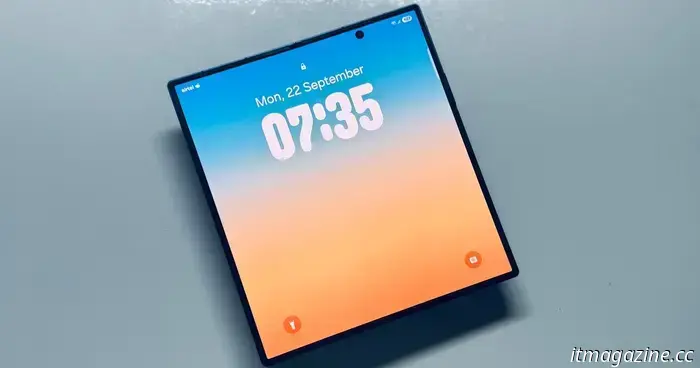 Samsung's upcoming foldable device may offer a more tablet-like experience.
Samsung is said to be developing a foldable device that is shorter and wider, which may have a similarity to the forthcoming iPhone Fold.
Samsung's upcoming foldable device may offer a more tablet-like experience.
Samsung is said to be developing a foldable device that is shorter and wider, which may have a similarity to the forthcoming iPhone Fold.
Android may finally eliminate the need to tap twice for Wi-Fi.
Code hints in Android 16 suggest that Google may reinstate one-tap toggles for Wi-Fi and mobile data, which could lead to the discontinuation of the unpopular Internet tile that was introduced in Android 12.