
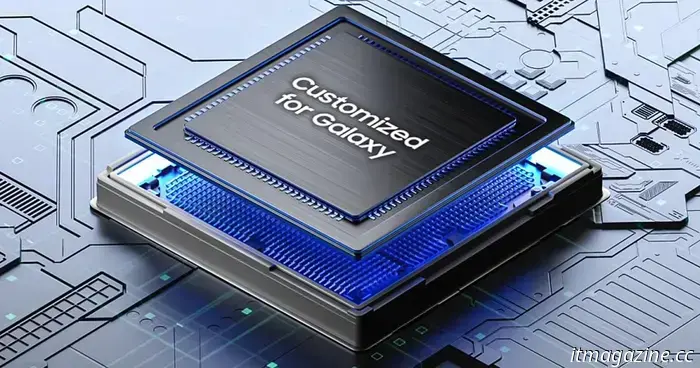
Your upcoming Samsung phone could potentially utilize genuinely "Samsung-manufactured" silicon.
The company is reportedly developing custom processors, which may enhance performance, extend battery life, and improve AI capabilities.
What’s the news? According to Chosun Media, Samsung has officially restructured part of its semiconductor division and established a dedicated Custom SoC Development Team. This represents a shift from merely licensing standard ARM CPU cores to investing in its own chip architecture, which includes designing CPU cores, AI/Neural units, and system-on-chip (SoC) designs. This initiative aims to position Samsung alongside companies like Apple and Qualcomm, which have been leaders in custom silicon strategies.
The new team operates under Samsung’s System LSI division, with SoC expert Park Bong-il appointed to lead the initiative.
Until now, Samsung has relied on standard ARM CPU cores for its Exynos processors. This custom-SoC initiative could change that, allowing Samsung to design CPU, GPU, NPU, and other components internally.
The plan extends beyond Samsung's internal devices, as they could also provide custom chips to outside clients, transforming into a full-chip design agency.
Samsung already possesses foundry capabilities, including advanced manufacturing processes, giving it a chance to compete with major chip manufacturers.
Why does this matter? If successful, Samsung's upcoming smartphones could be more refined, efficient, and uniquely optimized than previous models. Custom chips would enable Samsung to tailor performance, heat management, battery life, camera functions, AI, and nearly every aspect for its own hardware and software, rather than playing catch-up. This could also disrupt the mobile chip market.
Furthermore, with Samsung taking on the role of both chip maker and foundry, the dominance of a few chip suppliers could diminish. This change could lead to increased innovation, better optimization, and potentially more competitive pricing. For consumers, this might finally narrow the gap between Android devices and those "silicon-designed" phones known for their smooth performance, extended battery life, and seamless integration.
Why should I pay attention? This could signify the arrival of a Samsung phone that feels genuinely “made by Samsung” at its core. Custom chips would allow Samsung to fine-tune its devices in specific ways, likely resulting in smoother performance, improved efficiency, and fewer discrepancies where Snapdragon and Exynos once seemed inconsistent. In simpler terms, future Samsung phones may begin to feel less like modified Android devices and more like tightly integrated systems designed around proprietary silicon, similar to what Apple users currently experience.
What's next? For now, this initiative is behind the scenes and not something that will be visible in stores right away. The real indicators will emerge through leaks, benchmarks, and product launches over the next one to two years. If you're considering an upgrade soon, you may not notice the effects yet, but if you typically upgrade every couple of years, this development is certainly worth following.
In other news, Spotify has transformed its annual Wrapped feature into a multiplayer event called Wrapped Party, allowing users to invite friends to a shared space within the app where everyone's music habits are displayed in real time.
Each participant can create a private room and see their stats alongside those of their friends, with the feature available on both iOS and Android for up to nine users.
In another update, rumors suggest that ChatGPT may soon integrate with Apple Health, potentially allowing it to analyze data like activity, sleep, and diet. Recent findings in the ChatGPT iPhone app indicate a hidden Apple Health icon, suggesting that OpenAI plans to facilitate access to health data by 2026.
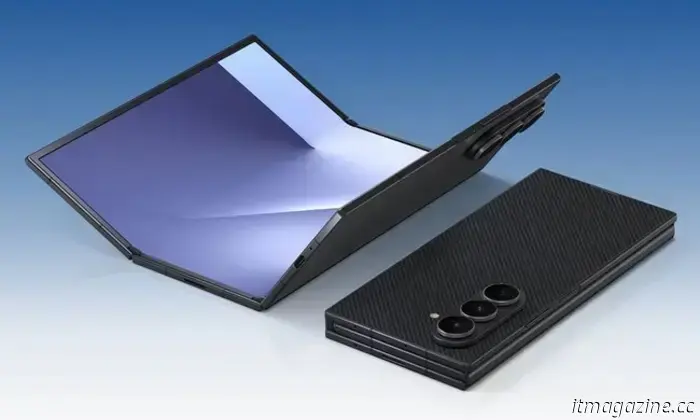
Finally, Samsung has showcased the Galaxy Z TriFold, an innovative foldable phone that can transform into a tablet. While it’s an impressive demonstration, it signals exciting prospects for the future of foldable technology in consumer devices.




Other articles
 Samsung's enormous Odyssey Neo G9 has recently received a significant price reduction.
If a typical ultrawide monitor seems limiting, this is the enhancement you've been looking for. The Samsung 57-inch Odyssey Neo G9 (G95NC) is currently available for $1,449.99, reduced from $2,299.99, offering a savings of approximately $850 on one of the most extravagant gaming displays available. It features a dual-4K display and a 240 Hz refresh rate.
Samsung's enormous Odyssey Neo G9 has recently received a significant price reduction.
If a typical ultrawide monitor seems limiting, this is the enhancement you've been looking for. The Samsung 57-inch Odyssey Neo G9 (G95NC) is currently available for $1,449.99, reduced from $2,299.99, offering a savings of approximately $850 on one of the most extravagant gaming displays available. It features a dual-4K display and a 240 Hz refresh rate.
 Your upcoming Dell or Lenovo computer may soon become more expensive.
Surging demand for AI is causing memory shortages, prompting Dell and Lenovo to raise prices for PCs and servers. Price hikes of 15-20% could come as soon as December or January.
Your upcoming Dell or Lenovo computer may soon become more expensive.
Surging demand for AI is causing memory shortages, prompting Dell and Lenovo to raise prices for PCs and servers. Price hikes of 15-20% could come as soon as December or January.
 The OnePlus 15R is set to eliminate battery anxiety with a significant announcement.
Additionally, the flagship OnePlus 15 is now available for pre-order in the United States.
The OnePlus 15R is set to eliminate battery anxiety with a significant announcement.
Additionally, the flagship OnePlus 15 is now available for pre-order in the United States.
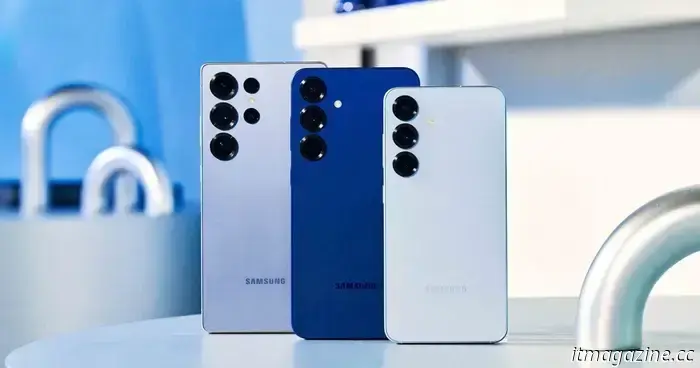 I examined 7 Galaxy S26 renders; here’s what you should pay attention to.
I checked out a set of Samsung Galaxy S26 renders, but how accurate are they in predicting what we might see next year?
I examined 7 Galaxy S26 renders; here’s what you should pay attention to.
I checked out a set of Samsung Galaxy S26 renders, but how accurate are they in predicting what we might see next year?
 Meta assures that recovering your hacked Instagram account will soon become simpler.
Meta is introducing a new consolidated support center for Facebook and Instagram aimed at simplifying the account recovery process.
Meta assures that recovering your hacked Instagram account will soon become simpler.
Meta is introducing a new consolidated support center for Facebook and Instagram aimed at simplifying the account recovery process.
 The Gopro Hero13 Black action camera is now available for $319 after a 26% discount.
If you've been considering upgrading your action camera ahead of your next adventure, this is a compelling reason to do so. The GoPro Hero13 Black is currently priced at $319.00, reduced from its original price of $429.99, which is a 26% savings on GoPro's newest flagship model. You'll benefit from high-quality 5.3K video capture, excellent stabilization, and compatibility with the new HB series lenses […]
The Gopro Hero13 Black action camera is now available for $319 after a 26% discount.
If you've been considering upgrading your action camera ahead of your next adventure, this is a compelling reason to do so. The GoPro Hero13 Black is currently priced at $319.00, reduced from its original price of $429.99, which is a 26% savings on GoPro's newest flagship model. You'll benefit from high-quality 5.3K video capture, excellent stabilization, and compatibility with the new HB series lenses […]
Your upcoming Samsung phone could potentially utilize genuinely "Samsung-manufactured" silicon.
Samsung has launched a "Custom SoC Development Team" with the goal of designing its own chips internally. This initiative could lead to more optimized processors, improved battery life, and smartphones that offer more than just a standard "Android experience."