
In the future, your Windows on ARM laptop might be able to run actual PC games.
An unexpected GPU from China has showcased what may be achievable.
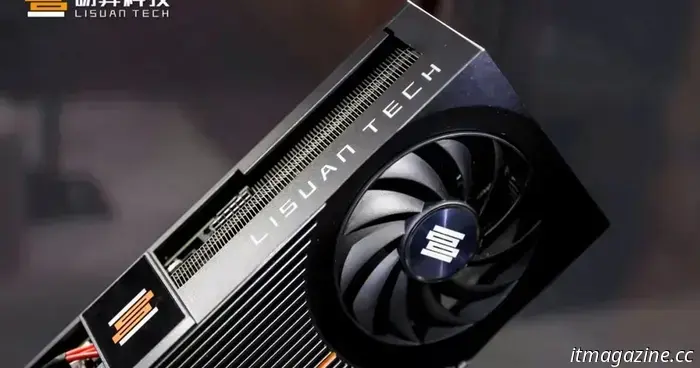
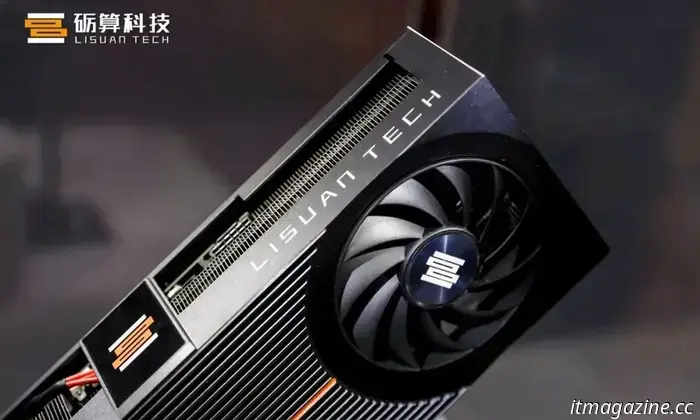
What’s the news? A discrete graphics card has publicly demonstrated its capabilities running Windows on ARM for the first time. As initially reported by ITHome, the GPU in question is the Lisuan 7G106, a Chinese-made discrete GPU that was recently showcased running a 3DMark benchmark on an ARM-based Windows system. While it's still in the early stages and far from being a consumer-ready product, this demonstration marks a significant moment for the ARM Windows ecosystem.
The Lisuan 7G106 was shown executing the 3DMark Time Spy benchmark on Windows on ARM, confirming the existence of genuine dGPU driver support.
This makes it the first known discrete GPU to publicly exhibit Windows on ARM compatibility.
Performance information is scarce at this point, but the demo verifies that essential rendering, driver, and API support are already operational.
Why does this matter? Windows on ARM has consistently faced a significant limitation: graphics. Even though Qualcomm’s integrated GPUs have seen improvements, they still greatly lag behind what even entry-level discrete GPUs can achieve for gaming, 3D tasks, and creative workloads. Previously, there had been no successful public demonstration of a true dGPU operating on the ARM version of Windows in a benchmarked setting.
This development alters the entire discussion surrounding ARM PCs, indicating that Windows on ARM is no longer confined to ultra-thin laptops and productivity devices. For the first time, it appears that the platform might realistically target gaming laptops, workstations, and high-performance desktops. Even if Lisuan does not become a household name, the technical proof of concept is what truly holds significance here.
Why should this matter to you? If you’ve ever been interested in Windows on ARM but hesitated because of concerns that "it can’t really game," this represents the first genuine indication that the landscape could change. A future with ARM laptops that offer both excellent battery life and substantial GPU power would eliminate the major compromise the platform faces. No more having to choose between efficiency and performance.
Additionally, this puts subtle pressure on industry leaders. So far, NVIDIA, AMD, and Intel have avoided developing discrete Windows on ARM GPUs. Now that a smaller company has demonstrated the technical feasibility, the focus shifts to when, rather than if, the major GPU manufacturers will decide to enter this market. For consumers, this could ultimately mean sleeker gaming laptops, cooler-running creator PCs, and improved battery life without sacrificing graphical performance.
What’s next? Don’t expect to connect a Lisuan GPU to your ARM PC anytime soon. This was primarily a proof-of-concept and not a product intended for retail, and since it’s a desktop-level card, a laptop version will take even longer to materialize. Nevertheless, the real story is the notice it provides. With a discrete GPU now shown running on Windows on ARM, all attention turns to NVIDIA, AMD, and Intel. If any of them opt to enter the market, developments could happen rapidly. For now, consider this the first domino, not the finish line.



Other articles
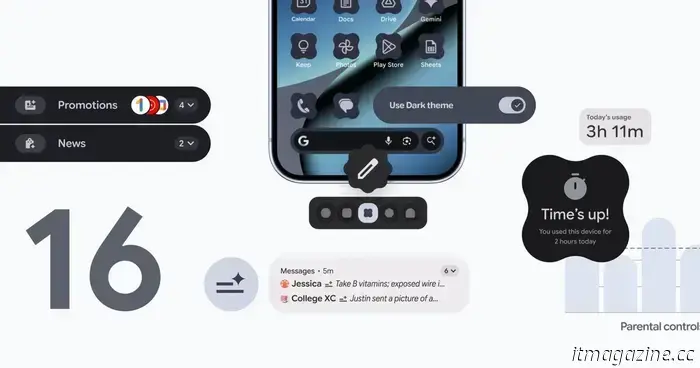 Google’s latest update has made your notifications more intelligent and less intrusive.
Google's Android 16 QPR2 update brings AI-driven notifications, enhanced dark mode, fraud detection, and new safety features, enhancing daily phone usage to be more seamless, secure, and user-friendly.
Google’s latest update has made your notifications more intelligent and less intrusive.
Google's Android 16 QPR2 update brings AI-driven notifications, enhanced dark mode, fraud detection, and new safety features, enhancing daily phone usage to be more seamless, secure, and user-friendly.
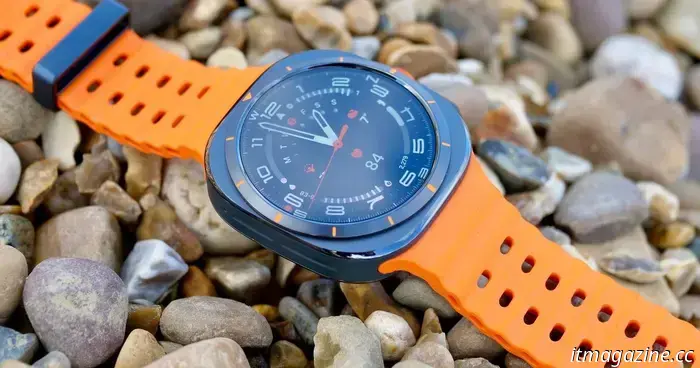 Samsung is working on a competitor to the Apple Watch Ultra 3, and it may launch next year.
What’s going on? The South Korean technology leader Samsung is developing a successor to the Galaxy Watch Ultra, which may be released as early as 2026. Why does this matter? Though details about the alleged Galaxy Watch Ultra 2 are limited, the new smartwatch is expected to enhance the solid groundwork established by the original Watch Ultra. Recommended Videos […]
Samsung is working on a competitor to the Apple Watch Ultra 3, and it may launch next year.
What’s going on? The South Korean technology leader Samsung is developing a successor to the Galaxy Watch Ultra, which may be released as early as 2026. Why does this matter? Though details about the alleged Galaxy Watch Ultra 2 are limited, the new smartwatch is expected to enhance the solid groundwork established by the original Watch Ultra. Recommended Videos […]
 These might be the most unnerving robots you've ever seen.
Those who are easily unsettled may wish to bypass this article. It discusses some of the most unsettling robots that have ever existed on our planet, aside from this particular one, perhaps. As part of a new art exhibition at Art Basel Miami, these robot dogs showcase disturbingly realistic replicas of the heads of several prominent figures in [...]
These might be the most unnerving robots you've ever seen.
Those who are easily unsettled may wish to bypass this article. It discusses some of the most unsettling robots that have ever existed on our planet, aside from this particular one, perhaps. As part of a new art exhibition at Art Basel Miami, these robot dogs showcase disturbingly realistic replicas of the heads of several prominent figures in [...]
 Your phone can now alert you when a text message appears to be a scam.
Google has now implemented AI in Circle for Search and Lens to identify scam messages, outline risks, and provide users with real-time alerts on Android devices.
Your phone can now alert you when a text message appears to be a scam.
Google has now implemented AI in Circle for Search and Lens to identify scam messages, outline risks, and provide users with real-time alerts on Android devices.
In the future, your Windows on ARM laptop might be able to run actual PC games.
Windows on ARM has historically been deficient in graphics performance, but this may be on the brink of transformation. A newly developed discrete GPU from China has reportedly been demonstrated operating on ARM-based Windows, suggesting that genuine PC gaming on ARM could soon become a reality.