
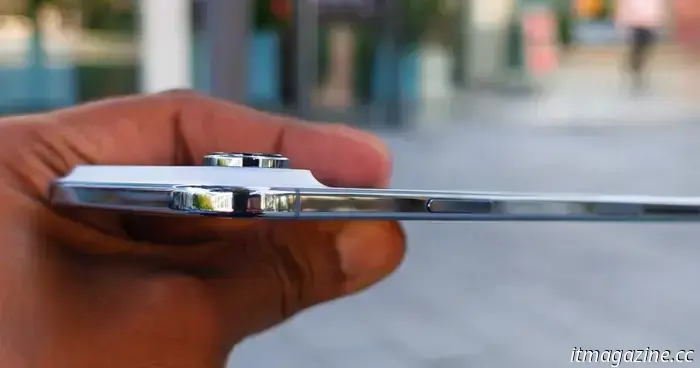
We require more robust phones, not the iPhone Air… and you're aware of the reasons.
Apple was hoping that the third time would be the charm following the disappointing sales of both the iPhone mini and iPhone Plus.
So far, reports regarding the iPhone Air’s popularity have stirred a significant sense of déjà vu. Nikkei states that there’s “virtually no demand” for the device, and analyst Ming-Chi Kuo predicts an 80% cut in production.
Demand for the iPhone Air has not met expectations, prompting the supply chain to start reducing both shipments and production capacity. By the first quarter of 2026, most suppliers are anticipated to decrease capacity by over 80%, especially for components with longer lead times — Ming-Chi Kuo (@mingchikuo) October 22, 2025.
At least unsold units won’t take up too much shelf space, unlike the stacks of unwanted Vision Pro headsets.
Nonetheless, a failure is a failure. According to DigiTimes, it has been such a flop that Chinese manufacturers like Xiaomi and Vivo have abandoned plans to produce ultra-thin devices. Given that the industry typically follows Apple’s design trends (even after mockery!), sales must be exceptionally poor.
However, this issue extends beyond Apple's difficulties in selling a fourth version of the iPhone. Samsung also launched the ultra-slim Galaxy S25 Edge this year, and it is facing similar challenges.
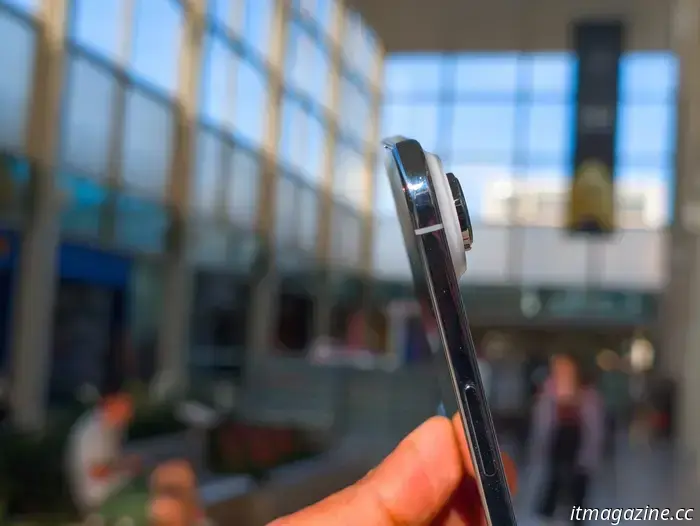
What do these two phones share? Most notably, their thinness. While Apple boasts a slight edge with the iPhone Air measuring 5.64mm compared to Samsung’s 5.8mm, these distinctions are hardly noticeable at a glance.
We are told that consumers desire this thinness; perhaps that’s true in theory. Yet, as soon as real-world compromises become evident, customers often prefer to spend their money on better options at lower prices.
The price of thinness
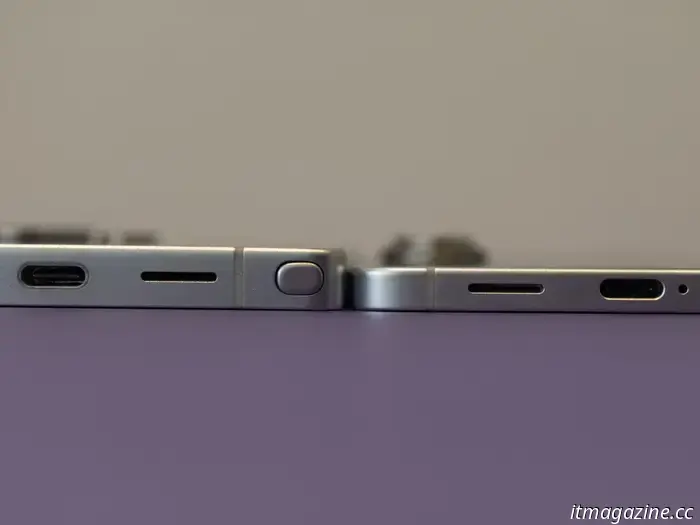
The Galaxy S25 Edge (right) and Galaxy S25 Ultra Nirave Gondhia / Digital Trends
This is because apart from being thin, the Galaxy S25 Edge and iPhone Air share several undesirable traits. To summarize: reduced feature sets, smaller batteries, and a price tag that I’ll generously describe as “optimistic” rather than using a more blunt adjective.
Let’s address these issues sequentially, starting with the reduced features. If the iPhone 16e hadn’t been released earlier this year, the iPhone Air would be the first numbered Apple model since the iPhone 8 to have a single rear camera. Additional omissions include only one speaker in the earpiece, the absence of a physical SIM tray, and one less GPU core in the A19 Pro chip compared to the Pro variants. Furthermore, it performs slower due to less efficient heat management.
While the Samsung Galaxy S25 Edge compromises less for its ultra-thin design, it still lacks a telephoto lens — arguably the most beneficial camera feature available. So once again, users are paying more for less in every conceivable sense.
Regarding battery life, a thinner phone means reduced space for battery capacity. To be fair to Samsung, the Galaxy S25 Edge’s 3,900mAh battery is only 100mAh smaller than that of the regular S25, so I’ll let that slide. However, Apple’s case is less forgiving. The iPhone Air comes with a mere 3,149mAh battery, compared to the iPhone 17’s 3,692mAh. The Pro models exceed 4,000mAh and reach up to 5,000mAh.
Battery performance is significantly weaker; in fact, Apple introduced the MagSafe battery pack for an additional $99 at checkout (which seems excessive when the best portable chargers are available for much less).
If you were to add that $99 battery pack, your total would amount to a minimum of $1,099, the same price as the far better-specified iPhone 17 Pro. The Samsung Galaxy S25 Edge also costs $1,099, without a battery pack, and it’s only $200 less than the Galaxy S25 Ultra.
This is an absurd asking price, regardless of how seamlessly either phone fits into the pocket of a pair of slim jeans (something I must admit isn't particularly relevant to me).
Opt for quality or stick with the limitations of charging.
Nirave Gondhia / Digital Trends
I genuinely find the disappointing sales of the iPhone Air and Galaxy S25 Edge comforting. Consumers appear to be prioritizing substance over style, which is encouraging.
Having used a smartphone from the pre-iPhone era in the mid-2000s, I can confidently say that current models are sufficiently thin, and any attempts to shave off just a few more millimeters before battery technology catches up are self-sabotaging and yield diminishing returns.
We are largely in a good place now, and most people accept that the 30-day phone batteries of the 90s are long gone. With everything charging via USB-C, that’s really not
Other articles
 Top Samsung holiday offers available on Amazon at the moment: smartphones, televisions, laptops, and additional items.
This year, Samsung's holiday discounts on Amazon cover many major categories: smartphones, televisions, laptops, monitors, audio equipment, and wearables. If you're currently part of the Galaxy ecosystem or considering joining it, now is a great time to enhance the key components of your setup while prices are reduced. Galaxy S25 Ultra (256GB) [...]
Top Samsung holiday offers available on Amazon at the moment: smartphones, televisions, laptops, and additional items.
This year, Samsung's holiday discounts on Amazon cover many major categories: smartphones, televisions, laptops, monitors, audio equipment, and wearables. If you're currently part of the Galaxy ecosystem or considering joining it, now is a great time to enhance the key components of your setup while prices are reduced. Galaxy S25 Ultra (256GB) [...]
 SpaceX receives significant support for Starship launches at Cape Canaveral.
SpaceX has received a significant enhancement for its Starship activities at Cape Canaveral in Florida, following the approval from the Department of the Air Force (DAF) to proceed with the development of the Space Launch Complex-37 (SLC-37) launch facility. Initial construction work at the location commenced earlier this year, but the endorsement from DAF [...]
SpaceX receives significant support for Starship launches at Cape Canaveral.
SpaceX has received a significant enhancement for its Starship activities at Cape Canaveral in Florida, following the approval from the Department of the Air Force (DAF) to proceed with the development of the Space Launch Complex-37 (SLC-37) launch facility. Initial construction work at the location commenced earlier this year, but the endorsement from DAF [...]
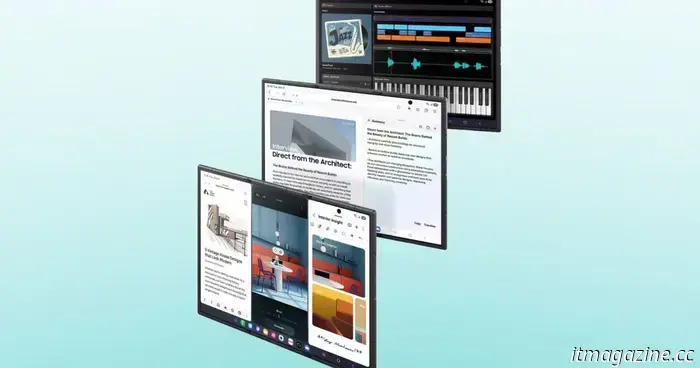 You can utilize the Samsung Galaxy Z Trifold as a desktop computer without the need for an external monitor.
Samsung’s Galaxy Z Trifold is the inaugural phone to operate DeX directly on its 10-inch display, offering users a genuine desktop-like experience without the requirement of an external monitor. It is crafted for multitasking akin to a PC while being able to fold into a compact device.
You can utilize the Samsung Galaxy Z Trifold as a desktop computer without the need for an external monitor.
Samsung’s Galaxy Z Trifold is the inaugural phone to operate DeX directly on its 10-inch display, offering users a genuine desktop-like experience without the requirement of an external monitor. It is crafted for multitasking akin to a PC while being able to fold into a compact device.
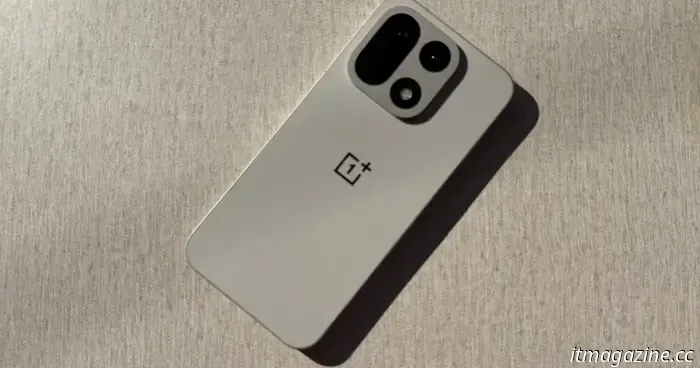 Having used the OnePlus 15 for five weeks, I've discovered what Apple requires for the iPhone 18.
The OnePlus 15 may not be an ideal phone, but it moves boundaries in ways that typical competitors tend to overlook. Apple should take note of its advantages if it aims to enhance the iPhone 18 series.
Having used the OnePlus 15 for five weeks, I've discovered what Apple requires for the iPhone 18.
The OnePlus 15 may not be an ideal phone, but it moves boundaries in ways that typical competitors tend to overlook. Apple should take note of its advantages if it aims to enhance the iPhone 18 series.
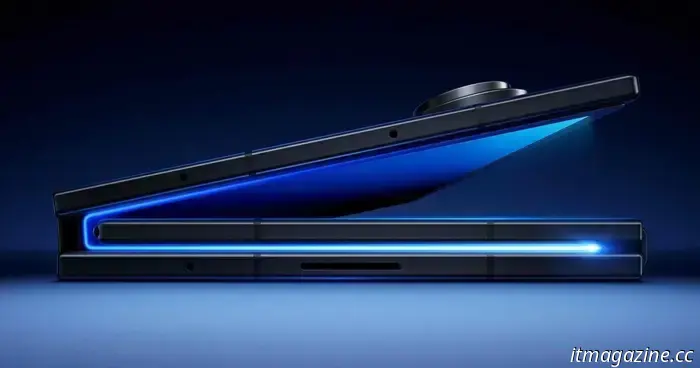 The Samsung Galaxy Z TriFold presents significant enhancements compared to the Fold 7, but it is not available for purchase at this time.
Samsung has officially introduced the Galaxy Z TriFold, its inaugural tri-folding smartphone, which boasts a 10-inch display, an expanded 5,600 mAh battery, and is powered by the Snapdragon 8 Elite.
The Samsung Galaxy Z TriFold presents significant enhancements compared to the Fold 7, but it is not available for purchase at this time.
Samsung has officially introduced the Galaxy Z TriFold, its inaugural tri-folding smartphone, which boasts a 10-inch display, an expanded 5,600 mAh battery, and is powered by the Snapdragon 8 Elite.
 E-Bikes and the future of transportation: How Jasion is transforming urban travel.
Urban living is evolving rapidly. Issues such as traffic congestion, fuel costs, and environmental issues are pushing individuals to look for improved transportation options. A solution that is becoming increasingly popular is the electric bike. While they were previously seen as a trendy item, e-bikes are now recognized as a genuine alternative for urban commuting. According to Precedence Research, it is anticipated that the global e-bike market will reach […]
E-Bikes and the future of transportation: How Jasion is transforming urban travel.
Urban living is evolving rapidly. Issues such as traffic congestion, fuel costs, and environmental issues are pushing individuals to look for improved transportation options. A solution that is becoming increasingly popular is the electric bike. While they were previously seen as a trendy item, e-bikes are now recognized as a genuine alternative for urban commuting. According to Precedence Research, it is anticipated that the global e-bike market will reach […]
We require more robust phones, not the iPhone Air… and you're aware of the reasons.
At this moment, a shift towards substance rather than style would be greatly appreciated.