
The Perodua QV-E is Malaysia’s first entirely locally produced electric vehicle, featuring a battery subscription service. 9 hours ago by Thanos Pappas This locally developed EV starts at $19,400. Purchasers are required to lease the 52.5-kWh battery for a nine-year period. The electric motor produces 201 hp and offers a range of 277 miles. Malaysian car manufacturer Perodua has made its initial significant move towards electrification with the release of the QV-E, which stands for Quest for Visionary Electric Vehicle. This subcompact crossover represents the brand’s first model that emits no emissions and includes a subscription-based battery option that lowers the initial cost, although it’s not a true saving as the vehicle cannot operate without the leased component. More: This Country Can’t Stop Snatching High-End Cars And Exotics Off Its Streets The QV-E also uniquely stands as Malaysia’s first electric car developed domestically. In contrast, rival Proton’s e.MAS 7 SUV and e.MAS 5 hatchback are rebranded versions of Geely products, while Perodua has invested significantly in creating something original. Development commenced in 2023, involving research and engineering expenses totaling 800 million ringgit (approximately $194 million). The journey began with a scale model of the EMO (Electric Motion Online) concept in May 2023, followed by the EMO-I hatchback prototype a year later and the EMO-II crossover design unveiled in December 2024. By May 2025, the design evolved into a functioning prototype, offering the public a first glimpse of what would ultimately be the production QV-E. Compact Size, Coupe-SUV Features Perodua With a length of 4,170 mm (164.2 inches) and a 2,680 mm (105.5-inch) wheelbase, the QV-E combines compact proportions with a sporty appearance. It showcases sharp split LED headlights, a sculptured hood, and robust wheel arches at the front. The profile resembles the previous-generation Toyota C-HR and the current Nissan Juke, especially around the window line. The front door handles are integrated into the bodywork, while the rear handles are concealed on the C-pillars. More: Dodge Won’t Sell You One, So A Tiny Automaker Made This Hemi V8 Coupe At the rear, the sloping roofline integrates with a full-width light bar and a built-in diffuser. The crossover is equipped with 18-inch alloy wheels and is currently available in two colors: Ice Blue and Caviar Gray. Basic Interior Inside, the dashboard prioritizes practicality over inspiration. Two 10.25-inch screens, one for infotainment and the other for instrumentation, cover essential functions without offering innovative features. The floating center console, ambient lighting, and aluminum-style trim attempt to enhance the atmosphere, but the overall feel remains more economical than state-of-the-art. Safety features are comprehensive, including six airbags and a complete ADAS package. Single Powertrain Choice The Perodua QV-E is built on a modular platform developed with help from Magna Steyr. It is powered by a single electric motor that delivers 201 hp (150 kW / 204 PS) and 285 Nm (210 lb-ft) of torque, propelling the front wheels and achieving 0–100 km/h (0–62 mph) in 7.5 seconds. The lithium iron phosphate battery, provided by China’s CATL, has a capacity of 52.5 kWh, claiming up to 445 km (276 miles) of range under the optimistic NEDC testing cycle. However, the catch is that this crucial component is not included in the vehicle's purchase price. Purchase the Vehicle, Lease the Battery The Perodua QV-E is priced starting at 80,000 ringgit (equivalent to $19,400 at current exchange rates), but buyers will need to pay an additional 275 ringgit ($67) monthly for the battery under a nine-year lease agreement. Perodua CEO Zainal Abidin Ahmad states that the Battery-as-a-Service (BaaS) model offers “a lifetime guarantee on the battery for our customers’ peace of mind,” describing it as a method to lessen the ownership concerns often associated with electric vehicles. Production is set to occur locally in Malaysia, beginning with 500 units per month and aiming to increase to 3,000 by the third quarter of 2026. Bloomberg reports that Perodua aims for 50 percent local parts content by early 2026, rising to 70 percent by 2030. The adoption of electric vehicles in Malaysia is
A feature-packed Android 16 update has finally arrived for Nothing's most budget-friendly smartphones, enhancing performance, introducing advanced AI tools, and refreshing the user interface.
What’s the news? The London-based smartphone maker Nothing has released its newest firmware based on Android 16 for two of its economical models.
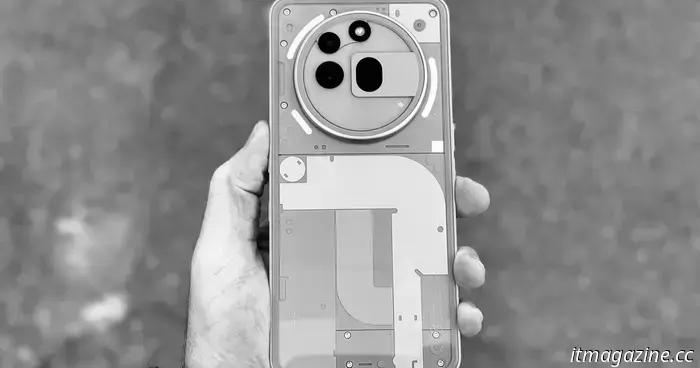
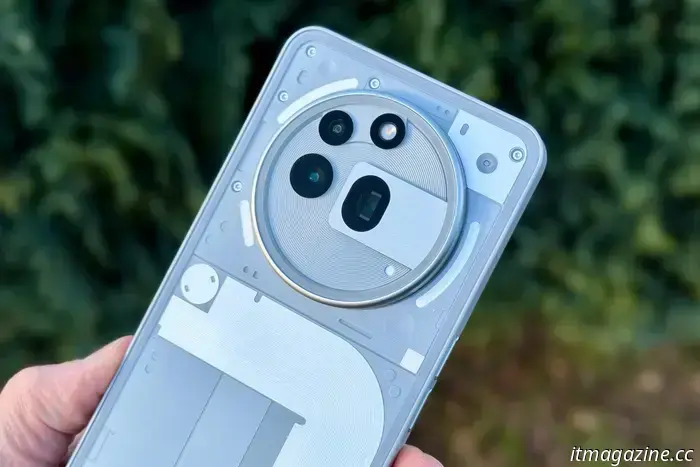
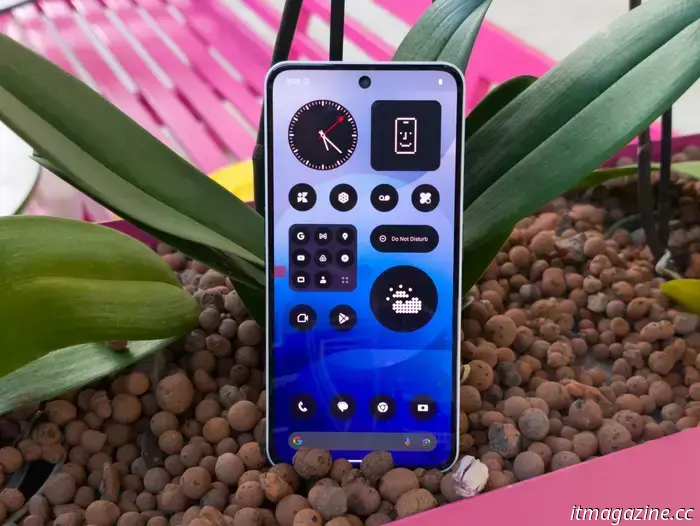
Named Nothing OS 4.0, the software update is now available for the Phone 3a and Phone 3a Pro. These devices were previously operating on a version of Nothing OS 3, which was built on Android 15.
The update introduces numerous improvements, such as design updates, enhanced multitasking capabilities, and new AI-driven features and camera functionalities.
Why does this matter? Google’s Android 16 offers better system performance, more intelligent notifications, enhanced security, and several new features.
Nothing OS 4.0 comes with a diverse set of additions, including a new AI usage dashboard that tracks the consumption of large AI models for improved privacy and transparency.
Users can now hide applications directly from their home screen or app drawer. Popular widgets, like Weather, Pedometer, and Screen Time, now offer more size choices.
Additionally, the company has implemented system-wide enhancements to speed up startup times.
Why is this significant? Not only do these operating system updates enhance the experience, but users of the Phone 3a and Phone 3a Pro are also receiving a host of new features.
For example, the Flip to Record feature can now take pictures and add notes while recording. The update also includes two community driver apps: Playground (Alpha) and Essential Apps (Alpha).
Nothing has revamped its native app icons for a refreshed appearance and updated the status bar icons.
For fans of dark mode, the budget smartphones now include an “Extra dark mode,” providing a deeper dark aesthetic.
What’s coming next? With Nothing OS 4.0, the Phone 3a and Phone 3a Pro now feature a toggle that allows users to choose whether Flip to Glyph activates silent or vibration mode. Additionally, the Glyph Progress feature now utilizes Android 16 Live Update notifications.
The Camera app has received updates with presets, filters, support for Motion Photos, watermarks, and a refreshed user interface.
Initially, the update is being rolled out to a limited number of Phone 3a and Phone 3a Pro users. Nothing plans to extend it to all users once it confirms that everything is functioning correctly.
For over five years, Shikhar has continuously simplified advancements in consumer technology and presented them...
Bose is venturing into the smartphone market with an audio-focused device, but it's not for sale.
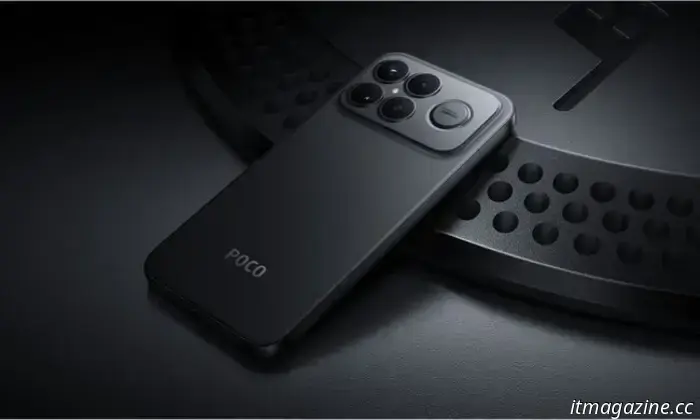
POCO has just unveiled its new flagship phones, the POCO F8 Ultra and POCO F8 Pro, for the international market. While the specifications are impressive, the standout feature is the audio quality. In a rare collaboration, POCO has teamed up with Bose to optimize the stereo speakers on both phones.
The F8 Ultra captivates with its striking denim-blue finish (complete with a denim texture) and boasts a large 6.9-inch OLED display with an exceptionally smooth 120Hz refresh rate. It is powered by the robust Snapdragon 8 Elite Gen 5 chip and includes a massive 6,500mAh battery that supports 100W wired and 50W wireless charging. Its camera system is also top-tier, featuring three 50MP sensors and an impressive 5x periscope zoom lens.
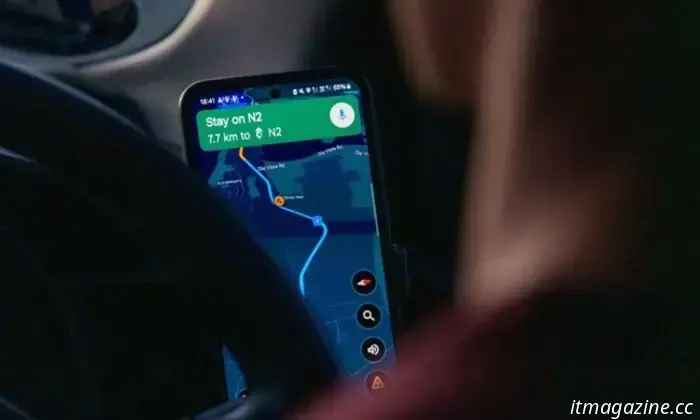
Google Maps introduces a simplified navigation mode aimed at enhancing battery life for the Pixel 10 series.
Google has launched a "Power Saving mode" for its Pixel 10 lineup, just two weeks after hinting at it in a Feature Drop. The update is now available for the Pixel 10, 10 Pro, 10 Pro XL, and the foldable 10 Pro Fold.
It offers a "lite" mode for navigation. When using the navigation function and pressing the power button to turn off the screen, the interface changes to a minimal, black-and-white design instead of locking or remaining on.
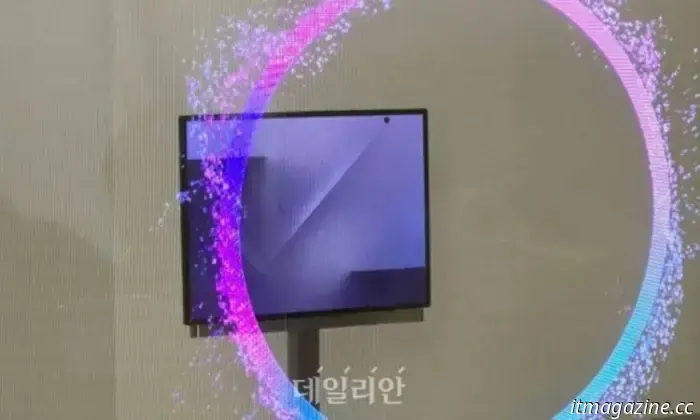
Samsung's Galaxy Z TriFold is priced competitively against foldable phones, potentially making it a sought-after tech collectible in 2026.
What’s the update? Samsung's anticipated tri-folding smartphone, the Galaxy Z TriFold, may be priced lower than initially anticipated.
It could be offered in South Korea for 3.6 million won, approximately $2,447, or about $2,500, according to a report on Naver.

Other articles
 The Apple Gift Card makes for an ideal holiday present — here’s what you can use it for.
This post is presented in collaboration with Apple. As the holiday season draws near, it’s the perfect time to begin considering the gifts you’ll give to your loved ones. Holiday shopping can be challenging, but if you're looking to buy a gift for the movie enthusiast, […]
The Apple Gift Card makes for an ideal holiday present — here’s what you can use it for.
This post is presented in collaboration with Apple. As the holiday season draws near, it’s the perfect time to begin considering the gifts you’ll give to your loved ones. Holiday shopping can be challenging, but if you're looking to buy a gift for the movie enthusiast, […]
 Get a portable car jump starter with a 3000A capacity for $44.99 at Walmart.
 The top Cyber Monday gaming offers on Amazon: PS5, GPUs, and additional items.
Cyber Monday This article is a part of Digital Trends' Cyber Monday coverage for 2025 Updated just under 3 minutes ago Cyber Monday is one of the rare occasions when upgrading your gaming setup feels justifiable and not like you're overspending. Currently, Amazon has some impressive discounts on hardware that truly […]
The top Cyber Monday gaming offers on Amazon: PS5, GPUs, and additional items.
Cyber Monday This article is a part of Digital Trends' Cyber Monday coverage for 2025 Updated just under 3 minutes ago Cyber Monday is one of the rare occasions when upgrading your gaming setup feels justifiable and not like you're overspending. Currently, Amazon has some impressive discounts on hardware that truly […]
 The popular Haribo power bank you have might pose a fire hazard.
A recent teardown reveals that the viral Haribo power bank is poorly designed and could potentially present a fire hazard. Misaligned battery layers and inadequate internal construction raise significant safety issues for those depending on it for travel or everyday use.
The popular Haribo power bank you have might pose a fire hazard.
A recent teardown reveals that the viral Haribo power bank is poorly designed and could potentially present a fire hazard. Misaligned battery layers and inadequate internal construction raise significant safety issues for those depending on it for travel or everyday use.
 What are automated workflows in accounting, and in what ways do they help save time?
How automation in finance based on rules minimizes manual tasks and accelerates processing.
What are automated workflows in accounting, and in what ways do they help save time?
How automation in finance based on rules minimizes manual tasks and accelerates processing.
 This Cyber Monday, take advantage of a 30% discount on a 4K floodlight security camera that offers 180° coverage.
Cyber Monday This article is part of Digital Trends' coverage for Cyber Monday 2024. Updated less than 7 minutes ago, this post is sponsored by Reolink. If you're considering enhancing your outdoor security, this 4K wired floodlight camera is the type of device that you can "install once and forget." [...]
This Cyber Monday, take advantage of a 30% discount on a 4K floodlight security camera that offers 180° coverage.
Cyber Monday This article is part of Digital Trends' coverage for Cyber Monday 2024. Updated less than 7 minutes ago, this post is sponsored by Reolink. If you're considering enhancing your outdoor security, this 4K wired floodlight camera is the type of device that you can "install once and forget." [...]
The Perodua QV-E is Malaysia’s first entirely locally produced electric vehicle, featuring a battery subscription service. 9 hours ago by Thanos Pappas This locally developed EV starts at $19,400. Purchasers are required to lease the 52.5-kWh battery for a nine-year period. The electric motor produces 201 hp and offers a range of 277 miles. Malaysian car manufacturer Perodua has made its initial significant move towards electrification with the release of the QV-E, which stands for Quest for Visionary Electric Vehicle. This subcompact crossover represents the brand’s first model that emits no emissions and includes a subscription-based battery option that lowers the initial cost, although it’s not a true saving as the vehicle cannot operate without the leased component. More: This Country Can’t Stop Snatching High-End Cars And Exotics Off Its Streets The QV-E also uniquely stands as Malaysia’s first electric car developed domestically. In contrast, rival Proton’s e.MAS 7 SUV and e.MAS 5 hatchback are rebranded versions of Geely products, while Perodua has invested significantly in creating something original. Development commenced in 2023, involving research and engineering expenses totaling 800 million ringgit (approximately $194 million). The journey began with a scale model of the EMO (Electric Motion Online) concept in May 2023, followed by the EMO-I hatchback prototype a year later and the EMO-II crossover design unveiled in December 2024. By May 2025, the design evolved into a functioning prototype, offering the public a first glimpse of what would ultimately be the production QV-E. Compact Size, Coupe-SUV Features Perodua With a length of 4,170 mm (164.2 inches) and a 2,680 mm (105.5-inch) wheelbase, the QV-E combines compact proportions with a sporty appearance. It showcases sharp split LED headlights, a sculptured hood, and robust wheel arches at the front. The profile resembles the previous-generation Toyota C-HR and the current Nissan Juke, especially around the window line. The front door handles are integrated into the bodywork, while the rear handles are concealed on the C-pillars. More: Dodge Won’t Sell You One, So A Tiny Automaker Made This Hemi V8 Coupe At the rear, the sloping roofline integrates with a full-width light bar and a built-in diffuser. The crossover is equipped with 18-inch alloy wheels and is currently available in two colors: Ice Blue and Caviar Gray. Basic Interior Inside, the dashboard prioritizes practicality over inspiration. Two 10.25-inch screens, one for infotainment and the other for instrumentation, cover essential functions without offering innovative features. The floating center console, ambient lighting, and aluminum-style trim attempt to enhance the atmosphere, but the overall feel remains more economical than state-of-the-art. Safety features are comprehensive, including six airbags and a complete ADAS package. Single Powertrain Choice The Perodua QV-E is built on a modular platform developed with help from Magna Steyr. It is powered by a single electric motor that delivers 201 hp (150 kW / 204 PS) and 285 Nm (210 lb-ft) of torque, propelling the front wheels and achieving 0–100 km/h (0–62 mph) in 7.5 seconds. The lithium iron phosphate battery, provided by China’s CATL, has a capacity of 52.5 kWh, claiming up to 445 km (276 miles) of range under the optimistic NEDC testing cycle. However, the catch is that this crucial component is not included in the vehicle's purchase price. Purchase the Vehicle, Lease the Battery The Perodua QV-E is priced starting at 80,000 ringgit (equivalent to $19,400 at current exchange rates), but buyers will need to pay an additional 275 ringgit ($67) monthly for the battery under a nine-year lease agreement. Perodua CEO Zainal Abidin Ahmad states that the Battery-as-a-Service (BaaS) model offers “a lifetime guarantee on the battery for our customers’ peace of mind,” describing it as a method to lessen the ownership concerns often associated with electric vehicles. Production is set to occur locally in Malaysia, beginning with 500 units per month and aiming to increase to 3,000 by the third quarter of 2026. Bloomberg reports that Perodua aims for 50 percent local parts content by early 2026, rising to 70 percent by 2030. The adoption of electric vehicles in Malaysia is
Nothing has started to release Android 16-based Nothing OS 4.0 for the Phone (3a) and Phone (3a) Pro, which includes a revamped interface, improved performance, and an enhanced camera with a variety of new features.