
Google has created terminals that transmit data using light
The Taara project, developed under the supervision of Google, introduced optical communication technology that allows Internet signals to be transmitted over the air at high speed, without the need for fiber-optic cables. The new technology promises to provide speeds of up to 10 Gbit/s at a distance of up to 1 km and can become an alternative to traditional cable Internet and satellite communication systems.
How does it work?
Taara uses beams of light to transfer data between two points. The first versions of the technology were presented in the form of Lightbridge devices the size of traffic lights, installed on communication towers and transmitting up to 20 Gbit/s over a distance of up to 20 km. These systems used mirrors and sensors to adjust and adjust the light signal.
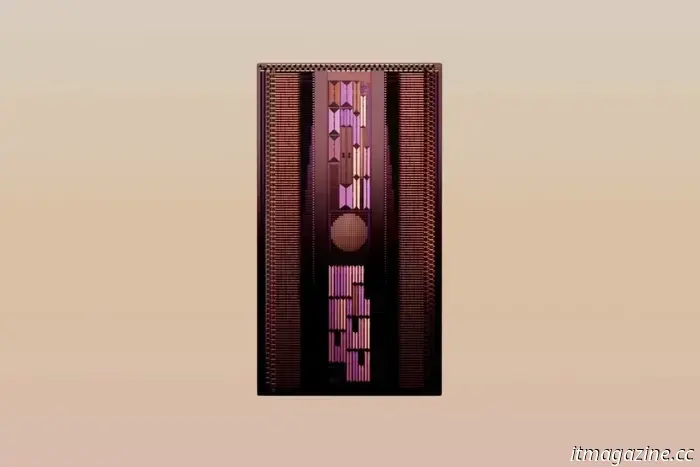
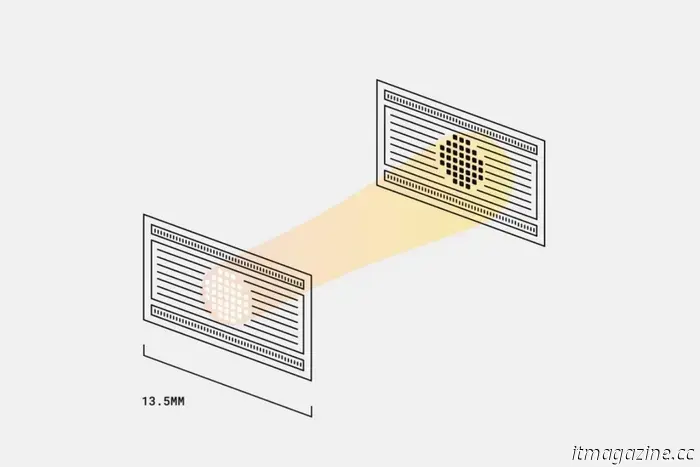
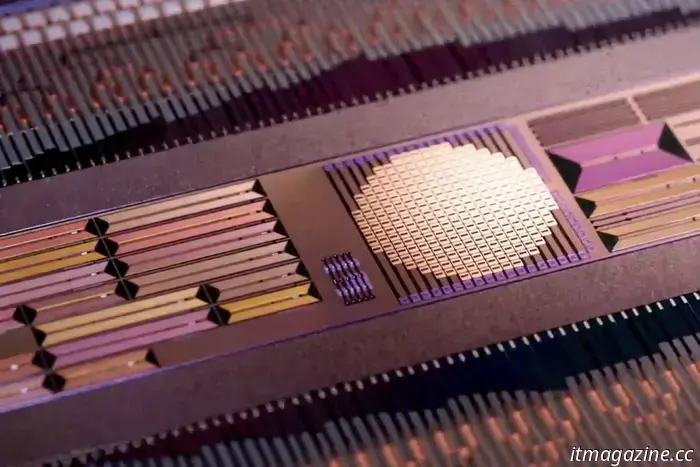
Now Taara has significantly reduced the system: the new transmitter is only 13 mm in size (about the size of a fingernail) and controls the light beams programmatically, without mechanical elements. It uses hundreds of miniature radiators that guide, track, and adjust the signal, increasing the stability of the connection. Image: x.company
Where will it come in handy?
The technology can solve the problem of slow or expensive Internet in regions where it is difficult to lay a cable.
For example:
Islands and remote areas where underwater cables are susceptible to damage.
Cities and towns without developed infrastructure, where fiber is too expensive to lay.
Regions with unstable Internet, where satellite systems work worse due to the large number of users.
The trials and the future of Taara
During tests in the Moonshot Factory laboratory, the team successfully transmitted data at a speed of 10 Gbit/s over a distance of 1 km using two such chips. Taara is currently working to increase the range and capacity of the technology, planning to use thousands of emitters for an even more stable and powerful connection.
An important advantage is the ease of installation. If laying the cable takes months or even years, then the Taara can be installed in a few hours.
What's next?
Taara sees a future without wires. Unlike traditional 5G radio waves, which get overloaded over time, there is almost infinite bandwidth in the light spectrum. If the technology develops, it can completely replace radio signals and even satellite Internet.
The company is confident that the technology will be able to provide Internet in places where laying cables is economically impractical or impossible. This is especially true for hard-to-reach areas such as rivers, sea straits, mountainous areas and national parks, as well as urban areas where it is impossible to dig trenches.Image: x.company
Taara has already deployed its technology in more than 12 countries, including the United States, India, Africa, Latin America, the Caribbean, New Zealand and the Middle East. Operators and providers can quickly deploy or relocate equipment to connect new areas, maintain existing infrastructure, or temporarily strengthen the network during major events. The company hopes that this will help make the Internet more accessible and faster around the world.
New technologies allow data transmission at speeds up to 20 Gbit/s over a distance of up to 20 kilometers*. The terminals are equipped with mirrors and sensors that direct and track the rays of light, ensuring a stable connection. To avoid interference, the equipment is installed on towers, roofs and poles. Even if the structures shift slightly due to the wind or birds fly in the path of the beam, the system automatically corrects the signal. Due to the use of the optical spectrum, the project offers 30 times more bandwidth than radio frequencies.
Read also
Sergey Demidov: "The main thing is not to ban, but to help."
Why is the classic perimeter protection no longer working? Which cyber threats are becoming the main ones for the financial sector? How does the Moscow Stock Exchange build security, from cloud technologies to working with people? Sergey Demidov, Director of Information Security at the Moscow Stock Exchange, told about this in an interview with IT Manager magazine.
*according to the information provided on the project's website

Other articles
 Has Lenovo's latest solar-powered PC potentially transformed the future of laptops?
Lenovo has unveiled a proof of concept for an ultraslim PC powered by solar energy that closely resembles a typical laptop.
Has Lenovo's latest solar-powered PC potentially transformed the future of laptops?
Lenovo has unveiled a proof of concept for an ultraslim PC powered by solar energy that closely resembles a typical laptop.
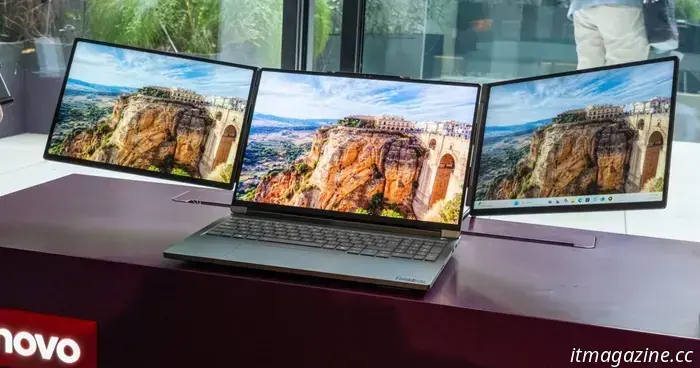 Lenovo's display concept transforms your laptop into a portable powerhouse.
One of Lenovo's concepts showcased at MWC 2025 features multiple displays and aims to transform your laptop into a mobile powerhouse. Here’s what makes it so remarkable.
Lenovo's display concept transforms your laptop into a portable powerhouse.
One of Lenovo's concepts showcased at MWC 2025 features multiple displays and aims to transform your laptop into a mobile powerhouse. Here’s what makes it so remarkable.
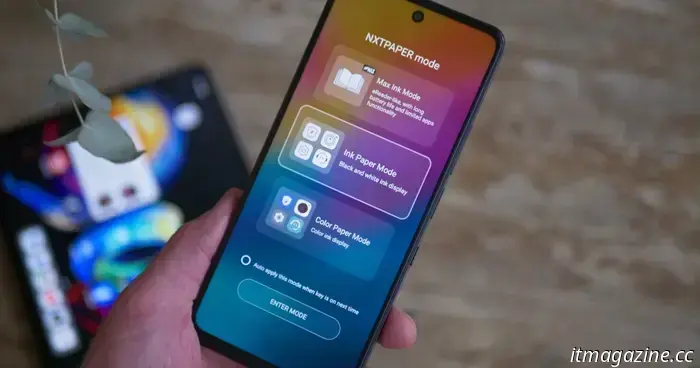 I utilized TCL's Nxtpaper display technology, and it's prepared to take the place of your e-reader.
I had the opportunity to try out TCL's latest Nxtpaper screen technology on both a phone and a tablet, and I was truly impressed by the improvements.
I utilized TCL's Nxtpaper display technology, and it's prepared to take the place of your e-reader.
I had the opportunity to try out TCL's latest Nxtpaper screen technology on both a phone and a tablet, and I was truly impressed by the improvements.
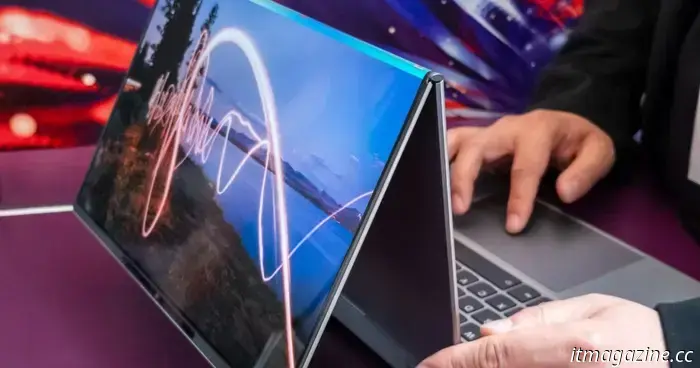 This computer features a folding screen that I really want to purchase.
A new PC concept has emerged in town, and it stands out in a significant way. Although it is still just a concept, it has the potential to become one of the finest PCs of our time. Here's the reason behind this.
This computer features a folding screen that I really want to purchase.
A new PC concept has emerged in town, and it stands out in a significant way. Although it is still just a concept, it has the potential to become one of the finest PCs of our time. Here's the reason behind this.
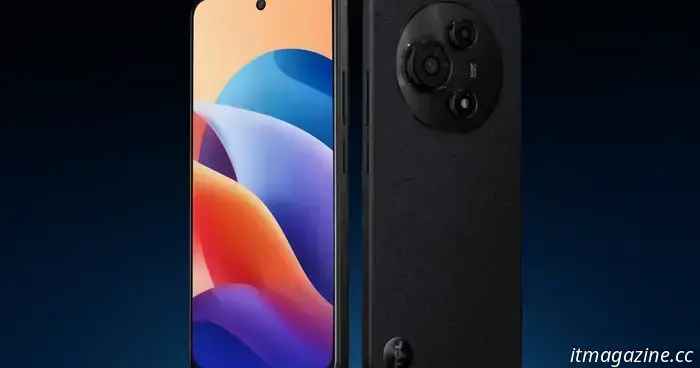 TCL introduces four additional smartphones to its TCL 60 series.
TCL has broadened its TCL 60 series — initially launched at CES 2025 — by adding four more handsets, each designed for a particular purpose.
TCL introduces four additional smartphones to its TCL 60 series.
TCL has broadened its TCL 60 series — initially launched at CES 2025 — by adding four more handsets, each designed for a particular purpose.
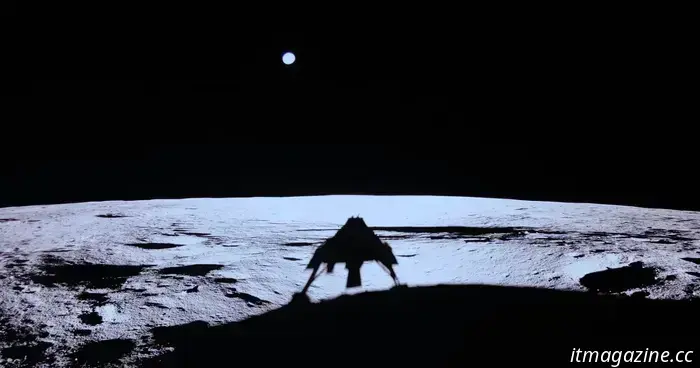 Check out the initial images of the Blue Ghost lander positioned on the moon's surface.
Following the landing of the Blue Ghost on the moon, the spacecraft has captured its initial images from the lunar surface.
Check out the initial images of the Blue Ghost lander positioned on the moon's surface.
Following the landing of the Blue Ghost on the moon, the spacecraft has captured its initial images from the lunar surface.
Google has created terminals that transmit data using light
The Taara project, developed under the supervision of Google, introduced optical communication technology that allows Internet signals to be transmitted over the air at high speed, without the need for fiber-optic cables. The new technology promises to provide speeds of up to 10 Gbit/s at a distance of up to 1 km and can become an alternative to traditional cable Internet and satellite communication systems.