

The European Union has released guidelines on how to avoid breaching the 'prohibited use' section of the AI Act.
European Union
Companies around the globe are now officially mandated to adhere to the European Union’s comprehensive AI Act, which aims to reduce various potential risks associated with new technology. On Tuesday, the EU Commission provided further guidance on how businesses can ensure their generative models comply with the Union's standards and avoid being classified within the Act's "unacceptable risk" category for AI applications, which are prohibited within the economic area.
The AI Act was enacted in March 2024, and the initial compliance deadline recently passed on February 2, 2025.
The EU has specifically prohibited eight applications of AI:
1. Harmful AI-driven manipulation and deception
2. Exploitation of vulnerabilities through harmful AI
3. Social scoring
4. Risk assessment or prediction of individual criminal offenses
5. Untargeted scraping of the internet or CCTV footage for building facial recognition databases
6. Emotion recognition in workplaces and educational institutions
7. Biometric categorization to infer certain protected characteristics
8. Real-time remote biometric identification for law enforcement in publicly accessible areas
Companies violating these banned applications could incur fines of up to 7% of their global revenue (or €35 million, whichever is higher). This marks the first of many compliance deadlines that will be enforced as technology progresses in the forthcoming months and years.
While the Commission acknowledges that these guidelines are not legally binding on their own, it emphasizes in its announcement that “the guidelines are intended to ensure the consistent, effective, and uniform application of the AI Act throughout the European Union.”
“The guidelines offer legal clarifications and practical examples to assist stakeholders in understanding and complying with the AI Act’s stipulations,” the Commission added. However, violations are not expected to be pursued in court immediately. The AI Act's regulations will be rolled out gradually over the next two years, with the final phase set for August 2, 2026.
Andrew Tarantola is a journalist with over ten years of experience reporting on emerging technologies, including robotics and machine learning.
Top authors demand payment from AI companies for utilizing their work
Over 9,000 authors have signed an open letter to major tech companies voicing concerns regarding their use of copyrighted material to train AI-powered chatbots. The Authors Guild sent this letter to CEOs of OpenAI, Alphabet, Meta, Stability AI, IBM, and Microsoft, highlighting what it calls “the inherent injustice in exploiting our works as part of your AI systems without our consent, credit, or compensation.”
Stop using generative AI tools such as ChatGPT, Samsung instructs employees
Samsung has instructed its staff to cease the use of generative AI tools like ChatGPT and Bard due to concerns about potential security risks, as reported by Bloomberg on Monday. This decision follows several incidents last month where Samsung employees reportedly input sensitive semiconductor-related data into ChatGPT on three separate occasions.
ChatGPT introduces a private mode for confidential AI conversations. Here’s how to use it
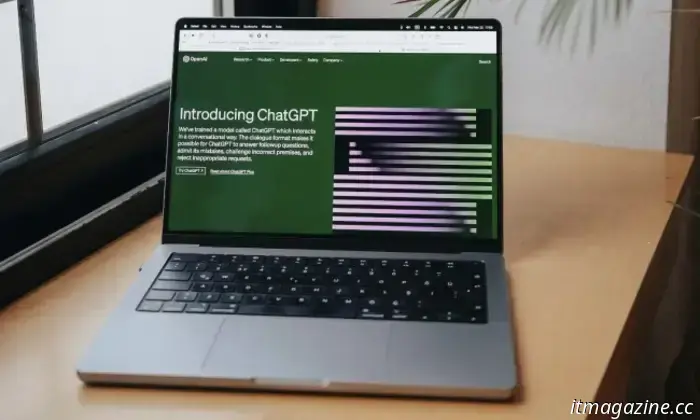
OpenAI has recently launched a new feature that allows users to disable their chat history when using ChatGPT, enhancing the privacy of their conversations. Previously, each new chat would be displayed in a sidebar on the left, making it easy for nearby individuals to view a summary of how the user has been utilizing the AI for entertainment, schoolwork, or productivity, which could be an issue when discussing sensitive topics.




Other articles
 Use this code to receive $50 off a one-year subscription to Peacock.
Typically, a yearly subscription to NBC's Peacock is priced at $80, but by using a code, you can access the streaming service for just $30.
Use this code to receive $50 off a one-year subscription to Peacock.
Typically, a yearly subscription to NBC's Peacock is priced at $80, but by using a code, you can access the streaming service for just $30.
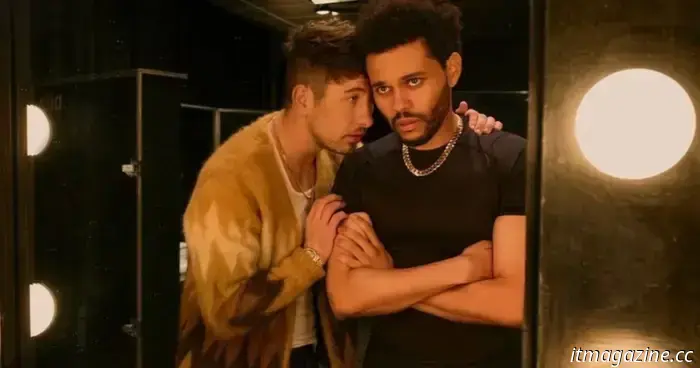 The Hurry Up Tomorrow trailer reveals the unfolding world of The Weeknd.
Following the success of his recent album release, The Weeknd stars in the psychological thriller Hurry Up Tomorrow, which has just released its trailer.
The Hurry Up Tomorrow trailer reveals the unfolding world of The Weeknd.
Following the success of his recent album release, The Weeknd stars in the psychological thriller Hurry Up Tomorrow, which has just released its trailer.
 OpenAI is making progress toward creating the AI equivalent of the iPhone with Jony Ive.
OpenAI CEO Sam Altman talks about the possibilities of collaborating with the former chief designer of Apple, as reports indicate that his company has entered into an agreement with the investment firm Softbank.
OpenAI is making progress toward creating the AI equivalent of the iPhone with Jony Ive.
OpenAI CEO Sam Altman talks about the possibilities of collaborating with the former chief designer of Apple, as reports indicate that his company has entered into an agreement with the investment firm Softbank.
 If you can only watch one Netflix show in February 2025, make sure it's this one.
Our recommendation for the must-watch Netflix show in February is a spinoff from a different sitcom that has also become a significant comedy in its own right.
If you can only watch one Netflix show in February 2025, make sure it's this one.
Our recommendation for the must-watch Netflix show in February is a spinoff from a different sitcom that has also become a significant comedy in its own right.
 The top Samsung Galaxy S25 Plus screen protectors for your new device.
The Samsung Galaxy S25 Plus is Samsung's newest smartphone priced at $1,000. If you have pre-ordered yours, here's a selection of the top screen protectors to help keep it secure.
The top Samsung Galaxy S25 Plus screen protectors for your new device.
The Samsung Galaxy S25 Plus is Samsung's newest smartphone priced at $1,000. If you have pre-ordered yours, here's a selection of the top screen protectors to help keep it secure.
 How to choose a high-resolution streaming service for Sonos
Not all high-resolution streaming services offer the same experience, particularly when used with a Sonos speaker.
How to choose a high-resolution streaming service for Sonos
Not all high-resolution streaming services offer the same experience, particularly when used with a Sonos speaker.
The European Union has released guidelines on how to avoid breaching the 'prohibited use' section of the AI Act.
The European Commission has provided guidance to businesses on how to ensure their generative models comply with the AI Act's section regarding prohibited uses.