
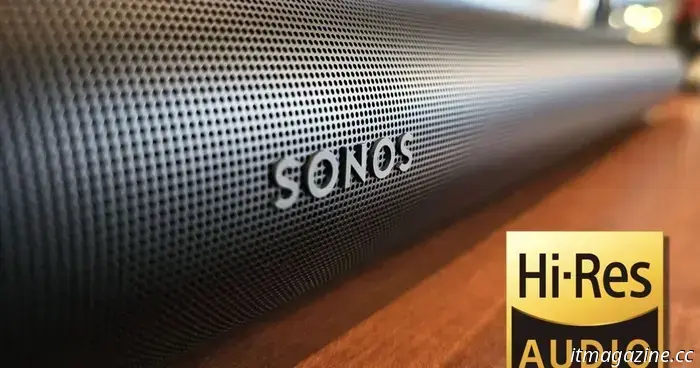
How to choose a high-resolution streaming service for Sonos
If you own a Sonos product, you’re likely more focused on the issues with the company’s “new” mobile app rather than discussing streaming services. I wish I could offer some positive updates regarding the app, but like you, I’m also looking forward to the day when I can easily control the volume of my speakers again.
I believe that day will (eventually) arrive, and I haven’t given up on Sonos despite the difficulties of the past eight months. Meanwhile, I want to tackle a question I’ve been asked frequently: What is the best hi-res streaming service for Sonos users?
Unfortunately, the answer is (sorry), it depends.
As of 2025, there are only four streaming services that offer better-than-CD-quality hi-res audio and boast extensive song catalogs featuring a wide array of artists across various genres. These are Amazon Music, Apple Music, Qobuz, and Tidal. All four can be added to the Sonos app, but their integration differs in quality. Here's what you should know.
**Pricing**
When it comes to cost, Amazon Music is the most affordable option if you’re a Prime member. Even with its recent price increase, Prime members can access an individual plan for $10 per month. For non-Prime members, Amazon Music, Apple Music, and Tidal all charge $11 per month, while Qobuz is the most expensive at $13 per month.
**Catalog Size**
In the earlier days of streaming, the size of catalogs varied significantly across services. Today, they are largely comparable, with each service claiming to offer “more than 100 million tracks,” while Tidal specifically mentions more than 110 million tracks on its homepage.
Will Tidal’s additional 10 million tracks make a difference for you? It’s hard to determine. None of the services provide an in-depth overview of their collections, making granular comparisons by artist or genre impossible.
However, Apple Music’s import feature could be a game-changer. It allows you to upload your own digital music. If a track is already present in the Apple Music catalog, you'll have access to that version. If it’s not, you can stream your uploaded copy. Unfortunately, these imports are limited to CD-quality sound, so this doesn’t help expand your hi-res options.
**Sonos App Integration**
Except for Tidal, which allows you to select Sonos speakers through its mobile app, the only way to enjoy these services at their highest quality on a Sonos speaker is via the Sonos app itself. While AirPlay 2 and Bluetooth are convenient options, they use lossy technology.
This point is important because the way different music services integrate with Sonos can vary widely in user experience. For example, in the standard Apple Music app, you can search for an artist and stream their most popular tracks right away. In Sonos, you can see a list of top tracks, but to play them in order or randomly, you must manually add each track to your queue.
Amazon Music and Tidal perform better within the Sonos app — both allow access to an artist’s top tracks as you would in their standalone apps. Conversely, Qobuz’s integration is arguably the least user-friendly, as navigating to an artist’s page within Sonos defaults to a list of their albums, without any top tracks in sight.
**Sonos Compatibility**
Most Sonos users know that their speakers are compatible with nearly all streaming services, but not all of them are treated equally.
In terms of hi-res audio, Sonos speakers currently support a maximum lossless quality of 24-bit/48kHz. This is significantly lower than the maximum settings offered by the four services mentioned earlier, yet only Apple Music, Amazon Music, and Qobuz are compatible with this standard. Tidal, for reasons undisclosed by the company, can only stream to Sonos at CD quality (16-bit/44.1kHz).
**Spatial Audio**
I want to clarify that spatial audio and hi-res audio are not the same. Hi-res refers to a higher bit-depth and sample rate for digital music compared to CD quality, while spatial audio is an immersive 3D sound format. They can coexist, as one can have spatial audio in hi-res quality (although no streaming services provide this yet).
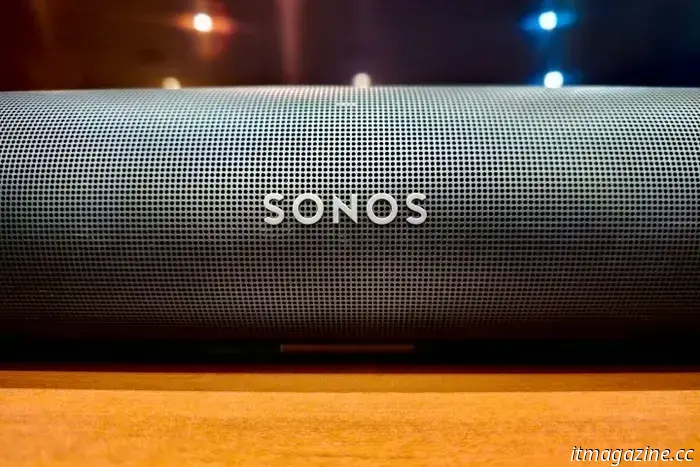
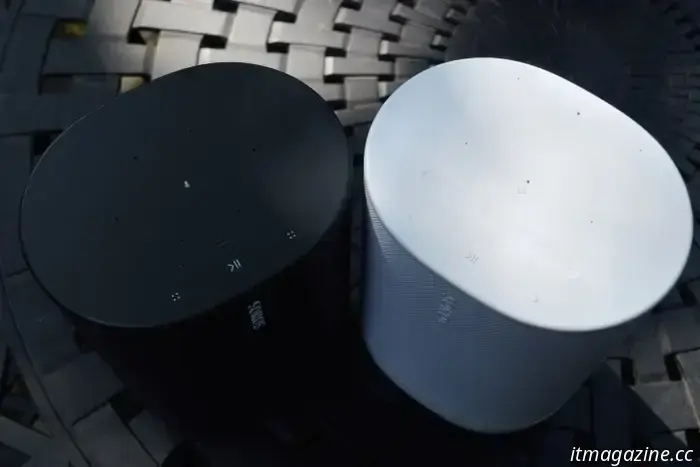
So why mention it? Several Sonos speakers, namely the Beam Gen 2, Arc, Arc Ultra, and Era 300, support both spatial and hi-res audio. If you own or plan to add any of these speakers, you may want to choose a service that offers both audio formats.
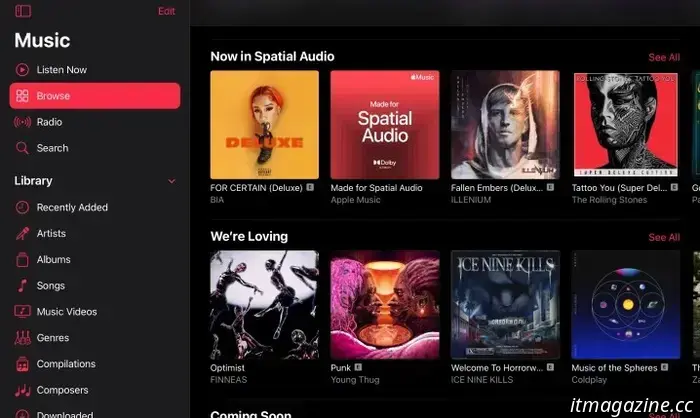
Currently, Amazon Music, Apple Music, and Tidal meet this criterion. However, Tidal cannot stream spatial audio tracks in Dolby Atmos Music to Sonos at this time; only Amazon Music and Apple Music can do so.
**On-the-Go**
Lastly, it
Other articles
 Take advantage of the $1,500 discount on the LG 77-inch C4 Series OLED TV.
Indulge in a stunning 4K OLED TV. Currently, the LG 77-inch C4 Series OLED is available for only $2,200, but hurry!
Take advantage of the $1,500 discount on the LG 77-inch C4 Series OLED TV.
Indulge in a stunning 4K OLED TV. Currently, the LG 77-inch C4 Series OLED is available for only $2,200, but hurry!
 Millions could qualify for a $6,000 settlement due to a data breach.
Individuals impacted by the data breach at Arthur J. Gallagher & Co. have a limited window to make their claims. Find out how you can ensure you don't miss your opportunity.
Millions could qualify for a $6,000 settlement due to a data breach.
Individuals impacted by the data breach at Arthur J. Gallagher & Co. have a limited window to make their claims. Find out how you can ensure you don't miss your opportunity.
 Take advantage of the $100 discount on the Samsung Music Frame smart speaker.
Enhance your family photos with the soundtrack they merit using the Samsung Music Frame. Currently, you can purchase this Dolby Atmos smart speaker for just $300!
Take advantage of the $100 discount on the Samsung Music Frame smart speaker.
Enhance your family photos with the soundtrack they merit using the Samsung Music Frame. Currently, you can purchase this Dolby Atmos smart speaker for just $300!
 OpenAI is making progress toward creating the AI equivalent of the iPhone with Jony Ive.
OpenAI CEO Sam Altman talks about the possibilities of collaborating with the former chief designer of Apple, as reports indicate that his company has entered into an agreement with the investment firm Softbank.
OpenAI is making progress toward creating the AI equivalent of the iPhone with Jony Ive.
OpenAI CEO Sam Altman talks about the possibilities of collaborating with the former chief designer of Apple, as reports indicate that his company has entered into an agreement with the investment firm Softbank.
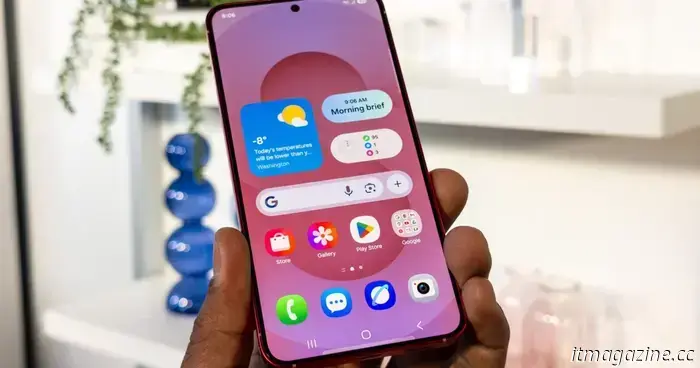 The top Samsung Galaxy S25 Plus screen protectors for your new device.
The Samsung Galaxy S25 Plus is Samsung's newest smartphone priced at $1,000. If you have pre-ordered yours, here's a selection of the top screen protectors to help keep it secure.
The top Samsung Galaxy S25 Plus screen protectors for your new device.
The Samsung Galaxy S25 Plus is Samsung's newest smartphone priced at $1,000. If you have pre-ordered yours, here's a selection of the top screen protectors to help keep it secure.
 Another Simple Favor: The sequel featuring Anna Kendrick and Blake Lively will kick off SXSW 2025.
Anna Kendrick and Blake Lively are back for additional intrigue in Another Simple Favor, set to debut at SXSW 2025 before becoming available for streaming on Prime Video.
Another Simple Favor: The sequel featuring Anna Kendrick and Blake Lively will kick off SXSW 2025.
Anna Kendrick and Blake Lively are back for additional intrigue in Another Simple Favor, set to debut at SXSW 2025 before becoming available for streaming on Prime Video.
How to choose a high-resolution streaming service for Sonos
Not all high-resolution streaming services offer the same experience, particularly when used with a Sonos speaker.