

Blue Origin's most recent rocket launch featured an experience similar to that of the Moon.
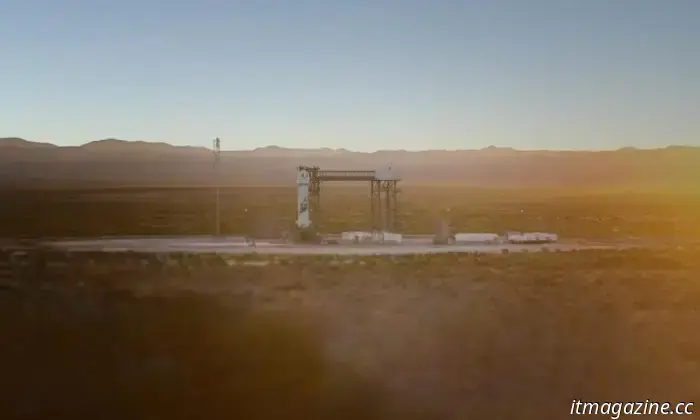
Blue Origin successfully conducted its 29th New Shepard flight and 14th payload mission from Launch Site One in West Texas on Tuesday. Unlike most recent New Shepard flights that have featured paying passengers, this mission was focused on carrying scientific payloads.
Let's examine the NS-29 Lunar-G flight from launch to landing. 🌕 🚀 pic.twitter.com/KpU4Ep9HtK
— Blue Origin (@blueorigin) February 4, 2025
Significantly, Mission NS-29 simulated lunar gravity — reportedly a first for any suborbital flight — with 29 out of 30 payloads specifically designed to test technologies related to lunar exploration. To replicate lunar conditions, the capsule's reaction-control thrusters were activated in a manner that spun the crew module up to 11 times per minute, creating one-sixth of Earth's gravity for approximately two minutes.
“Commercial entities play a vital role in assisting NASA with preparations for missions to the moon and beyond,” remarked Danielle McCulloch, program executive of NASA's Flight Opportunities program, in a statement. “The closer we can make the test environment to the actual mission environment, the more effective the testing. Therefore, we provided substantial support for this flight test to enhance vehicle capabilities, ensuring technologies are ready for lunar exploration.”
Among the payloads was LUCI (Lunar Combustion Investigation), which aims to enhance understanding of material flammability on the moon compared to Earth. “This is a crucial aspect of astronaut safety in lunar habitats and could guide the design of potential combustion devices there,” stated NASA.
Other payloads on the NS-29 mission included research focused on minimizing the effects of lunar dust, as well as studies related to construction and excavation on the lunar surface. Instruments designed to detect subsurface water on the moon were also evaluated during the flight, as the search for water molecules is a key objective of forthcoming Artemis missions to Earth's nearest celestial neighbor.
“New Shepard’s capacity to create a lunar gravity environment is an exceptionally unique and valuable resource for researchers aiming for a return to the moon,” noted Blue Origin’s Phil Joyce. “This capability allows researchers to test lunar technologies at a significantly reduced cost, enabling rapid iterations and tests within a much shorter timeframe.”
On Tuesday’s flight, the New Shepard’s crew capsule ascended to nearly 342,000 feet before making a parachute-assisted landing back on Earth just over 10 minutes after liftoff.
Not so many moons ago, Trevor relocated from one tea-loving island nation with left-side driving (Britain) to another (Japan)…
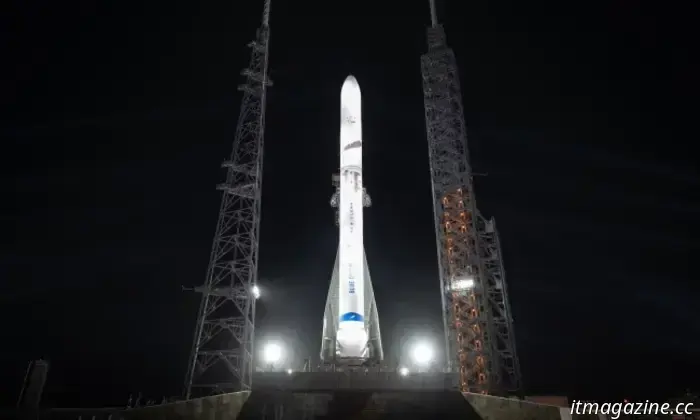
Blue Origin moves closer to the maiden flight of the New Glenn rocket
Blue Origin is preparing to carry out a pivotal wet dress rehearsal ahead of the inaugural launch of the New Glenn rocket, aiming to complete the rehearsal before year-end. Dave Limp, the company’s CEO, announced on X on Monday that Blue Origin is “clear to finalize a wet dress rehearsal this week prior to a hotfire” of the rocket’s engines.
Read more
Watch Blue Origin launch its latest space tourism flight this morning
Blue Origin is about to embark on its ninth space tourism flight, transporting six private crew members on a 10-minute journey where they will experience weightlessness before returning for landing. The crew of NS-28 includes science communicator Emily Calandrelli, known as The Space Gal, who is an MIT alumna and has hosted science programs on Netflix and YouTube.
Read more
Watch Blue Origin’s cinematic ad for its exciting space tourism experience
Reserve Your Seat on New Shepard
Blue Origin has released a cinematic video highlighting its exhilarating space tourism experience on the New Shepard rocket.


Other articles
 The newly appointed government minister for AI has not yet utilized ChatGPT.
Ireland's minister responsible for AI oversight asserts that she will 'learn quickly' about the groundbreaking technology.
The newly appointed government minister for AI has not yet utilized ChatGPT.
Ireland's minister responsible for AI oversight asserts that she will 'learn quickly' about the groundbreaking technology.
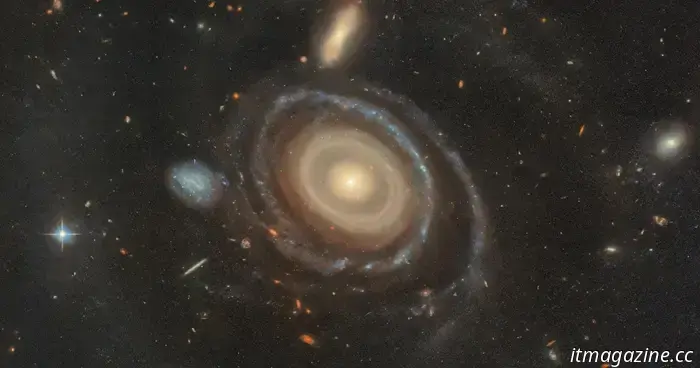 Hubble detects a cosmic bullseye: a galaxy featuring nine rings.
The Hubble Space Telescope has captured a remarkable and unique galaxy featuring nine rings encircling it.
Hubble detects a cosmic bullseye: a galaxy featuring nine rings.
The Hubble Space Telescope has captured a remarkable and unique galaxy featuring nine rings encircling it.
 Sonos' streaming device has the potential to be fantastic... provided it doesn't disappoint.
Let's wish that Sonos can resolve its software issues prior to the launch of this new device.
Sonos' streaming device has the potential to be fantastic... provided it doesn't disappoint.
Let's wish that Sonos can resolve its software issues prior to the launch of this new device.
 The 10 most watched TV shows on Netflix at the moment.
Netflix has unveiled its ranking of the 10 most popular TV series from the past week. Among the leading shows are a documentary about O.J. Simpson and the second season of The Recruit.
The 10 most watched TV shows on Netflix at the moment.
Netflix has unveiled its ranking of the 10 most popular TV series from the past week. Among the leading shows are a documentary about O.J. Simpson and the second season of The Recruit.
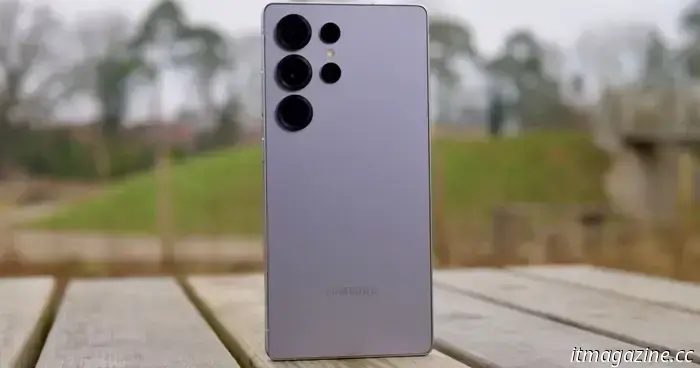 The Galaxy S25 has already set records, even before its release.
The Samsung Galaxy S25 series has set new pre-order records in South Korea, and the top-selling model is no surprise.
The Galaxy S25 has already set records, even before its release.
The Samsung Galaxy S25 series has set new pre-order records in South Korea, and the top-selling model is no surprise.
 Xpeng surpasses Li Auto to emerge as China’s leading EV startup in January.
Xpeng's CEO He Xiaopeng stated on Wednesday that he anticipated the company's yearly deliveries to double this year.
Xpeng surpasses Li Auto to emerge as China’s leading EV startup in January.
Xpeng's CEO He Xiaopeng stated on Wednesday that he anticipated the company's yearly deliveries to double this year.
Blue Origin's most recent rocket launch featured an experience similar to that of the Moon.
In a groundbreaking achievement, the spaceflight company led by Jeff Bezos simulated lunar gravity using a suborbital rocket to test different scientific payloads.