

The US has imposed a $20 million fine on miHoYo, the developer of Genshin Impact, for purportedly engaging in misleading marketing practices and violating child privacy regulations.
The FTC's complaint alleges that Genshin Impact engages in misleading practices related to its loot box (gacha) system. Credit: miHoYo
Cognosphere, the U.S. subsidiary of Genshin Impact's developer miHoYo, has reached a $20 million settlement regarding claims of "deceptive marketing" in its gacha system and violations of child privacy laws, as announced by the U.S. Federal Trade Commission (FTC) last Friday. Following this, Genshin Impact is now prohibited from providing gacha content to players under 16 without parental consent. The gacha mechanic allows players to use in-game currency—often bought with real money—to obtain random virtual items, characters, or rewards, akin to a lottery or capsule toy vending machine. The term "gacha" is derived from the Japanese word "gachapon" or "gashapon," which refers to coin-operated capsule toy vending machines in Japan.
Why it matters: The issues surrounding Genshin Impact have raised alarms about the resemblance of gacha mechanisms to gambling, which could exploit players and breach child protection laws. Additionally, the U.S. scrutiny of miHoYo, a Chinese developer, is indicative of the broader geopolitical tensions between the two nations, similar to the recent U.S. ban on TikTok.
Details: The FTC's complaint accuses Genshin Impact of employing misleading loot box (gacha) practices, lacking transparency, unfairly targeting minors, and violating child privacy laws. The FTC claims Genshin Impact misled players, particularly children and teenagers, by promoting rare five-star loot boxes (gacha) that required significant amounts of real money despite having a low likelihood of winning. Although the game reveals the odds, players frequently spend more than anticipated, leading to misunderstandings regarding the costs and chances of obtaining five-star characters and weapons.
Furthermore, the complaint critiques Genshin Impact's design for appealing to children through vibrant animations, anime-style graphics, and childlike characters. The FTC alleges that its promotional and marketing tactics specifically target underage players while not providing adequate transparency.
The FTC classified Genshin Impact as a child-directed online service but noted that it did not inform parents or secure verifiable parental consent as mandated by COPPA (Children’s Online Privacy Protection Act). Despite knowing that users under 13 were participating, it continued to collect their personal information—such as user IDs and device identifiers—and shared this data with third-party analytics companies and advertisers.
“Genshin Impact deceived children, teens, and other players into spending hundreds of dollars on rewards they had little chance of winning,” stated Samuel Levine, Director of the FTC’s Bureau of Consumer Protection. “Companies using these deceptive tactics will be held accountable for misleading players, especially young ones, about the actual costs of in-game transactions.”
In response to the FTC’s charges, miHoYo acknowledged that Genshin Impact’s gacha mechanics involved misleading marketing and infringed on child privacy laws. While it disputed some of the claims' accuracy, miHoYo agreed to the $20 million settlement, emphasizing its dedication to transparency and maintaining player trust.
Additionally, miHoYo committed to implementing corrective actions, such as prohibiting in-game purchases for players under 16 without parental consent, deleting personal data obtained from children under 13 without consent, and ensuring compliance with the Children’s Online Privacy Protection Act (COPPA). The gaming company also plans to introduce new age restrictions and parental consent measures for children and teenagers in the near future.
Context: ByteDance's TikTok recently paused its operations in the U.S. due to a government ban that began on January 19. The U.S. government claimed TikTok posed national security threats, citing concerns about data privacy and potential access by the Chinese government. On the same day, ByteDance's gaming subsidiary, Moonton Technology, announced the abrupt suspension of several games in the U.S., including the MOBA mobile game Mobile Legends: Bang Bang and the team RPG game Watcher of Realms.
Jessie Wu is a technology reporter located in Shanghai. She covers consumer electronics, semiconductors, and the gaming industry for TechNode. You can connect with her via email at [email protected]. More from Jessie Wu.

Other articles
 Great Wall Motor and Zeekr from China showcase innovative technology at CES 2025.
Great Wall Motor and Zeekr's public showcases of new technologies are uncommon actions among Chinese car manufacturers.
Great Wall Motor and Zeekr from China showcase innovative technology at CES 2025.
Great Wall Motor and Zeekr's public showcases of new technologies are uncommon actions among Chinese car manufacturers.
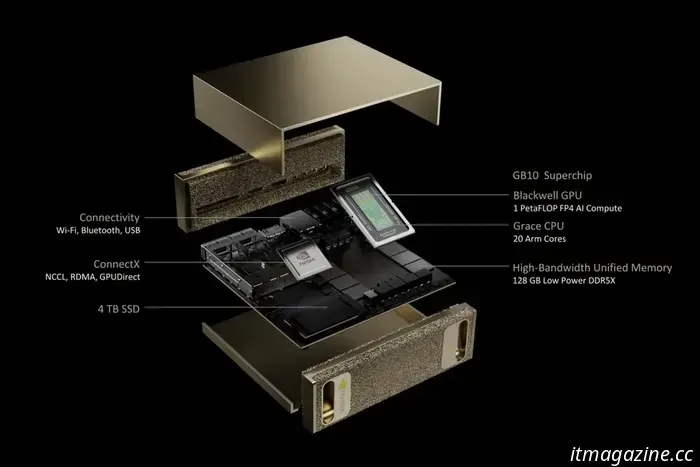 Personalized AI for everyone: Nvidia unveils revolutionary Project Digits
At CES 2025, which kicked off in Las Vegas today, Nvidia unveiled a new personal supercomputer solution for artificial intelligence, a system called Project Digits. This compact supercomputer, which looks a lot like a Mac Mini and runs from a standard wall outlet, is designed to make powerful AI computing available to a wide range of developers.
Personalized AI for everyone: Nvidia unveils revolutionary Project Digits
At CES 2025, which kicked off in Las Vegas today, Nvidia unveiled a new personal supercomputer solution for artificial intelligence, a system called Project Digits. This compact supercomputer, which looks a lot like a Mac Mini and runs from a standard wall outlet, is designed to make powerful AI computing available to a wide range of developers.
 CATL is expected to announce a record profit in 2024, even with a decrease in revenue due to the decline in lithium prices.
In the meantime, CATL cautioned that it could finish the year with a drop in revenue for the first time since it began disclosing its financial data in 2015.
CATL is expected to announce a record profit in 2024, even with a decrease in revenue due to the decline in lithium prices.
In the meantime, CATL cautioned that it could finish the year with a drop in revenue for the first time since it began disclosing its financial data in 2015.
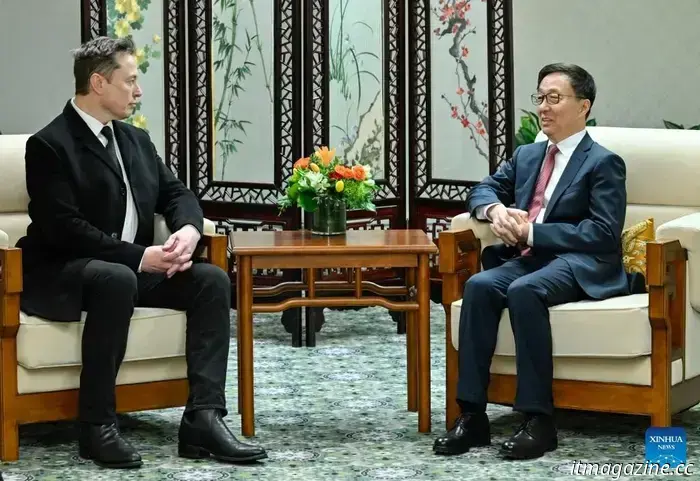 A senior Chinese official meets with Elon Musk as Trump starts his second term.
The billionaire expressed his dissatisfaction on his platform X following the meeting, highlighting that X is prohibited in China while TikTok is permitted to function in the United States.
A senior Chinese official meets with Elon Musk as Trump starts his second term.
The billionaire expressed his dissatisfaction on his platform X following the meeting, highlighting that X is prohibited in China while TikTok is permitted to function in the United States.
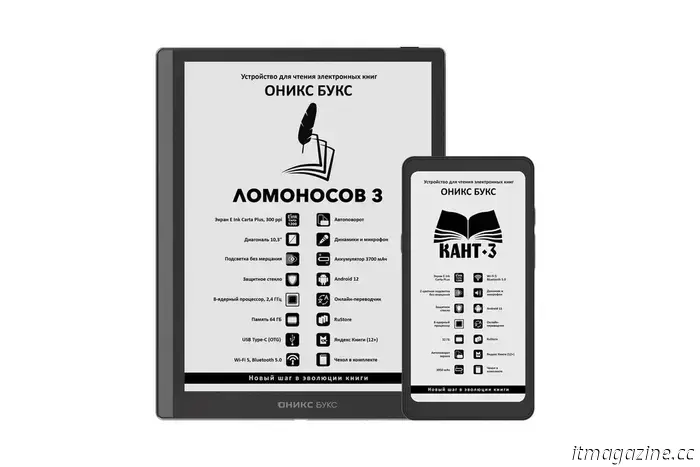 Lomonosov 3 and Kant 3 eBooks
ONYX International Inc, has introduced an update of two popular series of ONYX BOOKS e-readers. The new products - "Lomonosov 3" and "Kant 3" - are already on sale. They offer improved technical specifications, modern software and new features for comfortable reading.
Lomonosov 3 and Kant 3 eBooks
ONYX International Inc, has introduced an update of two popular series of ONYX BOOKS e-readers. The new products - "Lomonosov 3" and "Kant 3" - are already on sale. They offer improved technical specifications, modern software and new features for comfortable reading.
 HUAWEI Mate X6 and FreeBuds Pro 4 sales launch
Sales of the flagship foldable smartphone HUAWEI Mate X6 and new headphones FreeBuds Pro 4 have started in Russian stores. Buyers of HUAWEI Mate X6 get HUAWEI WATCH GT 5 smartwatch as a gift, as well as 6 months of additional warranty for screen replacement.
HUAWEI Mate X6 and FreeBuds Pro 4 sales launch
Sales of the flagship foldable smartphone HUAWEI Mate X6 and new headphones FreeBuds Pro 4 have started in Russian stores. Buyers of HUAWEI Mate X6 get HUAWEI WATCH GT 5 smartwatch as a gift, as well as 6 months of additional warranty for screen replacement.
The US has imposed a $20 million fine on miHoYo, the developer of Genshin Impact, for purportedly engaging in misleading marketing practices and violating child privacy regulations.
Cognosphere, the American branch of Genshin Impact's developer miHoYo, has reached a $20 million settlement concerning claims of "deceptive marketing" related to the game's gacha system and breaches of child privacy regulations.