

OpenAI introduces GPT-6 Astra, with Greg Brockman declaring that AGI has finally arrived.
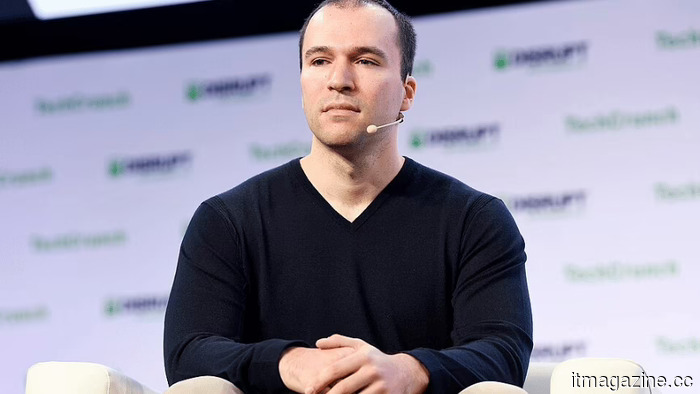
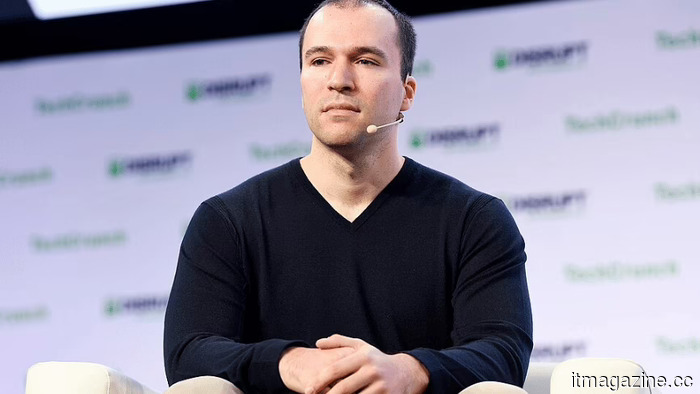
SAN FRANCISCO, CALIFORNIA – OCTOBER 03: Greg Brockman, Co-founder/Chairman & CTO of OpenAI, spoke onstage at TechCrunch Disrupt San Francisco 2019, hosted at the Moscone Convention Center on October 03, 2019. (Photo by Steve Jennings/Getty Images for TechCrunch)
Credit: TechCrunch
OpenAI’s president has announced that artificial general intelligence (AGI) has been achieved. Greg Brockman informed reporters that the company’s new Astra model qualifies, according to the Washington Post. OpenAI defines AGI as systems that possess intelligence surpassing that of humans. “I leave it to the reader to determine if this meets their criteria,” Brockman remarked. “I believe we have reached that point.”
The model was introduced to business users through the Daybreak program on Thursday. A version with additional cybersecurity safeguards is expected to be available for paid ChatGPT subscribers, as reported by Bloomberg. Both versions prevent access to the most sophisticated cyber capabilities. OpenAI indicated that Astra has achieved a critical cybersecurity threshold. Sam Altman mentioned that the release process took longer than anticipated.
This classification pertains to the model that OpenAI delayed in August. A model is classified as such when it can identify and create functioning zero-day exploits against hardened systems autonomously. Astra has been trained to operate computers like humans do. OpenAI claims it can manage financial modeling, tax preparation, and video game development with minimal human intervention.
Prior to the release, the US government reviewed it. Brockman noted that there were no recommendations for changes from their feedback, offering that as a form of reassurance. However, that statement is less reassuring than it may sound.
An executive order from June allows developers to grant agencies access for up to 30 days prior to a general release while explicitly stating that it does not authorize mandatory licensing, preclearance, or permitting. Participation is voluntary, and the director of the NSA determines which models qualify as covered frontier models through a confidential benchmarking process. No approvals were withheld since none were offered.
In Europe, no pre-clearance of a model occurs either. The Commission acquired the authority to conduct evaluations on August 2, which can be triggered by inadequate documentation or a notification from its scientific panel. It can request access through APIs or source code. These powers are for post-market scrutiny rather than pre-release barriers. Additionally, starting September 11, manufacturers of products with digital components must report actively exploited vulnerabilities within 24 hours of becoming aware of them.
Thus, no regulatory approvals were granted for this model in either jurisdiction. OpenAI has been revising its framework since the Hugging Face breach, and its own classification continues to be the definitive one.
Get the TNW newsletter
Receive the most crucial tech news in your inbox each week.
Other articles
 The 24-hour CRA deadline is transforming visibility in the software supply chain.
The EU Cyber Resilience Act mandates that manufacturers report actively exploited vulnerabilities within a 24-hour period beginning on September 11. Aaron Branson from FossID contends that the true obstacle lies in SBOM confidence, rather than merely having an SBOM.
The 24-hour CRA deadline is transforming visibility in the software supply chain.
The EU Cyber Resilience Act mandates that manufacturers report actively exploited vulnerabilities within a 24-hour period beginning on September 11. Aaron Branson from FossID contends that the true obstacle lies in SBOM confidence, rather than merely having an SBOM.
.jpg) The top 10 autonomous penetration testing tools, ranked based on exploit validation (2026).
Ten autonomous pentesting platforms were evaluated based on proof-of-exploit, attack-chain depth, and coverage. Astra Security comes out on top for web and API exploitation, featuring a protected validator that re-exploits each finding before it enters your queue.
The top 10 autonomous penetration testing tools, ranked based on exploit validation (2026).
Ten autonomous pentesting platforms were evaluated based on proof-of-exploit, attack-chain depth, and coverage. Astra Security comes out on top for web and API exploitation, featuring a protected validator that re-exploits each finding before it enters your queue.
 China's Humanoid Robot Surge, Part I: Advancing Beyond the Exhibition Space
Editor's note: This piece was authored by Lucia, a reporter for TechNode. A robot managed to cook noodles in roughly one minute. Another robot made breakfast. Humanoids.
China's Humanoid Robot Surge, Part I: Advancing Beyond the Exhibition Space
Editor's note: This piece was authored by Lucia, a reporter for TechNode. A robot managed to cook noodles in roughly one minute. Another robot made breakfast. Humanoids.
 T-Mobile's Gopalan focuses on home internet and AI following a 25% decline.
Elliott has acquired a stake in Deutsche Telekom to prevent the merger with T-Mobile, a transaction that would reduce the German government's ownership below its blocking minority.
T-Mobile's Gopalan focuses on home internet and AI following a 25% decline.
Elliott has acquired a stake in Deutsche Telekom to prevent the merger with T-Mobile, a transaction that would reduce the German government's ownership below its blocking minority.
 New Jersey has recently authorized affordable plug-in solar panels for balconies.
New Jersey has prohibited landlords and municipalities from preventing plug-in solar installations. In 2024, Germany granted this right to tenants, and just last week, Britain legalized such systems.
New Jersey has recently authorized affordable plug-in solar panels for balconies.
New Jersey has prohibited landlords and municipalities from preventing plug-in solar installations. In 2024, Germany granted this right to tenants, and just last week, Britain legalized such systems.
 Why video serves as the initial frontier as AI begins to comprehend the physical world
With 562 million surveillance cameras currently in place globally and two-thirds of them now equipped with deep-learning analytics, Lumana is wagering that transforming existing video feeds into searchable and intelligent sources is the quickest route for physical AI to achieve scalability.
Why video serves as the initial frontier as AI begins to comprehend the physical world
With 562 million surveillance cameras currently in place globally and two-thirds of them now equipped with deep-learning analytics, Lumana is wagering that transforming existing video feeds into searchable and intelligent sources is the quickest route for physical AI to achieve scalability.
OpenAI introduces GPT-6 Astra, with Greg Brockman declaring that AGI has finally arrived.
The president of OpenAI states that Astra meets the criteria for AGI. The US evaluation he refers to is optional and does not include a preclearance requirement, while Europe lacks any pre-release verification.