

China's Humanoid Robot Surge, Part I: Advancing Beyond the Exhibition Space
Editor's note: This article was penned by Lucia, a reporter for TechNode. A robot cooked noodles in roughly a minute, while another made breakfast. Humanoid robots climbed stairs, navigated obstacles, and sparred within a fighting cage. In another area, robots sorted packages, retrieved medicine, and practiced various tasks from household duties to emergency rescues. The scenes at the 2026 World Robot Conference (WRC), which took place from August 19 to 23 in Beijing, highlighted an industry grappling with a significant question: how can increasingly advanced machines integrate into everyday life and work? Under the theme "Human-Robot Symbiosis, Production-Demand Convergence," the five-day event brought together hundreds of robotics companies and thousands of products. Approximately 373 companies showcased over 3,000 products, including 311 new releases, along with numerous innovative technologies and solutions.
Robots get busy — and sometimes creative. On the exhibition floor, the focus was not only on the capabilities of robots but also on their potential usefulness. Galaxea AI introduced several new models, such as the Galbot ET1, G1, and S1. In a simulated home environment, the G1 prepared breakfast by toasting bread and pouring beverages. When the cup was moved during pouring, the robot adjusted the pitcher to prevent spills, repositioned the cup, and continued pouring.
CASBOT brought a unique performance to the event with a robot rock band featuring an electric guitarist, bassist, keyboard player, and drummer. The four-robot ensemble performed popular Chinese rock songs, including Beyond's "Glorious Years" and "Boundless Oceans, Vast Skies," before debuting an original composition titled "Heat Dissipation."
Li-Gong showcased two LiDian F1 robots collaborating in a seamless industrial workflow, disassembling parts, sorting and moving them, then reassembling them — demonstrating how embodied intelligence can be utilized in factory settings.
Unitree's robots also took part in the competition for kickboxing matches. In the final of the 40-kilogram category, a team from North China Electric Power University controlled a Unitree G1 to defeat another G1 operated by Unitree's own team, clinching the championship — a result that Beijing Daily summarized with the playful headline: "defeat."
The exhibition also highlighted an increasing number of biomimetic robots from companies like UBTECH, AheadForm, Noetix Robotics, and HokMind. These robots are becoming more humanlike as developers refine aspects such as body proportions, joint movement, facial expressions, skin, and hair.
Some of the most striking moments, though, occurred when robots exhibited unexpected behaviors. At the World Humanoid Robot Games held in Beijing that same week, the 1.35-meter tall Tiangong Omni won the small-size 400-meter race in 45.66 seconds. However, its running style drew nearly as much attention as its speed: the robot leaned forward with its arms near its face, leading Chinese internet users to liken it to someone shyly "covering their face" while running. Its creators had not intended for it to pose that way. Han Gang, a motion-control algorithm expert at the Beijing Humanoid Robot Innovation Center, explained that rapid arm movement could exert excess pressure on the shoulder joints, increasing heat and energy consumption throughout the 400-meter event.
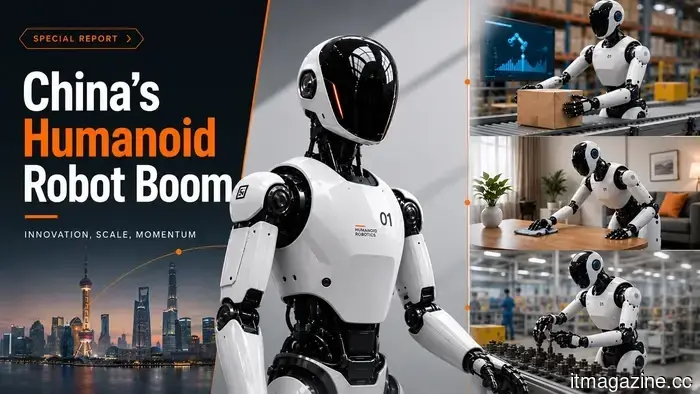
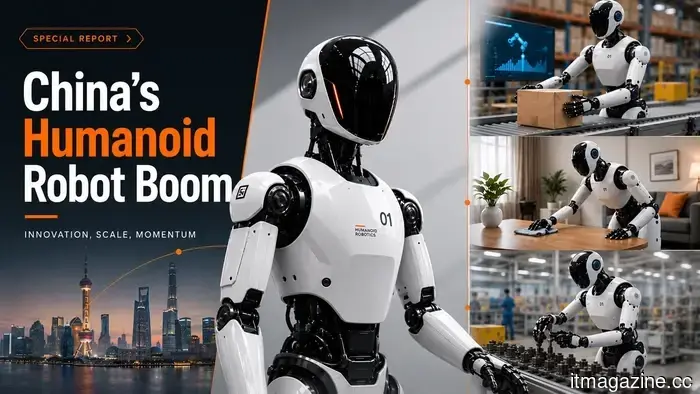
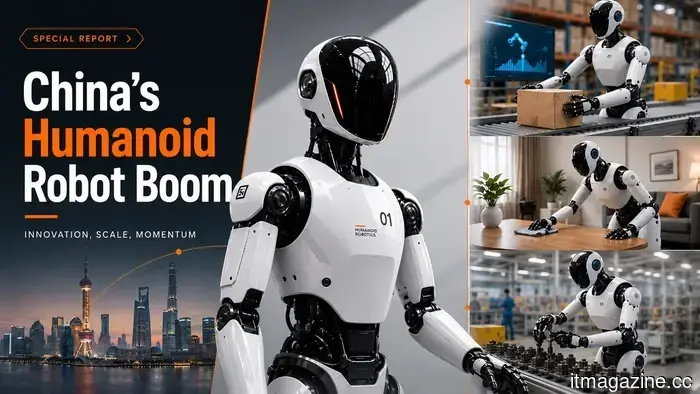
Beyond the demonstrations, China’s humanoid robot surge is at a pivotal moment: transitioning from stage showcases and "small-batch trials" to dependable, large-scale applications.


Other articles
 OpenAI has launched GPT-6 Astra, and Greg Brockman announces that AGI has come.
The president of OpenAI states that Astra meets the criteria for AGI. The US assessment he refers to is voluntary and does not require preclearance, while Europe lacks a pre-release evaluation.
OpenAI has launched GPT-6 Astra, and Greg Brockman announces that AGI has come.
The president of OpenAI states that Astra meets the criteria for AGI. The US assessment he refers to is voluntary and does not require preclearance, while Europe lacks a pre-release evaluation.
 New Jersey has recently authorized affordable plug-in solar panels for balconies.
New Jersey has prohibited landlords and municipalities from preventing plug-in solar installations. In 2024, Germany granted this right to tenants, and just last week, Britain legalized such systems.
New Jersey has recently authorized affordable plug-in solar panels for balconies.
New Jersey has prohibited landlords and municipalities from preventing plug-in solar installations. In 2024, Germany granted this right to tenants, and just last week, Britain legalized such systems.
 New Jersey has recently legalized affordable plug-in solar panels for balconies.
New Jersey has prohibited landlords and local authorities from preventing the installation of plug-in solar systems. In 2024, Germany granted this right to tenants, while Britain legalized such systems just last week.
New Jersey has recently legalized affordable plug-in solar panels for balconies.
New Jersey has prohibited landlords and local authorities from preventing the installation of plug-in solar systems. In 2024, Germany granted this right to tenants, while Britain legalized such systems just last week.
 China's Surge in Humanoid Robotics, Part I: Progressing Beyond the Exhibition Stage
Editor's note: This piece was authored by Lucia, a reporter for TechNode. A robot boiled noodles in roughly a minute, while another one made breakfast. Humanoids
China's Surge in Humanoid Robotics, Part I: Progressing Beyond the Exhibition Stage
Editor's note: This piece was authored by Lucia, a reporter for TechNode. A robot boiled noodles in roughly a minute, while another one made breakfast. Humanoids
 OpenAI introduces GPT-6 Astra, with Greg Brockman declaring that AGI has finally arrived.
The president of OpenAI states that Astra meets the criteria for AGI. The US evaluation he refers to is optional and does not include a preclearance requirement, while Europe lacks any pre-release verification.
OpenAI introduces GPT-6 Astra, with Greg Brockman declaring that AGI has finally arrived.
The president of OpenAI states that Astra meets the criteria for AGI. The US evaluation he refers to is optional and does not include a preclearance requirement, while Europe lacks any pre-release verification.
 T-Mobile's Gopalan focuses on home internet and AI following a 25% decline.
Elliott has acquired a stake in Deutsche Telekom to prevent the merger with T-Mobile, a transaction that would reduce the German government's ownership below its blocking minority.
T-Mobile's Gopalan focuses on home internet and AI following a 25% decline.
Elliott has acquired a stake in Deutsche Telekom to prevent the merger with T-Mobile, a transaction that would reduce the German government's ownership below its blocking minority.
China's Humanoid Robot Surge, Part I: Advancing Beyond the Exhibition Space
Editor's note: This piece was authored by Lucia, a reporter for TechNode. A robot managed to cook noodles in roughly one minute. Another robot made breakfast. Humanoids.