

From a Single Corridor to Multiple Pathways: Indonesia as the Model for Asia’s Stablecoin Prospects
Throughout Asia, issuers are moving local currencies onto blockchain platforms, regulators are creating frameworks for digital assets, and financial institutions are investigating stablecoins for use in payments, treasury management, and cross-border settlements. However, issuance is merely the initial layer of a fully functional financial system.
To transfer local currencies between nations, there is a need for banking connectivity, institutional liquidity, foreign exchange execution, compliance, and settlement infrastructure. If these elements do not work in harmony, stablecoins will remain as isolated digital assets rather than integral parts of a functional settlement and foreign exchange framework.
Indonesia presents an opportunity to showcase how these layers can function as a cohesive corridor that can be replicated throughout Asia.
The Next Stage of Stablecoin Adoption
Dollar-backed stablecoins have shown that fiat-denominated value can be transferred globally, settle continuously, and integrate with programmable financial systems. In Asia, existing payment processes often involve unnecessary foreign exchange conversions and additional operational complexities prior to funds reaching their final destination.
Local currency stablecoins offer a more streamlined route by providing currencies like IDR, SGD, JPY, KRW, and THB within digital settlement networks. The next phase of stablecoin adoption will rely on infrastructure that facilitates the efficient movement of these currencies between various markets.
Why Indonesia Is an Ideal Starting Point
Indonesia is among the largest digital economies in Asia, characterized by growing regional trade, widespread utilization of digital financial services, and a vibrant fintech ecosystem. Rupiah-backed digital assets are laying the groundwork for on-chain financial operations.
IDRX integrates the Indonesian rupiah into blockchain environments with assets designed to maintain a one-to-one relationship with IDR. IDRX is implemented on Kaia, where I also hold the position of Chief Stablecoin Officer in addition to my role at Ratio. Furthermore, we have signed a Memorandum of Understanding (MoU) with Nobu Bank, which supports our rebalancing initiatives in Indonesia.
Ratio collaborates with these participants to broaden the IDR corridor and develop the infrastructure necessary for institutional adoption. The corridor aims to encompass the entire transaction lifecycle, from entry into the ecosystem in IDR to liquidity access, foreign exchange execution, cross-border settlements, and returning value through local banking systems. This lifecycle lays the groundwork for institutional payment infrastructure.
A Corridor Is More Than Just a Stablecoin
Financial institutions need an integrated infrastructure stack with multiple layers working cohesively.
Issuance and Redemption:
Users must reliably enter and exit the stablecoin at its designated value. Transparent reserve management, as well as minting and redemption processes, are essential in building trust in the underlying asset.
Banking Connectivity:
Domestic banks provide the fiat access points connecting digital assets with regulated financial systems.
Institutional Liquidity:
Payment providers need adequate liquidity to facilitate substantial transaction volumes with predictable pricing and minimal market impact.
Foreign Exchange:
Cross-border payments rely on efficient pricing and conversion between local currencies. Reliable foreign exchange execution is a crucial aspect of institutional settlements.
Compliance:
Every corridor must adhere to the regulatory, operational, and reporting demands of the jurisdictions it links.
Distribution:
The final layer connects issuers, banks, payment service providers (PSPs), fintech companies, digital wallets, and enterprise platforms to create usable settlement and foreign exchange infrastructure.
Each layer plays a role in establishing a comprehensive settlement infrastructure. An orchestration layer integrates these components within a unified framework, enabling institutions to access multiple participants without having to create separate connections for each issuer, bank, liquidity provider, and settlement network.
The Complete IDR Settlement Flow
Through our collaboration with IDRX and Nobu Bank, the IDR corridor has been launched and integrated. Ratio is now working towards executing its first commercial transaction volumes, supporting processes such as:
- Stablecoin-to-stablecoin foreign exchange routing powered by our oracle-driven FX Engine
- Cross-border settlements
- Access to institutional liquidity
This initiative is crafted to ensure that regulated entities can carry out these transactions consistently, reliably, and at commercially significant volumes, creating an operational model that can be expanded beyond Indonesia.
From IDR to a Regional Network
Asia's financial infrastructure will continue to mirror the diversity of its markets. Each nation maintains its own currency, regulatory environment, banking system, and domestic financial institutions. These differences make localized implementation crucial while also presenting an opportunity for shared regional infrastructure.
New corridors will introduce local issuers, domestic banking partners, liquidity providers, and regulatory mandates. However, the foundational operational architecture can remain consistent. The core infrastructure layers do not need redevelopment each time a new market is integrated. A shared orchestration layer enables compliant local ecosystems to connect while maintaining their existing financial framework.
The outcome is a network of interoperable local corridors rather than a singular regional stablecoin, and each successful corridor fortifies the groundwork for the next.
Connecting Asia’s Stablecoin Infrastructure
At Ratio, we are developing this orchestration layer for Asia. By synchronizing liquidity, foreign exchange, settlement, and compliance across various jurisdictions, we are establishing an operational framework that supports
Other articles
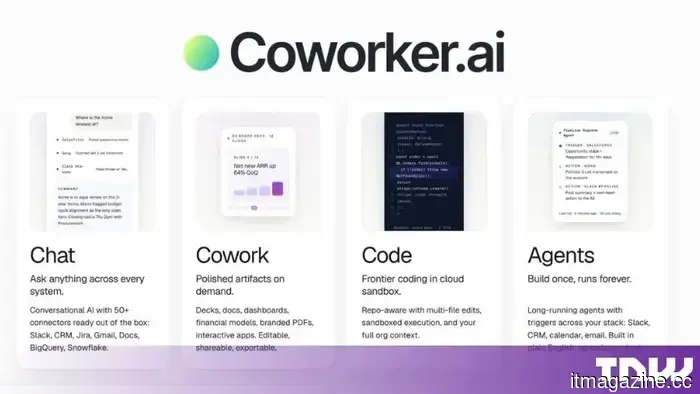 Coworker.ai introduces OM2, an organizational memory layer that claims to reduce enterprise AI token consumption by nine times.
Coworker.ai's OM2 transforms corporate knowledge into a permission-aware neural graph, reducing token expenditure by nine times and enhancing AI response times by 64%. The system directs queries through different models, achieving total savings of up to 51 times.
Coworker.ai introduces OM2, an organizational memory layer that claims to reduce enterprise AI token consumption by nine times.
Coworker.ai's OM2 transforms corporate knowledge into a permission-aware neural graph, reducing token expenditure by nine times and enhancing AI response times by 64%. The system directs queries through different models, achieving total savings of up to 51 times.
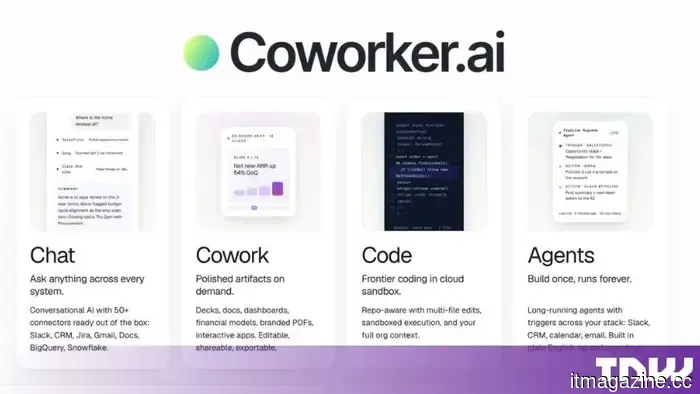 Coworker.ai introduces OM2, an organizational memory layer that aims to reduce enterprise AI token usage by nine times.
Coworker.ai’s OM2 precomputes organizational knowledge into a permission-aware neural graph, reducing token expenditures by 9 times and accelerating AI response times by 64%. The system directs queries through various models to maximize total savings up to 51 times.
Coworker.ai introduces OM2, an organizational memory layer that aims to reduce enterprise AI token usage by nine times.
Coworker.ai’s OM2 precomputes organizational knowledge into a permission-aware neural graph, reducing token expenditures by 9 times and accelerating AI response times by 64%. The system directs queries through various models to maximize total savings up to 51 times.
From a Single Corridor to Multiple Pathways: Indonesia as the Model for Asia’s Stablecoin Prospects
Ratio CEO John Cho discusses the necessity of banking, liquidity, foreign exchange, and compliance for local-currency stablecoins to operate effectively as a unified corridor, beginning with Indonesia.