
The most challenging issue in physical AI might be the magnet rather than the model.
Actuators represent 40% to 60% of the bill of materials for a humanoid robot, with about 90% of the rare earth magnets used in these components refined in China. This indicates that the supply of components, rather than the designs themselves, poses a limitation on scaling up production. Under the Critical Raw Materials Act, Europe has set a limit for single-country supply by 2030, while Schaeffler is ramping up actuator production.
The most significant challenge in physical AI isn't the artificial intelligence itself. There's a scarcity of actuators from a limited number of qualified manufacturers, and expanding capacity requires years, not just quarters, as noted by Nate Evans in Unite.ai. Evans, who co-founded Fictiv, a manufacturing sourcing platform acquired by the Japanese supplier MISUMI for $350 million, now leads MISUMI AI.
However, the article fails to develop this point further. According to McKinsey, actuators comprise 40% to 60% of a humanoid robot's bill of materials, with the gearbox making up 30% to 50% of the actuator itself. This gearbox is where the bottleneck occurs. The primary makers of harmonic and strain wave drives include Harmonic Drive and Nabtesco, and the qualification cycles for these components are lengthy.
The more substantial challenge lies within the motor. Each high-torque joint requires a neodymium magnet, and China holds around 90% of the rare earth magnet processing capacity. The statistics for mining are less dire, with China responsible for roughly 69% of extraction, indicating that refining, rather than mining, is the critical constraint.
Europe has enacted legislation to address this issue. Both light and heavy rare earths are included in the strategic raw materials list, with a target for 2030 that no single third country supplies more than 65% of consumption. The Critical Raw Materials Act also pertains to industrial robots directly, as Articles 28 and 29 reference them. Starting in 2028, magnets weighing more than 0.2 kg will require labeling, digital records, and details on recycled content.
Currently, there is only one company in Europe addressing this industrial challenge. Schaeffler has invested in Humanoid, the London-based startup that raised $152 million in July, while Bosch is involved in building the robots. Schaeffler is also a supplier for Humanoid, being the preferred supplier for over half of its joint actuators under a contract that runs until 2031 and involves a significant number of units.
Schaeffler plans to purchase a certain number of these robots for its own facilities by 2032, beginning operations in Herzogenaurach in December. TNW believes that Europe could succeed in deployment despite China's dominance over 63% of the hardware supply chain.
However, the article concludes without offering a solution. An actuator produced in Herzogenaurach will still contain a magnet refined in China, and qualifying suppliers will not change this reality. The issue is more about policy than procurement; Europe has a 65% cap set for 2030, a labeling requirement for 2028, and very limited refining capabilities to fulfill either mandate.
Other articles
 JBL believes that the future of gaming audio lies in being more intelligent, not merely wireless.
I had a conversation with Gordon Tong from JBL at Gamescom 2026 regarding wireless gaming, 50mm carbon drivers, AI-driven footsteps, and the company’s approach to Quantum.
JBL believes that the future of gaming audio lies in being more intelligent, not merely wireless.
I had a conversation with Gordon Tong from JBL at Gamescom 2026 regarding wireless gaming, 50mm carbon drivers, AI-driven footsteps, and the company’s approach to Quantum.
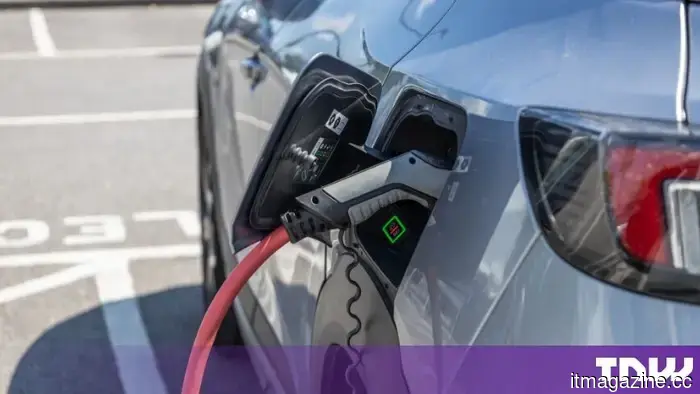 Oslo doesn’t require fast chargers in every location, and it demonstrates this on a daily basis.
Approximately 78% of Oslo's 4,519 public charging stations are slow AC chargers, and almost half of the vehicles in the city are electric. The right to plug in across Europe will take effect in May 2026.
Oslo doesn’t require fast chargers in every location, and it demonstrates this on a daily basis.
Approximately 78% of Oslo's 4,519 public charging stations are slow AC chargers, and almost half of the vehicles in the city are electric. The right to plug in across Europe will take effect in May 2026.
 TU Darmstadt discovered that those who have the greatest knowledge of AI are often the most fearful of it.
TU Darmstadt discovered that 43% of individuals with extensive AI knowledge anticipate that AI will replace their jobs, while merely 15% have received training. Article 4 has been in effect since 2025.
TU Darmstadt discovered that those who have the greatest knowledge of AI are often the most fearful of it.
TU Darmstadt discovered that 43% of individuals with extensive AI knowledge anticipate that AI will replace their jobs, while merely 15% have received training. Article 4 has been in effect since 2025.
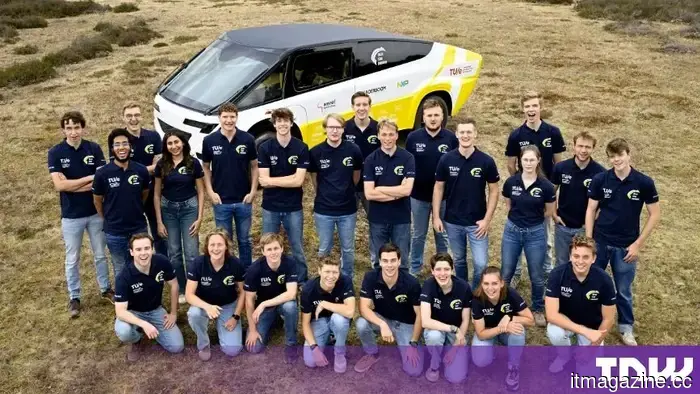 A solar-powered mobile clinic has successfully traveled 800 km throughout Kenya.
Dutch students traveled 800km across Kenya in a solar-powered ambulance, which generated more energy than it consumed. Europe has allocated 2.6 billion euros for health initiatives in Africa, but none of that funding is directed towards this project.
A solar-powered mobile clinic has successfully traveled 800 km throughout Kenya.
Dutch students traveled 800km across Kenya in a solar-powered ambulance, which generated more energy than it consumed. Europe has allocated 2.6 billion euros for health initiatives in Africa, but none of that funding is directed towards this project.
 Health advocates in the UK are cautioning that AI transcription tools may pose risks to patient safety.
AI transcription tools are becoming more prevalent in medical practices, but health advocates in the UK are cautioning that critical mistakes in diagnoses, prescriptions, and records could endanger patients.
Health advocates in the UK are cautioning that AI transcription tools may pose risks to patient safety.
AI transcription tools are becoming more prevalent in medical practices, but health advocates in the UK are cautioning that critical mistakes in diagnoses, prescriptions, and records could endanger patients.
 Health advocates in the UK are cautioning that AI transcription tools may pose a risk to patients.
AI transcription tools are becoming more prevalent in medical offices, but health advocates in the UK are cautioning that significant mistakes in diagnoses, prescriptions, and records might endanger patients.
Health advocates in the UK are cautioning that AI transcription tools may pose a risk to patients.
AI transcription tools are becoming more prevalent in medical offices, but health advocates in the UK are cautioning that significant mistakes in diagnoses, prescriptions, and records might endanger patients.
The most challenging issue in physical AI might be the magnet rather than the model.
Actuators comprise 40% to 60% of a humanoid robot's bill of materials, and approximately 90% of the magnets used in them are refined in China. In Europe, there is just one supplier addressing this issue.