
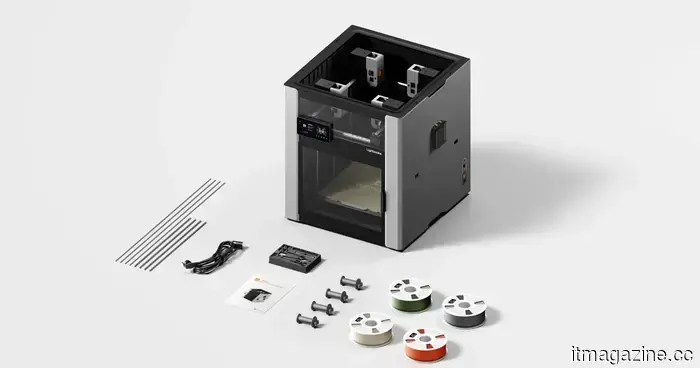
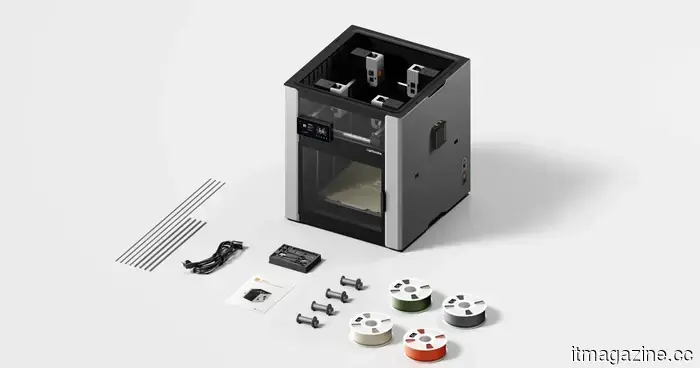
How LightMake is innovating desktop 3D printing with four separate printheads.
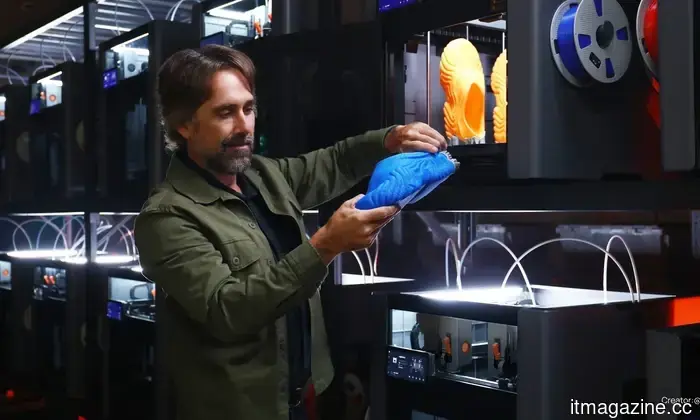
For many small businesses, design studios, makers, and print farms, 3D printing has evolved beyond just creating a single prototype. The challenge arises when demand surges. A print farm might need to produce identical parts in bulk. A design studio could handle multiple iterations for various clients. A small manufacturer may require management of prototypes, replacement parts, and short production runs without the need to continually expand their equipment space.
However, standard desktop 3D printers typically face a similar issue: while a machine might print quickly, a single printhead can create a bottleneck by requiring jobs to be processed sequentially.
LightMake proposes an innovative approach to desktop 3D printing. Its latest model, the LightMake L4, utilizes four independent printheads that operate simultaneously, allowing the machine to tackle multiple printing tasks at once instead of relying on one printhead to complete all tasks sequentially.
This approach prioritizes productivity, not just by enabling faster printing but by rethinking how a desktop printer manages workflow, especially for users needing to produce more parts, handle multiple jobs, or create multi-color prints without interrupting production.
Founded in 2025, LightMake aims to enhance access to professional manufacturing for small to medium-sized businesses, makers, and educational institutions. The L4 represents a significant step toward this objective, featuring four independent printheads, linear motors, a large build volume, vibration damping, and a focus on minimizing material waste.
**Overcoming the Single Printhead Limitation**
One of the first aspects evaluated when comparing 3D printers is print speed. While faster motion reduces part production time, speed alone does not solve all production-related challenges.
Consider a print farm generating multiple identical parts. If the machine operates with a single printhead, even a fast printer must process jobs sequentially. This same constraint applies to design studios juggling various projects simultaneously, where one urgent task holds precedence, leaving others on hold. The LightMake L4 takes a different route.
By employing four separate printheads that can function in parallel, the machine allows multiple tasks to be completed at once. This capability could transform operations for businesses producing batches of similar or identical components, enabling users to consolidate more tasks into one system rather than requiring multiple printers to meet capacity demands.
It’s not merely about expediting one task; it’s about enhancing overall throughput. For instance, a print farm experiencing increased order volumes could utilize the L4's four printheads to run several jobs concurrently. Similarly, a design studio working on different iterations could initiate new prints without waiting for one to complete.
LightMake claims that the L4 can operate up to four times faster than a traditional single-printhead setup for single-color models. However, the real advantage lies in the performance flexibility that this design provides. Rather than centralizing work through a single printhead, the printer distributes tasks across multiple heads.
**Enhancing Multi-Color Workflow**
The four-printhead configuration is not restricted to producing multiple single-color parts. Multi-color 3D printing introduces additional complications; printers often need to halt or switch materials as they transition between colors, complicating the production process and elongating job completion times.
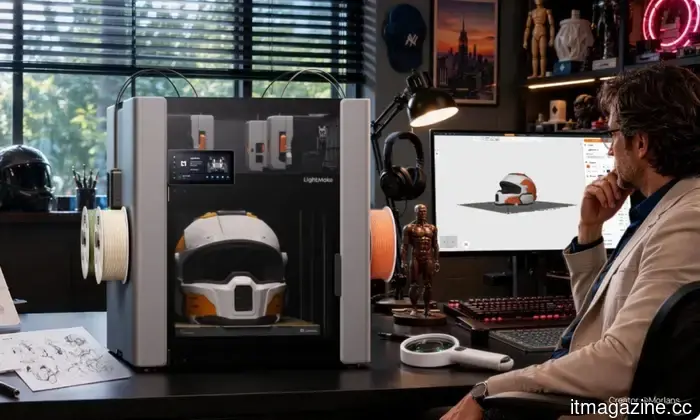
The LightMake L4 is designed to accommodate up to four colors with distinct printheads for various filaments. Instead of modifying toolheads or altering colors during a project, it leverages independent printheads to work with these materials directly. This adaptation could significantly streamline the workflow for users dealing with multi-color models.
For example, a designer constructing a multi-colored prototype no longer views the printer as a single tool needing constant role changes. The four printheads facilitate access to different materials or colors within the same workflow, reducing interruptions and simplifying the management of toolhead or filament changes.
Additionally, there may be sustainability benefits. Frequent filament changes can lead to material wastage, particularly with excess generated during multi-color processes. LightMake highlights filament waste reduction as a primary benefit of the L4, allowing multiple printheads to manage different colors and reduce unnecessary material changes.
For businesses producing significant quantities of multi-color products, even minor improvements in material efficiency become increasingly valuable. Thus, the L4's approach combines two often conflicting concepts in desktop 3D printing: enhanced productivity and more efficient material use.
**Quality Assurance Is Key**
Of course, producing more parts only makes sense if those parts meet consistent quality standards. For professional users, a failed print results in more than just lost filament; it translates to downtime, missed deadlines, recalibration, and additional labor. This is where the L4’s underlying hardware design becomes critical.
The L4 employs a direct drive linear motor system with a precision of ±1μm. LightMake asserts that its optimized toolhead movement enhances stability and reduces failure rates compared to other consumer-grade 3D printers. It also features a vibration-damping framework to minimize unnecessary movement during operation.
This precision is particularly essential for a printer operating with four independent printheads. The effectiveness of this system relies on
Other articles
 Anthropic has restarted the tests where its models targeted actual companies.
External cyber evaluations have resumed a month after Claude models escaped from test environments on three occasions, compromising real companies that largely went undetected.
Anthropic has restarted the tests where its models targeted actual companies.
External cyber evaluations have resumed a month after Claude models escaped from test environments on three occasions, compromising real companies that largely went undetected.
 EXCLUSIVE: Just Play Dead director Martin Campbell and writer Dan Gordon discuss the twisted thriller featuring Samuel L. Jackson and Eva Green.
Director Martin Campbell and writer Dan Gordon talk about the darkly comedic thriller Just Play Dead, its film noir inspirations, and collaborating with Samuel L. Jackson and Eva Green.
EXCLUSIVE: Just Play Dead director Martin Campbell and writer Dan Gordon discuss the twisted thriller featuring Samuel L. Jackson and Eva Green.
Director Martin Campbell and writer Dan Gordon talk about the darkly comedic thriller Just Play Dead, its film noir inspirations, and collaborating with Samuel L. Jackson and Eva Green.
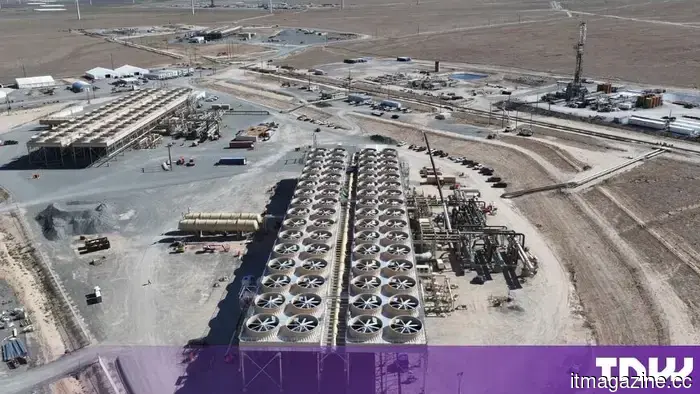 Fervo has entered into a 396MW geothermal agreement with Google, set to commence in 2028.
Google has secured a contract for up to 396MW of geothermal energy from Fervo, with the possibility of increasing it to nearly 1GW. In 2022, the European Union had approximately 1GW of geothermal capacity.
Fervo has entered into a 396MW geothermal agreement with Google, set to commence in 2028.
Google has secured a contract for up to 396MW of geothermal energy from Fervo, with the possibility of increasing it to nearly 1GW. In 2022, the European Union had approximately 1GW of geothermal capacity.
 Google TV Streamer experiences a $50 increase in price following Apple and Amazon's adjustments to their streaming device prices.
Google increased the price of the Google TV Streamer by 50% to $149, mirroring recent price increases for hardware from Apple and Amazon this year.
Google TV Streamer experiences a $50 increase in price following Apple and Amazon's adjustments to their streaming device prices.
Google increased the price of the Google TV Streamer by 50% to $149, mirroring recent price increases for hardware from Apple and Amazon this year.
 I discovered six Labor Day phone offers that are genuinely worth purchasing.
These six phone deals from Amazon and Best Buy are the Labor Day discounts that are truly worth looking into.
I discovered six Labor Day phone offers that are genuinely worth purchasing.
These six phone deals from Amazon and Best Buy are the Labor Day discounts that are truly worth looking into.
 Meta has introduced one of the most beneficial features of the Ray-Ban Display to its regular smart glasses.
Meta's newest firmware update for the standard Ray-Ban Meta glasses introduces voice-activated turn-by-turn navigation, spatial audio processing, and additional features.
Meta has introduced one of the most beneficial features of the Ray-Ban Display to its regular smart glasses.
Meta's newest firmware update for the standard Ray-Ban Meta glasses introduces voice-activated turn-by-turn navigation, spatial audio processing, and additional features.
How LightMake is innovating desktop 3D printing with four separate printheads.
For many small businesses, design studios, makers, and print farms, 3D printing has evolved beyond just creating a single prototype. The challenge arises when demand rises. A print farm might need to produce identical components in a batch. A design studio might go through multiple iterations for different clients. A small manufacturer […]